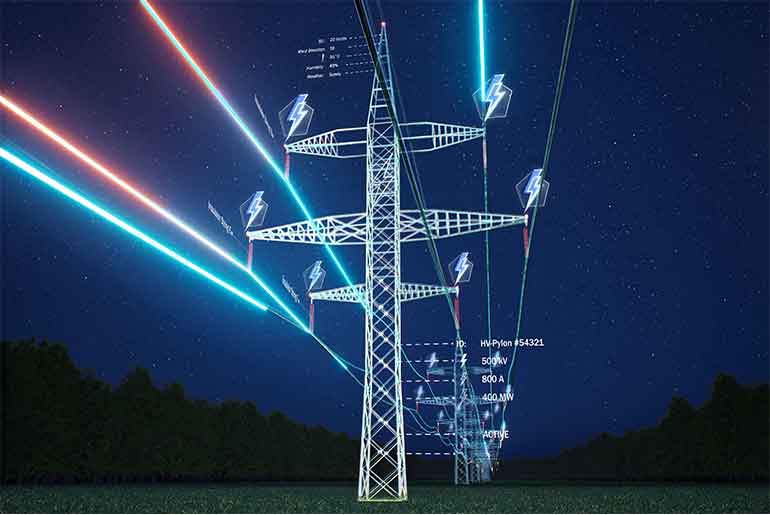
Adani Energy Solutions Limited (AESL) has secured long-term financing from a consortium of Japanese banks for its flagship 6 GW high-voltage direct current (HVDC) transmission project, marking a major step in strengthening India’s green power infrastructure. The project will create a dedicated green energy evacuation corridor to transport renewable electricity from Rajasthan to Uttar Pradesh, supporting India’s growing clean energy demand.
The transmission corridor is designed as a ±800 kV HVDC system with an evacuation capacity of 6,000 MW. Spanning nearly 950 kilometres, the project will connect Bhadla in Rajasthan—one of India’s largest solar power hubs—to Fatehpur in Uttar Pradesh. Once commissioned, the corridor is expected to play a critical role in integrating large volumes of renewable energy into the national grid while improving grid stability across northern India. The project is targeted for commissioning by 2029.
This HVDC asset forms a key part of the Adani Group’s integrated clean energy platform. Rajasthan continues to be a major renewable generation centre for Adani Green Energy Limited, whose projects already supply clean electricity to AESL’s subsidiary, Adani Electricity Mumbai Limited (AEML). Currently, more than 40 per cent of AEML’s power supply comes from renewable sources, positioning Mumbai among the world’s leading cities in terms of renewable energy penetration.
The financing for the project is being led by Japanese banking majors MUFG Bank Ltd. and Sumitomo Mitsui Banking Corporation (SMBC). Their participation highlights sustained international confidence in India’s renewable energy infrastructure and transmission sector. The project will deploy advanced HVDC technology supplied by Hitachi, in collaboration with Bharat Heavy Electricals Limited (BHEL), reinforcing the use of India’s domestic manufacturing capabilities.
The strengthening financial and industrial partnership between India and Japan is also reflected in AESL’s recent BBB+ (Stable) credit rating from the Japan Credit Rating Agency, which aligns with India’s sovereign rating.
Commenting on the development, Kandarp Patel, CEO of AESL, said,
“This project marks a defining step in building India’s green transmission backbone. The continued support from our Japanese partners–including leading banks and Hitachi– reflects the depth of the India-Japan partnership and our shared commitment to enabling a sustainable energy future. AESL remains focused on developing resilient, future-ready transmission infrastructure to accelerate India’s energy transition.”
The financing has been raised under AESL’s sustainable debt framework and follows the Equator Principles, allowing lenders to classify the facility as a Green Loan. Latham & Watkins and Saraf & Partners advised AESL, while Linklaters and Cyril Amarchand Mangaldas acted as legal advisors to the lenders.
 Electrify your feed! Click here to join our Whatsapp group and to get the latest updates, expert insights, and innovations driving India’s energy storage revolution.