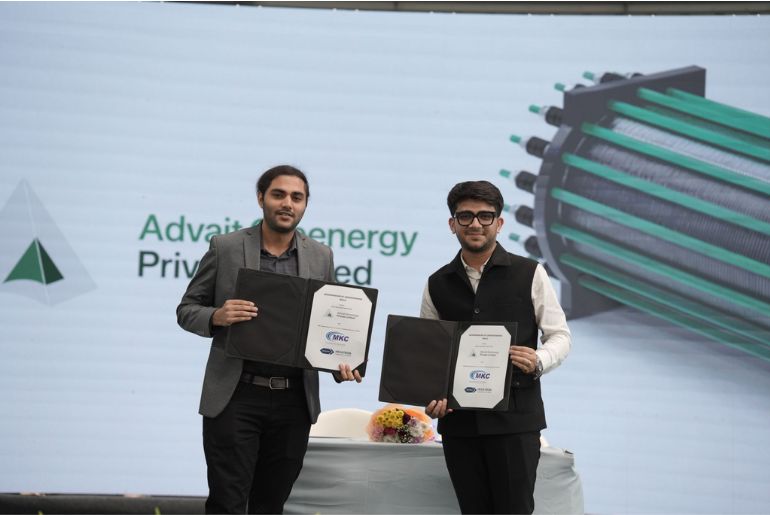
Advait Greenergy, a part of Advait Energy Transitions Ltd., has opened a 30 MW alkaline electrolyser assembly plant in Mehsana, Gujarat. The facility has been built as a scalable manufacturing platform, which is an important step toward building India’s capacity for green hydrogen technologies.
The new plant will start out with a 30 MW assembly capacity, but it plans to grow a lot in the next few years. The company’s plan says that by the end of 2026, the facility’s capacity will have grown to 100 MW, by 2027 it will have grown to 300 MW, and eventually it will have an annual manufacturing capacity of 1 GW. This modular expansion plan was made to help meet the rising need for green hydrogen in industries like steelmaking, refining, fertilisers, and heavy transport.
Supporting India’s Green Hydrogen Mission
The project aligns with the goals of the National Green Hydrogen Mission, which aims to produce 5 million metric tonnes of green hydrogen annually by 2030. The mission has triggered investments across several segments of the hydrogen value chain, including renewable energy generation, electrolyser manufacturing, and hydrogen utilisation.
Advait Greenergy’s facility in Mehsana is among the early industrial-scale initiatives aimed at strengthening India’s domestic capability for electrolyser assembly, which is a key technology used to produce hydrogen from water using renewable electricity. By developing local manufacturing capacity, the facility is expected to support the country’s broader efforts to scale green hydrogen production and reduce dependence on imported technologies.
Gujarat Emerging as a Clean Energy Hub
Over the past decade, Gujarat has developed strong industrial infrastructure supported by renewable energy corridors, port connectivity, and stable policy frameworks. These factors have attracted major investments across solar manufacturing, battery storage, renewable power projects, and now hydrogen technologies.
Commenting on the development, Advait Greenergy stated:
“Over the past decade, Gujarat has built strong industrial infrastructure supported by renewable energy corridors, port connectivity and long-standing policy stability. These factors have attracted investments across solar manufacturing, battery storage, renewable energy development and now hydrogen technologies, positioning Gujarat as a central hub for India’s emerging clean energy economy. Advait’s Mehsana facility is part of this wider ecosystem that continues to attract participation from both technology companies and industrial partners.”
Expansion Across Clean Energy Segments
The company has also received approval for 300 MW capacity under the Production Linked Incentive (PLI) scheme for electrolyser manufacturing and is participating in a 100 MW green hydrogen project component.
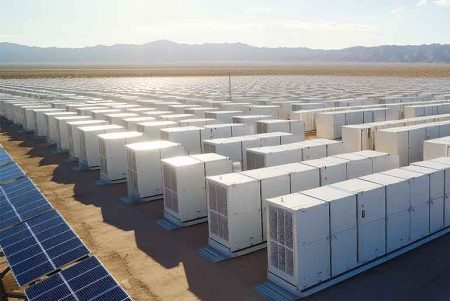
Beyond hydrogen technologies, Advait Energy Transitions is expanding its activities across multiple clean energy sectors. The company currently has more than 200 MW of solar EPC projects under execution. In addition, Advait Greenergy is developing over 400 MWh of Battery Energy Storage System (BESS) projects.
The company is also setting up a 2.5 GWh BESS manufacturing facility, which is expected to be commissioned in 2026.
Leadership on the New Facility
Speaking at the launch of the electrolyser facility, Shalin Sheth, Director of Advait Greenergy Pvt. Ltd., said:
“Gujarat has always led where India needed to go first. From textiles to petrochemicals to renewables, this state has never waited for the future it has built it. When we chose Mehsana for our electrolyser facility, we were not simply selecting a location. We were placing our confidence in a manufacturing ecosystem that has proven, time and again, that it can deliver at scale. Advait is proud to be part of that legacy.”
Vatsal Kundalia, Managing Director of Advait Greenergy Pvt. Ltd., added:
“Prime Minister Modi’s vision for India as a global manufacturing leader finds some of its strongest expression right here in Gujarat. The state’s industrial depth, its policy clarity, and its ambition are precisely what a technology like electrolyser manufacturing requires to move from promise to production. Advait’s facility in Mehsana is our contribution to that vision and we believe Gujarat will be to green hydrogen what it has already become to solar energy: the state that showed India how it is done.”
With this new facility, Advait Greenergy aims to play a larger role in India’s emerging green hydrogen ecosystem, while supporting the country’s long-term clean energy transition.
 Electrify your feed! Click here to join our Whatsapp group and to get the latest updates, expert insights, and innovations driving India’s energy storage revolution.