The Union Cabinet’s approval of the National Green Hydrogen Mission (NGHM) has set a nationwide policy scaffold—and Andhra Pradesh is already racing to become India’s flagship Green Hydrogen Valley. The cabinet decision gives the mission teeth and funding intent; Andhra Pradesh’s mix of ports, renewables, industry anchors, and project-level activity make it a clear frontrunner. This ambitious plan aligns with NGHM’s goal of making India a world leader in green hydrogen production, usage, and export.
1) Cabinet Clearance & Whole-of-Government Push—The Backdrop
In early December, the Union Cabinet approved the NGHM, tasking ministries across the center—including MNRE, Power, Petroleum & Natural Gas, Ports, Commerce, Railways, Steel, Finance, and others—with specific roles to fast-track production, demand creation, and export of green hydrogen and derivatives. The mission uses a whole-of-government approach, combining fiscal incentives, VGF-style support, and hub recognition to attract large investments. This national policy push is the immediate catalyst for state-level hub initiatives.
2) Why Andhra Pradesh? Strategic Rationale
Andhra Pradesh has been strategically chosen as the nation’s flagship green hydrogen hub due to:
Coastal advantage—proximity to key ports for seamless export and industrial integration. Its long coastline and shipping lanes make it a natural export node for hydrogen derivatives (green ammonia, methanol, and SAF), with planned bunkering infrastructure shortening the supply chain.
Renewable energy potential—Abundant solar and wind resources, along with strong transmission corridors, support low-cost renewable electricity for green hydrogen production, reducing input-cost risk for electrolysis projects.
Industrial ecosystem—Existing chemical, fertilizer, and industrial clusters provide early domestic offtake opportunities, lowering project developer risk during the build-up phase.
Government support— State orders and a roadmap to transform Andhra Pradesh into India’s largest green hydrogen hub demonstrate political resolve, shorten permitting timelines, and attract investors.
NTPC Pudimadaka Hub—Endorsed as a major pilot project, NTPC/NTPC Green Energy has issued procurement notices (132 kV GIS substation bids), showing project-level activity and infrastructure planning underway. Large central PSUs and private developers participating on the ground materially de-risk the hub.
3) Evidence: What’s Already Moving on the Ground
• NTPC Green has issued procurement notices for the Pudimadaka Green Hydrogen Hub, a critical step before electrolyzers and electrochemical plants can be installed.
• MNRE recognition of Deendayal (Kandla), V. O. Chidambaranar (Tuticorin), and Paradip ports as green hydrogen hubs underscores government intent to build a port-to-hub network and standardize logistics and maritime bunkering. Andhra’s ports and coastal nodes are similarly privileged.
• State targets: Andhra has declared timelines for electrolyzer manufacturing capacity scaling and production milestones as part of the Green Hydrogen Valley roadmap (2027–2030). These targets aim to attract domestic manufacturing players and supply chain investments.
4) The Enablers—What Makes Andhra Scalable and Investable
Grid & transmission investment—Early NTPC/state substation tenders show the state prioritizes robust power evacuation and dedicated infrastructure.
Co-location with ports and industrial clusters reduces hydrogen handling and transport costs for export and derivative production (ammonia, methanol, SAF).
State policy & fast permits—Public orders and a declared roadmap reduce policy risk and speed up land and clearance timelines.
Public-sector anchor projects—NTPC and other PSUs provide credibility, long-term offtake, and financing pathways.
Electrolyzer manufacturing targets—Andhra’s push to host manufacturing and supply chains makes the hub vertically integrated rather than purely production-oriented.
5) Commercial & Policy Supports from NGHM to Lower LCOH (Levelized Cost of Hydrogen)
• VGF and fiscal frameworks under NGHM aim to reduce initial capex and support greenfield manufacturing of electrolyzers and downstream facilities.
• Coordinated incentives across ministries—from power supply rules to ports & shipping policy—help attract investments.
• Port recognition & bunkering support create supply chain economies of scale for derivatives (green ammonia/methanol) and eventual maritime fuel demand.
6) Recent Developments Under NGHM
Pilot projects approved for 37 hydrogen-fueled vehicles and 9 refueling stations across 10 routes in India.
Shipping sector initiatives—V. O. Chidambaranar Port developing green methanol bunkering and refueling facilities.
Recognition of major ports—Deendayal (Kandla), V. O. Chidambaranar (Tuticorin), and Paradip—as green hydrogen hubs.
Infrastructure support—Guidelines for storage, transport, and pipelines for hydrogen and its derivatives.
7) Impact and Opportunities
Adoption of green hydrogen in transport, steel, chemicals, and shipping industries.
Creation of high-skill jobs and attraction of domestic and foreign investments.
Development of cutting-edge hydrogen technologies and clean energy solutions.
8) Risks & Bottlenecks to Watch
Water availability—Electrolysis at a large scale requires significant quality water; plans must balance freshwater needs, desalination options, and environmental approvals.
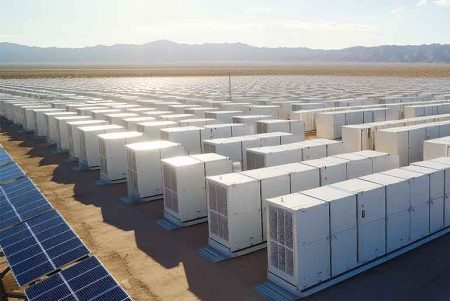
Grid balancing & additional storage—Large electrolyzer clusters may require co-located BESS/pumped storage to firm supply during low renewable output.
Capex & supply chain constraints—Electrolyzer manufacturing, catalyst & stack supply, and skilled labor availability remain global and domestic challenges.
Financing & price competitiveness—Reducing LCOH to globally competitive levels requires continued policy support, long-term offtake/export contracts, and international partnerships.
By 2030, Andhra Pradesh is set to redefine India’s energy landscape, showcasing a replicable model for sustainable industrial growth. With its strategic location, renewable energy capacity, industrial base, and robust government backing, the state is primed to lead India’s green hydrogen journey globally.
 Electrify your feed! Click here to join our Whatsapp group and to get the latest updates, expert insights, and innovations driving India’s energy storage revolution.