Chinese automaker Beijing Automotive Group (BAIC Group) has announced significant progress in sodium-ion battery development, marking a key step toward next-generation electric vehicle (EV) technology. The company confirmed that its research division has successfully developed a prototype sodium-ion battery and validated a mass-production process for prismatic cells.
Performance and Technical Breakthroughs
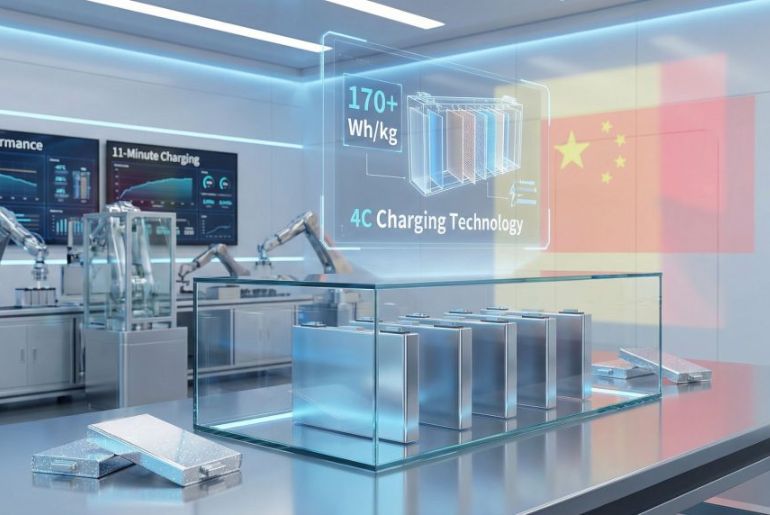
The sodium-ion battery features an energy density exceeding 170 Wh/kg, placing it among the leading systems in the segment. It supports 4C ultra-fast charging, enabling a full recharge in approximately 11 minutes under testing conditions. The battery is designed to operate efficiently across a wide temperature range from -40°C to 60°C, with over 92% energy retention at -20°C, highlighting improved performance in extreme climates.
BAIC said that the battery can give a CLTC range of up to 450 km, which makes it competitive in the EV market in terms of driving range. Safety testing has also been a focus, with reports saying that the battery can handle 200% overcharge conditions without catching fire or exploding and stays stable at temperatures up to 200°C.
Aurora Battery Programme and Industry Context
The sodium-ion battery is part of BAIC’s “Aurora Battery” programme, which also includes lithium-ion and solid-state technologies. The company has filed 20 patents related to sodium-ion systems, covering materials, cell design, manufacturing processes, and testing methodologies.
Automakers in China are speeding up the development of sodium-ion batteries as a cheaper alternative to lithium-based batteries. This is because there are more raw materials available and they work better in cold weather, even though they don’t store as much energy as lithium iron phosphate (LFP) batteries.
Industry Momentum
The development comes after other players have made progress. In February 2026, CATL and Changan Automobile showed off what they called the first mass-produced sodium-ion electric vehicle (EV). It had a 45 kWh battery that could go more than 400 km on a single charge, and they hoped that range would grow to 500–600 km in the next few years.
Global sodium-ion battery shipments reached 9 GWh last year, reflecting 150% growth, and are projected to exceed 1,000 GWh over the next four years.
BAIC hasn’t said when the technology will be available for commercial use yet. It’s still in the pre-commercial stage, waiting for more testing and integration.
 Electrify your feed! Click here to join our Whatsapp group and to get the latest updates, expert insights, and innovations driving India’s energy storage revolution.