For many years, lithium-ion batteries have powered almost everything around us — phones, laptops, electric vehicles, and energy storage systems. They became so common that most people stopped questioning how they work or whether something better could exist.
But across laboratories, pilot plants, and research centres around the world, scientists and engineers are now asking a different question: What comes after lithium-ion?
The global battery industry has reached a turning point. Demand is rising faster than ever, safety expectations are increasing, and raw material pressures are becoming impossible to ignore. As a result, battery research today is no longer just about improving range or charging speed. It is about rebuilding the battery from the inside out.
This article looks at the most important battery research trends happening globally — not hype, not promises, but real engineering work that is shaping the next decade of energy storage.
Why the world is rethinking lithium-ion batteries
Lithium-ion batteries are reliable, but they have clear limits.
They rely on materials like lithium, cobalt, and nickel, which are expensive, unevenly distributed across countries, and environmentally challenging to mine. Safety remains a concern, especially when batteries are damaged, poorly manufactured, or overheated. Recycling is improving, but still not widespread enough to support the scale of future demand.
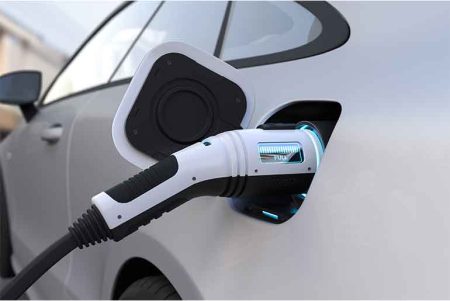
At the same time, battery demand is exploding — not just from electric vehicles, but also from renewable energy storage, data centres, defence systems, and industrial backup power.
This combination of pressure and opportunity is pushing researchers to explore new chemistries, new materials, and new battery designs.
Solid-state batteries: moving closer to reality
One of the most talked-about research areas today is solid-state batteries.
Unlike conventional lithium-ion batteries, which use liquid electrolytes, solid-state batteries replace the liquid with a solid material. This simple change brings major advantages. Solid electrolytes are far less flammable, which improves safety. They also allow the use of lithium metal anodes, which can significantly increase energy density.
For years, solid-state batteries existed mostly in research papers. That is changing.
Across Europe, Japan, South Korea, and the United States, pilot production lines are now being tested. Automotive companies are working directly with battery developers to integrate solid-state cells into future vehicle platforms.
However, challenges remain. Solid electrolytes must maintain good contact between layers. Manufacturing at scale is still complex. Costs are high, and long-term durability is still being proven.
Even so, solid-state batteries are no longer just a laboratory concept. They are slowly entering the industrial phase.
Sodium-ion batteries: a practical alternative gains momentum
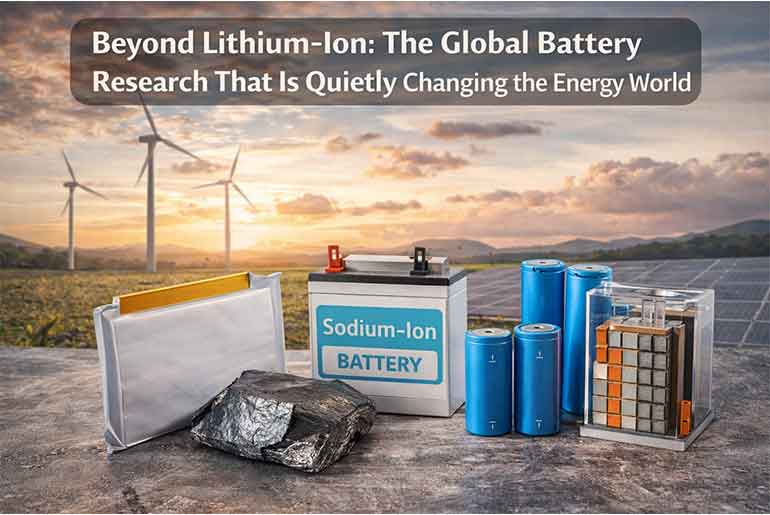
While solid-state batteries focus on high performance, sodium-ion batteries focus on practicality.
Sodium is far more abundant than lithium. It is easier to source, cheaper, and available in many regions. This makes sodium-ion technology especially attractive for stationary energy storage and lower-cost electric mobility.
In recent years, research has improved sodium-ion cathode materials, cycle life, and temperature stability. Several manufacturers have already announced commercial sodium-ion cells for grid storage and two-wheelers.
Sodium-ion batteries do not yet match lithium-ion in energy density. But for applications where size and weight are less critical, their advantages in cost and supply security are significant.
Globally, sodium-ion research reflects a broader shift: not every battery needs to be the most powerful — many just need to be reliable, affordable, and scalable.
Silicon anodes: improving what already exists
Another major area of research focuses on improving lithium-ion batteries rather than replacing them entirely.
One of the biggest limitations in lithium-ion cells is the graphite anode. Silicon can store far more lithium than graphite, which means higher energy density and faster charging.
Researchers around the world are working on silicon-based anodes, especially silicon-graphite composites. These materials reduce the cracking and swelling issues that pure silicon faces during charging cycles.
Several companies have already introduced silicon-enhanced anodes in commercial batteries, particularly for fast-charging applications. While these batteries still use lithium-ion chemistry, they demonstrate how materials engineering can unlock meaningful performance gains without changing the entire system.
This research path is especially attractive for manufacturers because it fits into existing production lines with minimal disruption.
Structural batteries: when energy storage becomes part of the structure
One of the most interesting research ideas emerging globally is the concept of structural batteries.
In simple terms, structural batteries store energy while also acting as part of the physical structure. Instead of placing batteries inside a vehicle or device, the battery itself becomes load-bearing.
This research is especially active in aerospace and advanced mobility sectors. If successful, structural batteries could significantly reduce weight, improve efficiency, and change how vehicles and aircraft are designed.
The technology is still in early research stages. Mechanical strength, energy density, and safety must all be balanced carefully. But the idea shows how battery research is expanding beyond chemistry into materials science and mechanical engineering.
Battery recycling and circular supply chains
As battery production increases, so does attention on end-of-life management.
Globally, research is accelerating in battery recycling technologies. New processes aim to recover lithium, cobalt, nickel, and other materials more efficiently and with lower environmental impact.
Governments are also introducing regulations that require manufacturers to plan for recycling and material recovery. This is changing how batteries are designed, encouraging easier disassembly and material separation.
Battery research today is not only about making better batteries — it is also about making batteries that fit into a circular economy.
Energy storage beyond electric vehicles
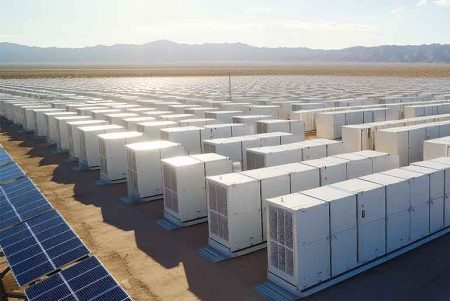
Another major shift in global battery research is the growing importance of grid-scale energy storage.
As renewable energy expands, power grids need batteries that can store electricity for hours or even days. This has opened the door for alternative chemistries where energy density is less critical than lifespan, cost, and safety.
Research in this area includes sodium-ion, iron-based batteries, flow batteries, and hybrid storage systems. These technologies may never power cars, but they could play a crucial role in stabilising future energy systems.
What this global research shift really means
Taken together, these research directions reveal something important.
There is no single “next battery” that will replace everything else. Instead, the future of batteries will be diverse, with different chemistries serving different needs.
High-performance vehicles may use solid-state batteries. Grid storage may rely on sodium-ion or alternative chemistries. Consumer electronics may benefit from silicon-enhanced lithium-ion cells. Aerospace applications may explore structural batteries.
The battery industry is moving away from one-size-fits-all thinking.
Battery research today is quieter than the headlines suggest, but far more meaningful.
Across the world, engineers are solving small, difficult problems — material stability, interface contact, thermal control, recyclability. These solutions may not go viral, but they will determine how energy is stored, moved, and used in the coming decades.
The next battery revolution will not arrive overnight. It will arrive cell by cell, layer by layer, built through careful research and patient engineering.
And when it does, it will change far more than just electric vehicles — it will reshape how the world powers itself.
 Electrify your feed! Click here to join our Whatsapp group and to get the latest updates, expert insights, and innovations driving India’s energy storage revolution.