The beginning of 2026 India’s power sector is undergoing a tremendous transformation with renewable energy on the rise now at 250+ GW installed capacity, but grid instability and intermittency demand is becoming critical for the grid. Integrated solutions with battery storage are essential for the resilient grid and also to manage quality power for end consumers. Building such infrastructure is crucial amid growing peak demands and climate vulnerabilities.
Current Growing Renewable Landscape
India achieved 253.96 GW of renewable capacity by early 2026, comprising about 45% of total power capacity, led by solar over 90 GW and wind exceeding 45 GW. In 2025 alone, the country added around 50 GW with ₹2 lakh crore investments, targeting sustained growth toward 500 GW by 2030. States like Rajasthan, Gujarat, and Tamil Nadu drive this expansion through large solar parks and hybrid projects.
Grid Challenges
Rapid renewable growth outpaces grid upgrades, causing congestion, curtailment of 50+ GW in some regions, and low inertia from variable solar-wind output. RE-rich states face reverse flows, transmission delays, and high integration costs without adequate flexibility. Climate events like cyclones exacerbate outages, as seen in Odisha, Andhra Pradesh where hardening efforts reduced downtime but gaps persist.
Role of Battery Storage in the Grid Ecosystem
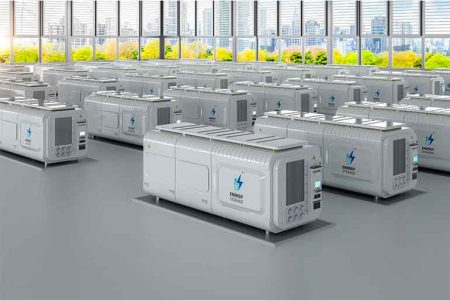
Battery Energy Storage Systems (BESS) address intermittency by storing surplus daytime solar for evening peaks, stabilizing grids, and enabling ancillary services. With current BESS installed capacity of 800 MWh with 100+ GWh BESS capacity is in tendering, installation stage. Government’s support through Viability Gap Funding (VGF) for 13-30 GWh targeting 2030-31 with up to 40% capital support (₹3,760 crore outlay) will accelerate the market growth.
Role of Battery Storage in Commercial & Industrial Sector
Battery storage plays a pivotal role in India’s Commercial & Industrial (C&I) sector by enabling cost savings, reliability, and renewable integration amid rising energy demands. With C&I consuming ~50% of power, BESS adoption surges for peak management and backups.
- Peak Shaving and Cost Optimization: BESS stores low-cost off-peak or solar power for high-tariff evening use, slashing demand charges by 20-40% for factories and warehouses. Time-of-day arbitrage and tariff optimization yield 15-25% bill reductions, vital for energy-intensive manufacturing.
- Backup and Reliability: Provides seamless power during outages, replacing diesel gensets for hospitals, data centers, and cold storage—ensuring zero production loss in <1 MW setups. Hyperscalers use BESS for post-sunset solar dispatch, meeting 24/7 uptime amid grid volatility.
- Renewable Integration: Pairs rooftop solar with storage to meet Renewable Purchase Obligations (RPOs), reducing fossil fuel reliance in mining/construction. Enables EV charging and microgrids for commercial buildings.
- Equipment Protection: Fluctuating voltage and unstable grids can harm electronics and machines. Storage system stabilize power. Machines can last longer and maintenance costs also goes down
- Power Quality Services: Improves voltage/frequency stability, frequency regulation, and load shifting—critical for data centers facing hyperscale growth.
| Sector | Key Benefits | Examples |
| Manufacturing/Factories | Peak shaving, backup | Production continuity |
| Data Centers/Hospitals | Uninterrupted ops | Diesel reduction |
| Warehouses/Cold Storage | Temp control | Night/cloudy ops |
| Mining/Construction | Fuel savings, RPOs | Renewable shift |
Uninterruptible Power Supplies (UPS) provide instant backup via batteries and bridging seconds-to-minutes gaps during outages for critical loads like data centres, hospitals and batch manufacturing industries. Modular designs scale for industrial use, ensuring no downtime in volatile grids. IPower Batteries already installed 10 MW+ such systems in commercials and industrial establishments like health centres, school, shops, offices, commercial building, hotels and others across India. It’s modular, robust and safe design, remote monitoring feature helped the end customers.
Integration Strategies
Hybrid setups pair renewables with BESS for firm dispatchable power, using UPS for micro-level protection—e.g., solar + BESS discharging to UPS during grid failure. Microgrids in Odisha combine solar, storage, and UPS for cyclone resilience, restoring power in 48 hours post-storms. VGF waivers on transmission charges till 2028 boost RE-BESS pairing, while states like Andhra Pradesh and Rajasthan mandate storage obligations.
| Component | Function | Indian Example |
| Solar/Wind | Primary Generation | solar parks |
| BESS | Energy Shifting & Stability | 100 MWh Rajasthan merchant |
| UPS | Instant Bridging | Data centres with solar-UPS hybrids |
| Grid Interface | Synchronization | Delhi 20 MW substation BESS |
Ipower Batteries is already offering a range of state-of-the-art batteries in BESS and UPS batteries which are compliant with best practices and norms.
The Road Ahead
By 2030, BESS market could reach 300+ GWh via the support of VGF and PLI schemes, complementing pumped hydro for 24/7 RE power. Challenges like battery recycling, dumping and import dependence persist which need policy clarity. Resilient infrastructure will secure India’s net-zero path, prioritizing domestic manufacturing and digital grids.
 Electrify your feed! Click here to join our Whatsapp group and to get the latest updates, expert insights, and innovations driving India’s energy storage revolution.