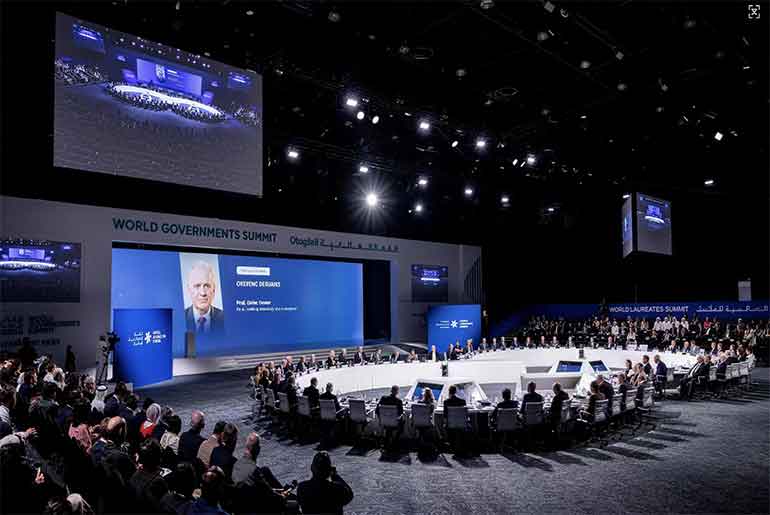
On February 3, Dr. Robin Zeng, Chairman and CEO of CATL, delivered a wide-ranging keynote address at the World Laureates Summit (WLS), standing alongside Nobel Prize–winning physicist Steven Chu. His address focused on one central message: the global energy system is undergoing an irreversible transformation, and zero-carbon technologies are now ready to move from promise to large-scale delivery.
Dr. Zeng explained that the transition to sustainable energy is no longer driven only by environmental goals. It is now powered by economics, industrial scale, and system reliability. Over the past decade, the cost of lithium iron phosphate (LFP) batteries and solar power has fallen by nearly 80%, according to international energy agencies. These cost reductions, he said, have turned clean energy into a practical and competitive option across industries, grids, and regions.
Clean energy is now cheaper than diesel in real projects
To illustrate this shift, Dr. Zeng shared examples from CATL’s projects across the world. In the Democratic Republic of Congo, CATL-supported solar-plus-storage systems are supplying power to remote mining sites at around USD 0.07 per kWh, compared with approximately USD 0.30 per kWh using diesel generators. This change not only lowers costs but also reduces emissions and dependence on fuel logistics in difficult terrain.
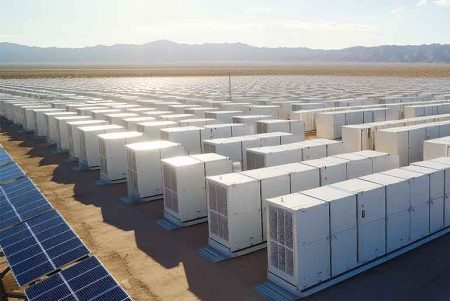
In Chile, CATL is supporting the Oasis de Atacama project, one of the world’s largest renewable-powered industrial energy systems. The project combines 2 GW of solar capacity with 11 GWh of energy storage, backed by an investment of USD 2.3 billion. CATL is supplying 1.25 GWh of battery storage using its EnerX containerised systems, designed to operate at altitudes of up to 4,000 metres. The system enables clean electricity to be delivered at roughly one-fifth the cost of diesel, while capturing more renewable energy in a compact and safe footprint. Across similar South American mining projects, renewable-based power systems have reduced combined capital and operating costs by more than 30%, with operating costs alone falling by 50%.
Industrial energy and grid-scale storage
Dr. Zeng also highlighted CATL’s role in powering heavy industry. In Pakistan, distributed solar combined with CATL’s energy storage solutions is supplying reliable electricity to cement plants, cutting power costs by around 50%. The project includes a 20.7 MW / 22.7 MWh battery system, the largest industrial storage deployment in the country. The storage system absorbs solar variability, provides spinning reserve, and allows fossil-fuel generators to be shut down during daylight hours.
At the grid level, he pointed to California, where large-scale energy storage has helped manage the well-known “duck curve.” In 2025, the CAISO grid recorded more than 1,800 hours when clean energy met or exceeded total electricity demand, demonstrating how storage is becoming central to grid stability.
Future energy systems: distributed, intelligent and circular
According to Dr. Zeng, future energy systems will have three defining features: distributed, intelligent, and circular.
On the distributed side, he said that as solar, wind, and batteries scale up, many regions—especially those with weak grid infrastructure—will move away from centralised fossil-fuel systems. Distributed renewables combined with storage will become the dominant way to deliver reliable zero-carbon electricity.
To address stability challenges from high renewable penetration, CATL has developed high-voltage grid-forming energy storage technology. This technology provides frequency regulation, reactive power support, damping control, inertia support, and even black-start capability after large-scale outages. It has already been validated at engineering scale and is now being used to build China’s first fully green-powered zero-carbon industrial park. The park directly supplies a 40 GWh battery manufacturing facility using wind and solar power, without relying on the public grid. Each battery produced carries a traceable “green power ID,” confirming it was manufactured using renewable electricity.
On intelligence, Dr. Zeng stressed that renewable-heavy systems must continuously balance variable supply and demand. Artificial intelligence will be essential for real-time scheduling and optimisation. CATL is already applying AI across battery materials research, system design, and grid management. One example is its support for SenseTime’s AI data centre in Shanghai, where a 17.888 MW / 35.776 MWh storage system has reduced power usage effectiveness to 1.267, saved over 10 million kWh annually, and avoided about 3,000 tonnes of CO₂ emissions.
Circular energy and battery recycling
Dr. Zeng emphasised that circularity is a key advantage of zero-carbon energy systems. Unlike fossil fuels, battery materials can be recovered and reused. CATL has achieved industry-leading recycling rates, recovering 99.6% of nickel and cobalt and 96.5% of lithium. In 2024 alone, the company processed more than 120,000 tonnes of end-of-life batteries, producing 17,100 tonnes of regenerated lithium salts.
Through its subsidiary BRUNP, CATL has played a major role in shaping battery recycling standards in China, contributing to hundreds of industry and national standards. Globally, CATL works with partners such as the Ellen MacArthur Foundation, promoting circular economy practices and reducing reliance on primary mineral extraction.
2030 as the turning point
Looking ahead, Dr. Zeng stated that 2030 will mark the true beginning of the sustainable energy era. While recent advances are significant, today’s technologies still address less than 30% of what is required for a fully zero-carbon energy system. Bridging this gap will require continued innovation in materials science, artificial intelligence, and large-scale manufacturing.
CATL is investing heavily to meet this challenge, with more than RMB 80 billion invested in research and development over the past decade and nearly 50,000 patents owned or pending. Dr. Zeng concluded that science defines what is possible, but engineering determines how fast the world can move—and CATL aims to accelerate that journey through global cooperation and industrial scale.
 Electrify your feed! Click here to join our Whatsapp group and to get the latest updates, expert insights, and innovations driving India’s energy storage revolution.