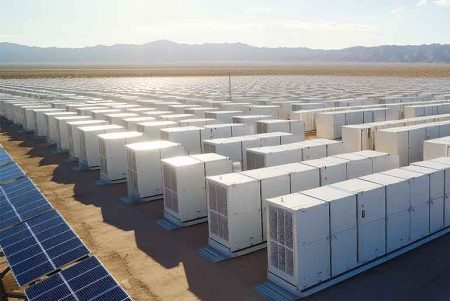
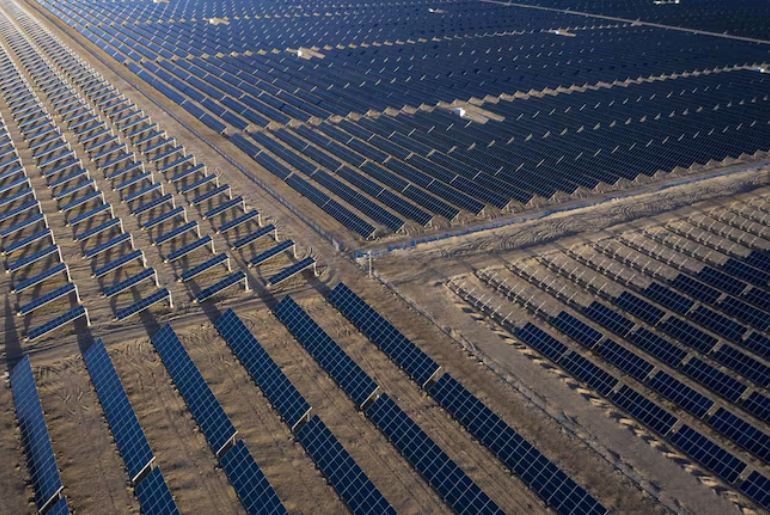
The Central Electricity Regulatory Commission (CERC) has approved the adoption of tariffs for 1,200 MW solar power projects integrated with 600 MW/2,400 MWh Energy Storage Systems (ESS). These projects, which can be developed anywhere in India, were awarded through a competitive bidding process conducted by SJVN Limited, acting as the intermediary procurer.
Strong Market Response and Competitive Tariffs
There was a lot of interest in the tender, with 19 bidders submitting proposals for a total of 4,880 MW, which is more than four times the offered capacity. After a technical review, an e-reverse auction in May 2025 chose six developers. The discovered tariffs ranged from ₹3.32 to ₹3.33 per kWh, which shows that prices are competitive even with storage systems.
Project Allocation Details
- Reliance NU Energies Pvt. Ltd.: 350 MW at ₹3.33/kWh
- Jindal India Renewables Energy Ltd.: 300 MW at ₹3.32/kWh
- SAEL Industries Limited: 150 MW at ₹3.32/kWh
- Sembcorp Green Infra Pvt. Ltd.: 150 MW at ₹3.32/kWh
- JBM Renewables Pvt. Ltd.: 150 MW at ₹3.32/kWh
- Fastnote Biofuels Pvt. Ltd.: 100 MW at ₹3.33/kWh
The allocation highlights balanced participation from both established and emerging renewable energy players.
Tariff Benchmarking and Regulatory Compliance
SJVN said that the tariffs are competitive with other bids that are similar. A tender from the Solar Energy Corporation of India (SECI) in late 2024 found tariffs of ₹3.52–₹3.53/kWh for projects with four-hour storage. A tender from the National Hydroelectric Power Corporation (NHPC) in January 2025 found lower tariffs of ₹3.09–₹3.10/kWh for projects with two-hour storage. The longer storage time in SJVN’s projects adds to the costs, which is why the discovered tariffs are reasonable.
CERC stated that the bidding process was transparent and aligned with the Ministry of Power’s 2023 guidelines, which aim to ensure firm and dispatchable renewable energy supply to DISCOMs.
Trading Margin and Implementation Structure
The Commission also agreed to a trading margin of ₹0.07 per kWh for SJVN, as long as they keep up with the payment security measures they have in place, like letters of credit or escrow accounts. Without these kinds of steps, the margin will be limited to ₹0.02 per kWh. SJVN will buy power from developers and then sell it to DISCOMs through Power Sale Agreements.
The decision is expected to strengthen India’s renewable energy transition by promoting solar-plus-storage solutions, ensuring reliable and clean power supply across the country.
 Electrify your feed! Click here to join our Whatsapp group and to get the latest updates, expert insights, and innovations driving India’s energy storage revolution.