
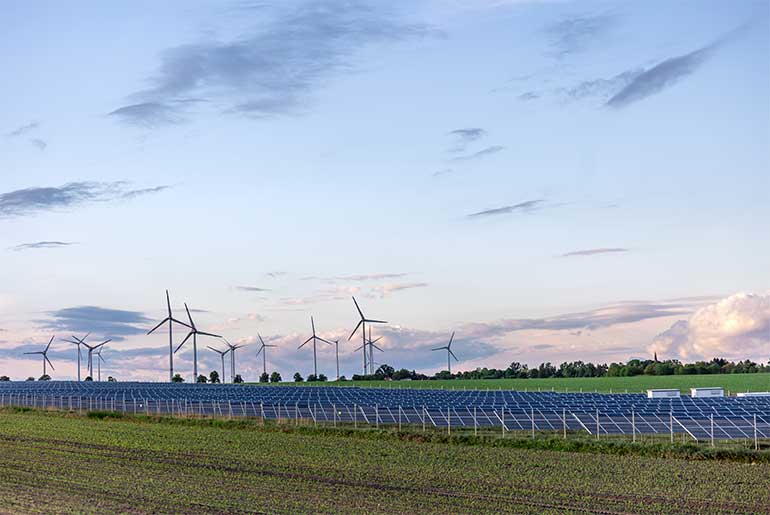
China has unveiled its renewable energy development blueprint for the 15th Five-Year Plan period (2026-2030), setting a target of around 3.5 TW of total installed renewable power generation capacity by 2030. The plan, jointly released by the National Development and Reform Commission and the National Energy Administration (NEA), focuses on scaling up renewable energy while improving system reliability and enabling greater substitution of conventional power sources.
Under the new roadmap, China expects renewable energy consumption to reach approximately 1.8 billion tonnes of standard coal equivalent by 2030, while annual renewable power generation is projected to reach about 6 trillion kWh. Wind and solar will remain the primary drivers of growth, with combined installed capacity expected to exceed 2.8 TW and annual electricity generation surpassing 4 trillion kWh.
The plan also places a strong focus on integrating renewable energy into the power system. China aims to add more than 300 GW of new dependable peak power capacity from renewable sources during the five-year period. In addition, around 160 GW of pumped storage capacity is expected to be installed by 2030, highlighting the country’s growing emphasis on energy storage and grid flexibility to manage the intermittency of large-scale wind and solar generation.
Offshore wind is another key area of expansion, with newly commenced projects expected to total around 100 GW nationwide. Meanwhile, conventional hydropower capacity is projected to reach approximately 410 GW by 2030, with future development to be balanced against ecological protection, flood control, water supply, irrigation and navigation requirements.
China has also outlined targets for emerging renewable technologies, including 15 GW of solar thermal power capacity and around 400 MW of marine energy capacity. The plan further aims to expand non-electricity applications of renewable energy, including renewable-powered heating and industrial uses, which are expected to grow 2.5 times from 2025 levels to approximately 150 million tonnes of standard coal equivalent by 2030.
According to the plan, China’s energy mix is expected to undergo a significant structural shift by 2030, with non-fossil fuels accounting for around half of total energy consumption, renewable energy approaching half, and new energy sources representing about 30%.
The roadmap also highlights China’s role in the global energy transition, with the country planning to strengthen international cooperation in renewable energy and support the global adoption of green and low-carbon technologies.
For the battery and energy storage industry, the plan’s emphasis on dependable renewable power and pumped storage is particularly significant. With wind and solar capacity expected to reach more than 2.8 TW, the need for flexible generation, energy storage and grid-balancing technologies is likely to increase substantially. The targets indicate that China’s renewable energy strategy is moving beyond rapid capacity additions toward building a more reliable and integrated clean energy system.
 Electrify your feed! Click here to join our Whatsapp group and to get the latest updates, expert insights, and innovations driving India’s energy storage revolution.