As India accelerates toward its net-zero goals, Delta Electronics India stands at the forefront of enabling this transition with advanced power and energy storage solutions. The company’s commitment to “Make in India, Design for the World” is reflected in its expanding manufacturing footprint, modular BESS technology, and intelligent Energy Management Systems that are redefining how industries, utilities, and data centers manage power.
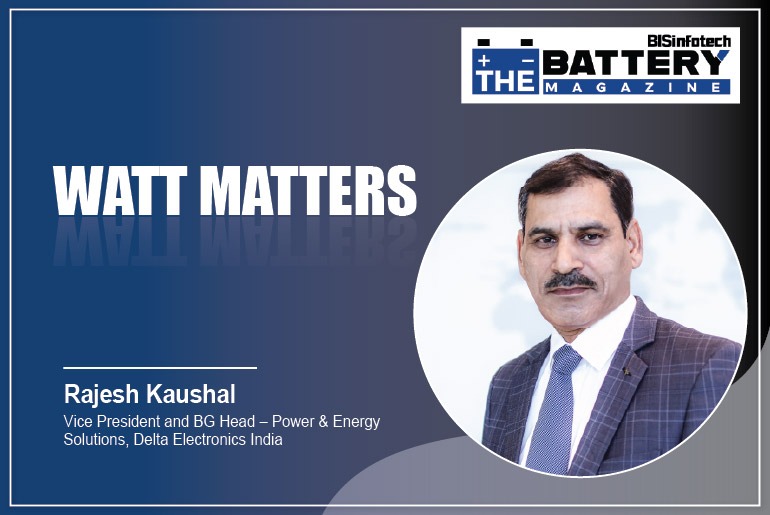
In an exclusive interaction, Shweta Kumari, Sub-Editor of The Battery Magazine, had the opportunity to engage in a thought-provoking discussion with Mr. Rajesh Kaushal, Vice President and BG Head – Power & Energy Solutions, Delta Electronics India. During the conversation, Mr. Kaushal highlighted Delta’s roadmap to deploy over 1 GWh of battery energy storage capacity in the coming years, its push toward 80% localization, and its innovation-driven approach to integrating predictive analytics, AI-driven O&M, and grid-interactive technologies.
He also shared insights on Delta’s collaborations with renewable developers, evolving commercial models like BaaS, and sustainable end-of-life strategies for batteries — all geared toward strengthening India’s clean energy ecosystem.
Let’s delve into the interview to explore how Delta is shaping the future of energy storage in India.
Delta is scaling manufacturing and ESS offerings in India — what are your concrete 3–5 year targets for BESS installed capacity (MW/MWh), revenue share, and the split between C&I, telco/data-center, EV and utility projects?
At Delta Electronics India, we view Energy Storage Systems (ESS) as a critical enabler of India’s clean-energy transition. Over the next 3–5 years, our goal is to deploy over 1 GWh of BESS capacity across segments: C&I (25%), Utility (50%), and Data Centres & Telecom (25%).
We expect our ESS business to contribute around 15% to Delta India’s overall Energy Infrastructure revenue by FY 2028–30. In the near term, our focus is on 250 MWh turnkey deployments for renewable integration and peak-shaving across industrial and utility sites, supported by local manufacturing and ecosystem partnerships.
Our Rudrapur and Krishnagiri campuses are being expanded to support this roadmap, reinforcing Delta’s philosophy of “Make in India, Design for the World.”
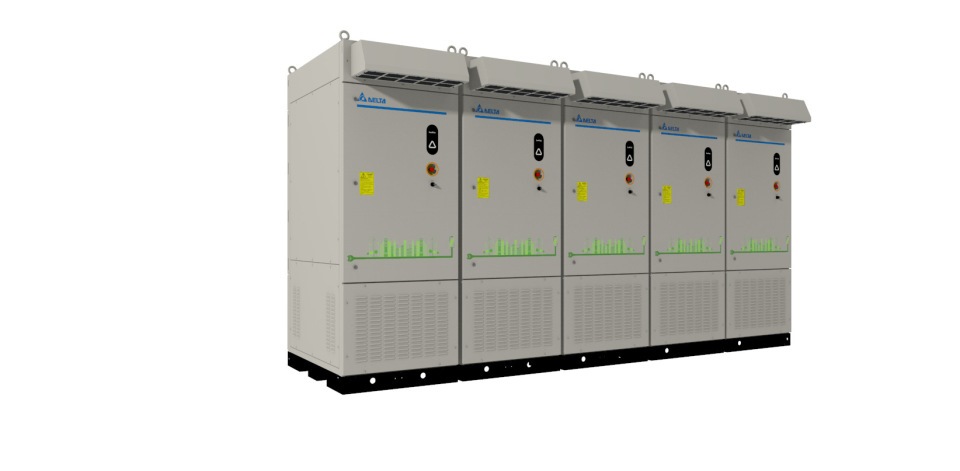
Delta’s BESS line is modular and uses LFP cells — beyond cell chemistry, what do you consider your unique IP: PCS efficiency, EMS algorithms, predictive O&M, grid-forming capability, or something else that competitors can’t easily copy?
Delta’s key differentiators are system intelligence and power-conversion efficiency. Our proprietary Energy Management System (EMS) serves as the brain of the solution—optimizing multi-source power (solar, grid, DG, and storage) through predictive analytics and AI-driven O&M to extend battery life.
Our PCS platform achieves >98.5% efficiency and features grid-forming and black-start capabilities, enabling true microgrid resilience. These algorithms are developed at Delta’s Bangalore R&D Center, drawing on decades of expertise in power conversion.
As an OEM of all critical components—PCS, EMS, and battery systems—Delta’s real IP lies in deep integration and control logic that enables seamless interplay between PCS ↔ EMS ↔ SCADA ↔ Cloud.
Your PCS/EMS claims to integrate widely — do you aim to stay vendor-agnostic (enable 3rd-party cells) or vertically integrate cells → pack → system? How does that choice affect speed-to-market in India?
India’s energy transition demands flexibility. Our approach is vendor-agnostic yet integration-ready. Delta remains cell-agnostic, allowing customers to choose Tier-1 cell suppliers while we provide the integration layer—pack design, thermal management, PCS controls, and EMS.
At the same time, we are investing in localized pack assembly lines and co-development programs with select cell manufacturers to ensure performance, safety, and traceability without compromising speed-to-market.
Which commercial models will drive your BESS scale in India — CAPEX EPC, developer JV, battery-as-a-service (BaaS)/lease, or performance contracts? Do you see finance or ESCO partners as the gating factor?
Currently, the CAPEX EPC model dominates, but we foresee a rapid shift toward OPEX and performance-based structures. Battery-as-a-Service (BaaS) and leasing are emerging strongly in EV infrastructure and fleet depots.
Delta’s strength lies in delivering the complete value chain—from power-conversion systems and EMS to lifecycle service support. We are also exploring performance-based contracts with energy service companies and green-finance entities, enabling customers to pay based on guaranteed uptime and performance KPIs rather than asset purchase.
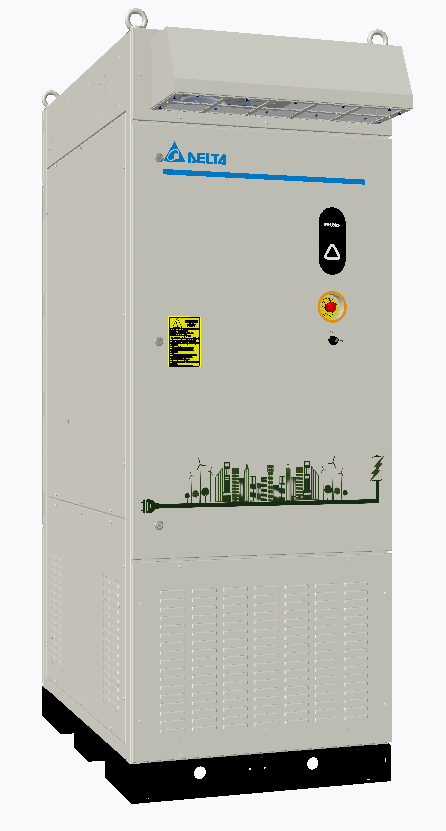
With capacity expansion in India, what localization percentage are you targeting for BESS (cells, PCS, cabinets, EMS HW) and what timelines/roadblocks do you foresee for domestic cell sourcing?
Delta India has already achieved over 70% localization in power-conversion and system-integration components. For BESS, our goal is to exceed 80% localization by FY 2027, covering PCS, cabinets, EMS hardware, and mechanical assemblies.
By FY 2026, we aim for more than 70% local value addition in BESS systems—including PCS, enclosures, control boards, EMS hardware, and thermal management modules. While cell manufacturing will continue to depend on global partners in the near term, we are closely tracking India’s PLI and ACC schemes to onboard domestic suppliers as cell-grade quality and supply stability mature.
How are you designing EMS/PCS to provide grid services (frequency response, VPP aggregation, black start, islanding) and what standards/SCADA/cybersecurity requirements have you prioritized for national/regional integration?
Delta’s PCS and EMS platforms are inherently grid-interactive, supporting frequency and voltage regulation, islanding, and black-start operations in compliance with IEEE 1547, IEC 61850, and CEA grid codes.
Our systems support Modbus TCP, IEC 61850, and DNP3 standards for seamless SCADA integration and are compliant with the CERT-In cybersecurity framework. Every design iteration includes cyber hardening, redundant gateways, and encrypted communication.
This ensures that whether deployed at a 33 kV industrial feeder or a 220 kV renewable park, Delta’s BESS remains both grid-interactive and secure—a prerequisite for India’s evolving distributed-energy ecosystem.
You recently signed strategic pacts (e.g., KP Group) — can you outline the pipeline (MW/MWh under discussion), the commercial model, and one or two early case studies you can share?
Our partnership with KP Group represents a significant milestone toward building integrated energy ecosystems in India. We have signed three MoUs covering battery energy storage, green hydrogen + EV charging, and solar inverters.
Under these agreements, Delta will provide power electronics, EMS, and system integration expertise, while KP Group will lead project development and site execution. The collaboration includes supplying about 1 GW of advanced solar inverters within a year and deploying scalable BESS and hydrogen-ready EV hubs across industrial and utility sites.
Together, we aim to build end-to-end renewable and storage infrastructure that supports India’s net-zero roadmap and strengthens local manufacturing.
What is your approach to battery end-of-life — second-life pathways, take-back or recycling agreements, and design-for-recycling features? How will regulatory shifts on battery disposal shape product design?
Sustainability is central to Delta’s design philosophy. All our BESS systems are designed for easy disassembly and cell traceability, ensuring transparent end-of-life management.
We are developing take-back and recycling partnerships with specialized recyclers to recover over 90% of materials such as copper, aluminum, lithium, and phosphate. In parallel, Delta’s R&D team is validating second-life applications for EV battery modules in stationary storage projects.
With the upcoming Battery Waste Management Rules and Extended Producer Responsibility (EPR) frameworks, we are integrating digital tracking and recycling codes into our EMS to ensure full lifecycle compliance.
 Electrify your feed! Click here to join our Whatsapp group and to get the latest updates, expert insights, and innovations driving India’s energy storage revolution.