Close Menu
The Battery MagazineThe Battery Magazine
  • Just In
  • Batteries
    • Battery Manufacturing (BESS)
    • Battery Materials & Chemistries
    • Battery Recycling
    • C&I Storage
  • Solar
  • Renewable energy
    • Wind Energy
    • Hydropower
    • Green Hydrogen
    • Bioenergy
  • Tenders
    • Energy Storage
    • Solar Energy
    • Wind Energy
  • Policy
    • Storage
    • Solar
    • Wind
    • EV
    • Transmission
  • EV
    • EV Batteries
    • EV Charging Infrastructure
    • Electric Mobility Trends
  • Grid
    • Transmission & Distribution
    • Grid Infrastructure
    • Power Generation
    • Power Equipments
  • Exclusive
    • Cover Story
    • Watt Matters
    • Perspective
    • Articles
  • More
    • E-Mag
    • Events
    • Contact Us
Facebook LinkedIn WhatsApp
The Battery MagazineThe Battery Magazine
  • Just In
  • Batteries
    • Battery Manufacturing (BESS)
    • Battery Materials & Chemistries
    • Battery Recycling
    • C&I Storage
  • Solar
  • Renewable energy
    • Wind Energy
    • Hydropower
    • Green Hydrogen
    • Bioenergy
  • Tenders
    • Energy Storage
    • Solar Energy
    • Wind Energy
  • Policy
    • Storage
    • Solar
    • Wind
    • EV
    • Transmission
  • EV
    • EV Batteries
    • EV Charging Infrastructure
    • Electric Mobility Trends
  • Grid
    • Transmission & Distribution
    • Grid Infrastructure
    • Power Generation
    • Power Equipments
  • Exclusive
    • Cover Story
    • Watt Matters
    • Perspective
    • Articles
  • More
    • E-Mag
    • Events
    • Contact Us
LinkedIn Facebook WhatsApp YouTube
The Battery MagazineThe Battery Magazine
Home » Batteries » Battery Materials & Chemistries » Epsilon CAM unveils Gen III LFP Cathode battery material for global EV supply
Battery Materials & Chemistries

Epsilon CAM unveils Gen III LFP Cathode battery material for global EV supply

ManshiBy ManshiApril 29, 20263 Mins Read
Facebook Twitter LinkedIn WhatsApp
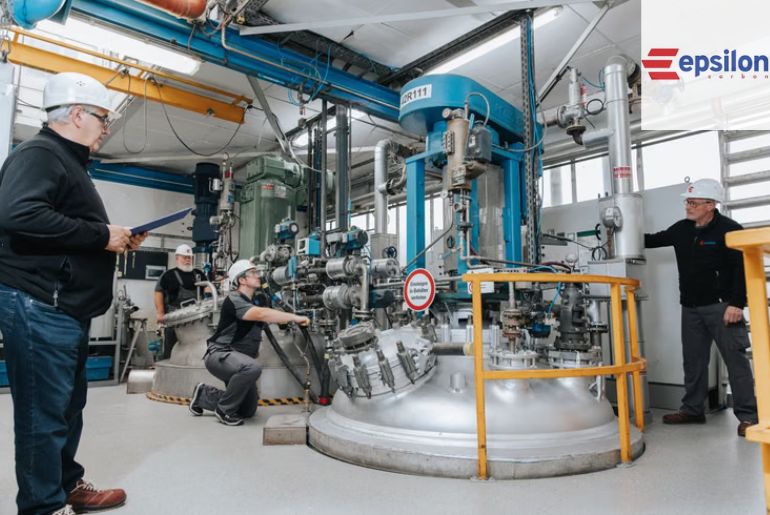
Epsilon CAM unveils Gen III LFP Cathode battery material for global EV supply

A company called Epsilon CAM has created a new, high-performance, Gen III LFP Cathode battery material. This allows electric vehicle (EV) batteries to hold more power (energy density) and last longer per charge. Most LFP technology comes from China, but this was developed by Epsilon’s R&D team in Germany and will be produced in India. It gives automakers outside China a reliable new source.

It enables denser packing in batteries (electrode density of ≥2.51 g/cc) higher energy output (discharge ≥159 mAh/g) and has twice the lifespan of previous versions. With such an innovation, there is going to be more power per cell available for manufacturers of electric vehicles across the world. The innovation came about due to 145+ patented research findings in materials science from Epsilon’s Cathode Technology Centre, Moosburg, Germany.

“This isn’t just incremental,” said Vikram Handa, Managing Director, Epsilon Group “With our Gen III LFP Cathode Material, we’ve engineered a formulation that gives EV makers genuine performance differentiation more energy per cell, denser electrode architecture, and the compliance pathway that matters most for the North American market: full PFE approval.”

The Commercial Implication

The Gen III LFP Cathode Material is engineered for commercial scale deployment. Epsilon is advancing commercial manufacturing at a planned capacity of 30,000 TPA in India. Critically, the Gen III LFP Cathode Material meets PFE (Prohibited Foreign Entity) compliance standards, positioning it for unrestricted entry into US battery manufacturing and automotive supply chains. In a market increasingly shaped by diversified mandates, this regulatory advantage is not a footnote, it’s a competitive moat. For battery cell manufacturers, Gen III LFP Cathode Material optimizes the energy density and discharge capacity, while delivering 2X cycle life for extended battery pack longevity and proven high-temperature performance. For EV OEMs, the performance gains translate directly to lower total cost of ownership, reduced warranty exposure, and batteries built for real-world deployment.

Why This Matters Now

Until now, OEMs seeking high-energy-density LFP at scale have had limited non-Chinese sourcing options — creating supply chain concentration risk and growing geopolitical exposure. Epsilon’s Gen-III LFP Cathode Material, backed by Moosburg R&D and India-based manufacturing, offers OEMs three simultaneous advantages: performance parity with Chinese alternatives, supply chain diversification, and regulatory compliance with North American frameworks. India is no longer just a cost-competitive manufacturing destination but a credible alternative to Chinese dominance in the global battery materials supply chain. With the Gen III LFP Cathode Material, Epsilon is staking its claim as a materials innovation destination. Epsilon’s Cathode Technology Centre in Moosburg will continue to serve as the global R&D and product development hub, housing the materials science team behind the 145+ patent portfolio and driving successive development cycles of the higher generation of LFP Cathode Material.

whatsapp icon Electrify your feed! Click here to join our Whatsapp group and to get the latest updates, expert insights, and innovations driving India’s energy storage revolution.
global news
Manshi
  • Website

I'm journalism graduate with professional experience working across different news websites. I have been involved in news reporting, content writing, and digital media coverage, which has helped me develop a strong understanding of current affairs and storytelling. Currently, I am working with Battery Magazine, where I continue to create accurate, engaging, and reader-focused news content.

Keep Reading

IIT Guwahati

IIT Guwahati Develops Perovskite Technology Achieving 25.73% Solar Cell Efficiency

India’s Clean Energy Sector

India’s Clean Energy Workforce Grows by 6.6 Lakh, Rooftop Solar Leads Job Creation

Advait Energy Secures 150 MW/300 MWh BESS Project from GUVNL

Advait Energy Secures 150 MW/300 MWh BESS Project from GUVNL

Leave A Reply Cancel Reply

sixteen − 3 =

Renewable energy
IIT Guwahati

IIT Guwahati Develops Perovskite Technology Achieving 25.73% Solar Cell Efficiency

June 4, 2026
India’s Clean Energy Sector

India’s Clean Energy Workforce Grows by 6.6 Lakh, Rooftop Solar Leads Job Creation

June 4, 2026
SJVN Flags

SJVN Flags Renewable Power Demand Gap Amid Rising Capacity Additions

June 4, 2026
Kyro Capital

Kyro Capital Launches ₹100 Crore Pre-IPO Fund Targeting Renewable Energy and Growth Sectors

June 3, 2026
Batteries
Advait Energy Secures 150 MW/300 MWh BESS Project from GUVNL

Advait Energy Secures 150 MW/300 MWh BESS Project from GUVNL

June 4, 2026
cylib and Vianode

cylib and Vianode Partner to Advance Recycled Graphite for EV Batteries

June 4, 2026
Trina Storage

Trina Storage Wins 160 MWh Ultra-High Voltage Battery Project in Japan’s Kyushu Region

June 3, 2026
Hoymiles Launches AI-Powered HiBattery 4020 Home Energy Storage Series

Hoymiles Launches AI-Powered HiBattery 4020 Home Energy Storage Series

June 3, 2026

Subscribe for Updates

Get the latest news about energy storage in your inbox.

    © 2026 Thebatterymagazine.com.
    • Home
    • About Us
    • Contact Us
    • Privacy Policy
    • Terms of Service

    Type above and press Enter to search. Press Esc to cancel.