India’s energy transition is moving into a systems-led phase, where the focus is shifting from capacity addition to grid reliability and efficiency. The rapid expansion of renewable energy, particularly solar and wind, has introduced a structural imbalance between when power is generated and when it is consumed, placing new demands on how electricity networks are designed and managed. As renewable penetration deepens, the challenge is no longer limited to generation capacity but extends to ensuring that energy can be stored, dispatched, and aligned with demand in real time. Within this evolving context, BESS are being integrated as a functional layer within the power ecosystem. Their role extends beyond storage to enabling time-shifting of energy, stabilising grid frequency, and improving the utilisation of renewable assets, capabilities that are becoming central to grid performance.
The Emergence of a Storage-Led Market
The growing relevance of storage is reflected in the pace at which the market is expanding. India’s BESS segment is projected to grow from USD 327.7 million in 2025 to USD 2.68 billion by 2034, indicating sustained demand across both large-scale and distributed applications. This growth trajectory is supported by a steady rise in project pipelines, with energy storage tendering reaching 102 GWh in 2025, with standalone BESS accounting for a significant share of this expansion.
This transition is also evident in project design. Storage is increasingly being integrated at the planning stage rather than being introduced as a corrective measure after generating assets are deployed. Such integration reflects a deeper recognition of storage as a foundational element within power systems, particularly in an environment where renewable variability needs to be actively managed rather than passively accommodated.
Convergence Across Mobility and Energy Systems
As storage gains prominence, the boundaries between sectors that were once considered distinct are beginning to blur. The technological foundations of electric mobility and stationary storage share significant common ground, particularly in lithium-ion chemistries, battery management systems, and thermal control mechanisms. This overlap has created a pathway for companies with experience in electric vehicle batteries to extend their capabilities into grid-scale applications.
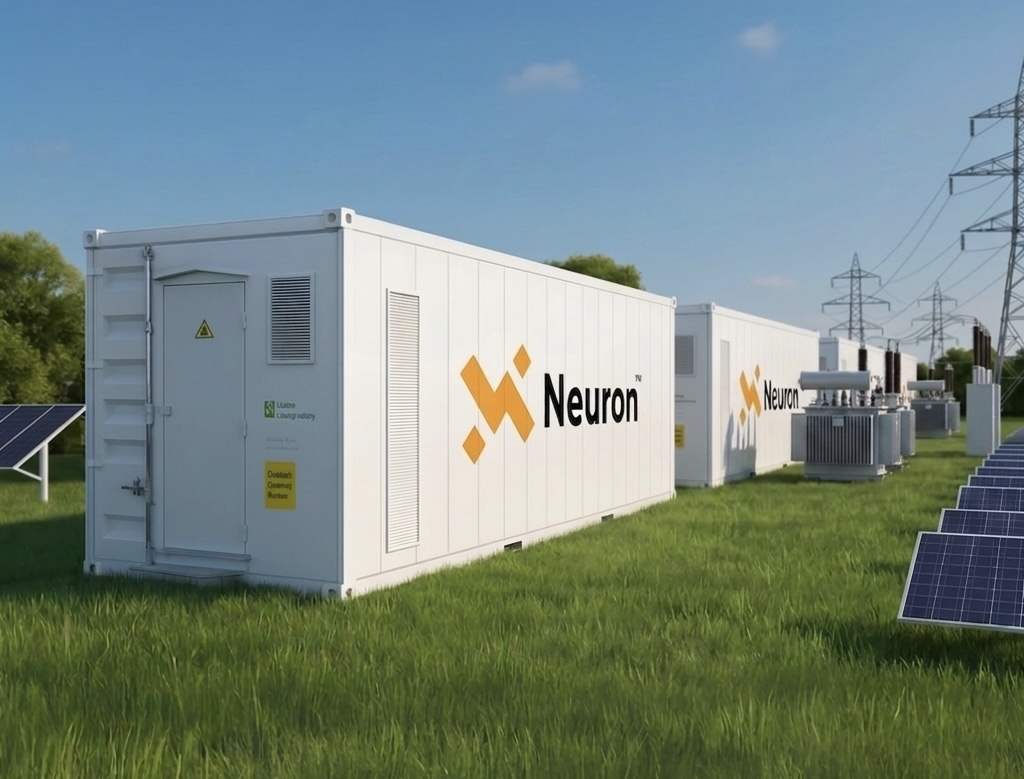
Neuron Energy’s expansion into the BESS segment can be understood within this broader convergence. The company’s work in lithium-ion batteries for electric two-wheelers, three-wheelers, and light commercial vehicles provides a base of engineering expertise that translates into stationary storage. This progression reflects a shift in how battery technologies are being deployed, moving from application-specific use cases towards a more integrated role within the energy system.
Building Industrial Capacity for Storage
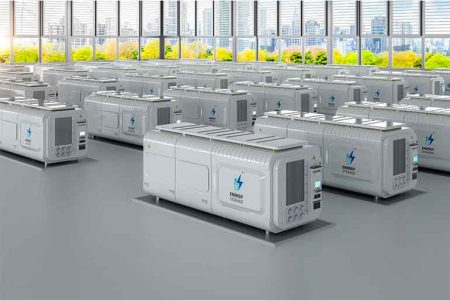
The transition into grid-scale storage is being supported by investments that reflect both scale and intent. Neuron Energy is developing a fully automated manufacturing facility in Talegaon, spread across 7 acres and backed by an investment of ₹100 crore. The facility is designed to produce up to 1,000 containerised BESS units annually, with a total production capacity of 5 GWh.
Such infrastructure points to the industrialisation of storage manufacturing, where consistency, safety, and throughput are critical to meeting growing demand. The company’s market strategy aligns with this outlook, with a planned distribution split of 60% domestic supply and 40% exports. This approach positions the company across both local and international markets, targeting solar developers, utilities, and commercial and industrial consumers, each of which represents a distinct but interconnected segment of the storage ecosystem.
From Battery Engineering to System Integration
The technological convergence between EV batteries and BESS is grounded in shared engineering principles. Both systems rely on lithium-ion cells, advanced battery management systems, and layered safety architectures that govern performance, efficiency, and risk mitigation. This commonality allows knowledge in cell chemistry, system integration, and thermal management to be transferred across applications with relatively limited redesign.
However, the optimisation priorities diverge significantly. EV batteries are designed to maximise energy density and support variable load conditions, whereas BESS deployments are structured around stability, longer discharge cycles, and predictable performance over extended operating periods. Addressing these differences increasingly involves the integration of software-driven intelligence, including monitoring systems and predictive maintenance, which enable more precise control over performance and lifecycle management.
Expanding Demand Across Sectors
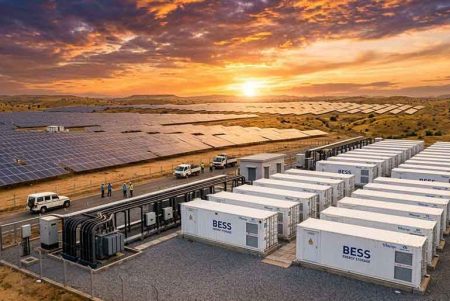
The demand for BESS in India is being shaped by multiple drivers that extend across the energy value chain. At the utility level, storage is being deployed to manage renewable variability, balance peak demand, and support grid stability as the share of solar and wind energy continues to grow. These deployments are closely tied to the evolving structure of power generation and distribution.
In parallel, commercial and industrial consumers are emerging as a significant segment, driven by the need for reliable power and greater control over energy costs. Sectors such as manufacturing, logistics, and data infrastructure are increasingly integrating storage with renewable energy to create more stable and predictable power environments. This dual demand is reflected in broader investment trends, with India’s power sector projected to attract ₹1.4 trillion towards grid-scale storage by 2030.
Towards an Integrated Energy Future
The convergence of mobility and energy storage is reshaping how battery technologies are deployed. Batteries are evolving from components within vehicles to strategic assets within the energy system. This shift is redefining the role of companies operating in this space, requiring capabilities that extend across multiple applications.
Neuron Energy’s expansion into BESS reflects this broader transition. By leveraging its expertise in EV battery systems, the company is positioning itself within a segment that is becoming central to the future of energy infrastructure.
As India continues to expand its renewable capacity and modernise its power systems, BESS will play a defining role in ensuring stability and efficiency. The movement from mobility to megawatts represents a natural progression within the energy sector, where battery innovation is increasingly linked to how power is stored, managed, and delivered at scale.
 Electrify your feed! Click here to join our Whatsapp group and to get the latest updates, expert insights, and innovations driving India’s energy storage revolution.