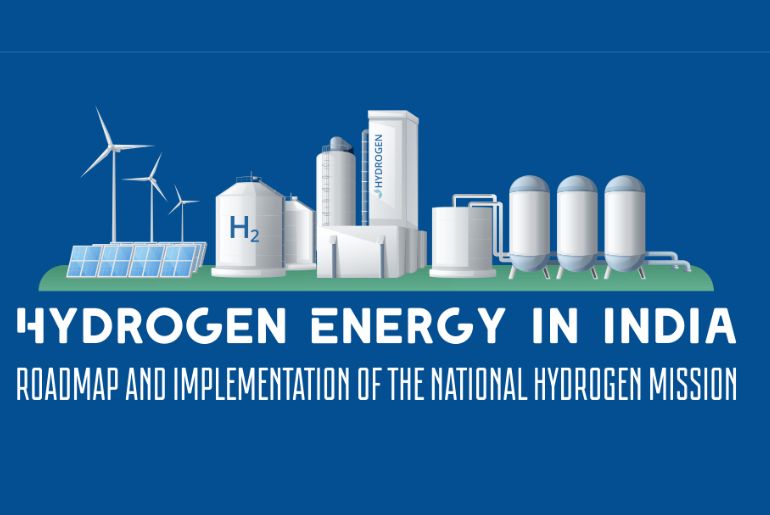
The Government of India has highlighted significant progress under the National Green Hydrogen Mission (NGHM) aimed at reducing the cost of green hydrogen and positioning India as a global hub for green hydrogen production, usage, and exports.
The update was presented by Union Minister of State for New and Renewable Energy, Shri Shripad Yesso Naik, in a written reply in the Rajya Sabha, according to a statement released by PIB Delhi on December 16, 2025.
Green Hydrogen Capacity Targets
India’s green hydrogen production capacity is projected to reach 5 million metric tonnes per annum by 2030, supported by large-scale manufacturing incentives, production-linked schemes, and policy support.
Key Incentives and Awards Under NGHM
The Ministry of New and Renewable Energy (MNRE) has rolled out multiple incentive schemes to accelerate cost reduction and scale deployment:
- Electrolyser Manufacturing: 15 companies have been awarded a cumulative manufacturing capacity of 3,000 MW per annum, with total incentives amounting to ₹4,440 crore.
- Green Hydrogen Production: 18 companies have been awarded a combined green hydrogen production capacity of 8.62 lakh tonnes per annum.
- Green Hydrogen Procurement for Refineries: 2 companies have been awarded contracts for a total capacity of 20,000 tonnes per annum, supporting industrial offtake.
Policy Measures to Reduce Costs
To further lower green hydrogen production costs, the government has introduced long-term policy incentives:
- ISTS Charge Exemption: Green hydrogen and green ammonia projects commissioned on or before December 31, 2030 will receive 25 years of exemption from Inter State Transmission System (ISTS) charges, provided renewable energy is used.
- SEZ Duty Benefits: Duty benefits under Section 26 of the SEZ Act, 2005 have been extended for the installation and operation of renewable energy equipment used exclusively for captive consumption.
R&D Support
MNRE is also backing technology innovation through a ₹83.19 crore R&D project titled “Scale-up of Perovskite Tandem Solar Cells (Phase-I)”, aimed at indigenisation and large-scale deployment of advanced solar cell technologies.
The government stated that these combined measures are designed to accelerate cost reductions, enhance domestic manufacturing, and strengthen India’s long-term clean energy and hydrogen economy roadmap.
 Electrify your feed! Click here to join our Whatsapp group and to get the latest updates, expert insights, and innovations driving India’s energy storage revolution.