
As India stands on the brink of a decisive energy transformation, 2026 is emerging as a watershed moment—one that will redefine how the country generates, stores, and delivers power. Multi-gigawatt storage tenders, hybrid renewable architectures, and digital grid reforms are converging to push clean energy beyond ambition and into execution. At the centre of this inflection point is Hindustan Power, a company increasingly shaping the conversation around dispatchable, storage-led renewable energy rather than intermittent generation alone.
Under the leadership of Mr. Ratul Puri, Chairman, Hindustan Power, the company is recalibrating its strategy to align with India’s evolving grid realities—where reliability, flexibility, and round-the-clock availability are just as critical as clean generation. With landmark wins in solar-plus-BESS projects, standalone storage initiatives, and a growing focus on hybrid power systems, Hindustan Power is positioning storage as the backbone of India’s future power infrastructure.
In an exclusive conversation with Shweta, Sub-Editor, The Battery Magazine, Mr. Puri shares how Hindustan Power views storage not as an add-on, but as a strategic enabler—bridging renewables, transitional assets, and digital intelligence into a unified, resilient energy ecosystem. From lifecycle economics and bankability to ancillary services and digital optimisation, he offers a candid perspective on what it will take to make clean energy dependable at scale.
Let’s delve into the interview to understand how Hindustan Power plans to help define India’s energy future—when reliability matters most.
As 2026 is widely regarded as the inflection year for India’s energy transformation—with multi-GW storage tenders, hybrid renewable models and digital grid reforms accelerating—what role does Hindustan Power aim to play in shaping this pivotal turning point for the country?
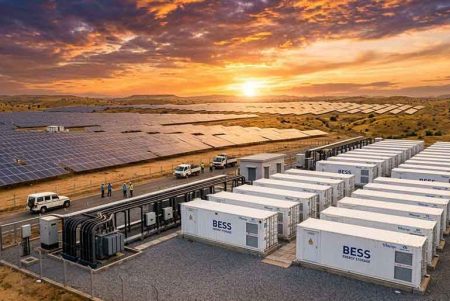
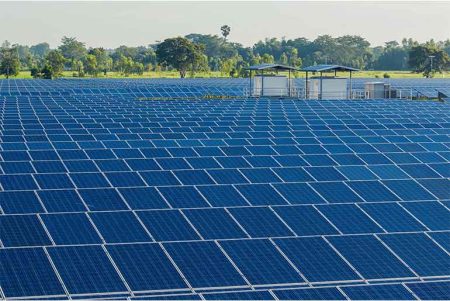
We see 2026 as the point where India’s clean energy sector really comes of age. For us, it’s less about reacting to that shift and more about helping shape it. Over the next three years, we are working toward a multi-GW portfolio with a strong focus on storage-led hybrid assets. The idea is to move beyond simply adding generation capacity and instead build a flexible infrastructure that can support a more resilient, digital grid. Projects like our SECI win, which combines large-scale solar with battery storage, reflect how we are creating dispatchable capacity that aligns with India’s 500 GW non-fossil ambition.
Hindustan Power has been a strong voice in India’s renewable transition. How are you integrating BESS into your long-term strategy to build a more stable, dispatchable and future-ready power ecosystem for India?
Storage sits at the heart of our long-term strategy. We are consciously moving toward integrated solar-plus-storage models. Projects like our standalone BESS in Bihar and SECI’s solar-plus-storage project are designed to deliver stability when the grid needs it most. By working closely with experienced technology partners, we are ensuring these assets can support peak demand. This is what allows renewables to move from being intermittent sources to becoming dependable alternatives to fossil-based baseload power.
Grid operators increasingly demand firm, round-the-clock renewable power. What is Hindustan Power’s roadmap for blending solar, thermal and BESS into scalable hybrid systems that can deliver consistent, grid-stabilising energy?
While we are scaling renewables aggressively, we also recognise that transitional assets still play a role in meeting regional baseload demand. By combining solar, transitional and battery storage, we can balance sustainability with reliability. Our renewable wins, including solar-plus-BESS projects and long-term transitional supply agreements, enable us to deliver consistent, grid-stabilising power. Storage acts as the bridge that brings these disparate assets together into a single, dependable system.
Given the industry-wide concerns about aggressive under-bidding, battery degradation risks and lifecycle uncertainty in India’s storage boom, what internal benchmarks or technology frameworks does Hindustan Power follow to ensure long-term reliability and commercial bankability of its storage assets?
We stay focused on lifecycle value rather than chasing the lowest upfront cost. Internally, we follow strict benchmarks around technology quality, warranties and supplier credibility. We spend a lot of time engaging with partners and securing long-term performance commitments. This approach may seem cautious, but it ensures our projects remain financially sound and technically reliable over time, especially in a market where aggressive bidding can create hidden risks.
As India develops ancillary service markets, how does Hindustan Power envision offering storage-as-a-service or monetising grid-support solutions like frequency regulation, peak-shaving, or real-time balancing?
We increasingly see storage as a flexible grid-support asset rather than just an energy-shifting tool. As ancillary service markets mature, these capabilities open up new revenue streams beyond traditional PPAs. Projects like our SECI hybrid asset are already structured to respond dynamically to peak requirements.
Digital systems are becoming the backbone of modern energy infrastructure. What innovations—such as digital twins, predictive analytics, automated dispatch, or battery health monitoring—are you integrating to enhance BESS efficiency and lifetime performance across your projects?
Digital systems are becoming central to how we operate energy assets. We are using advanced monitoring, predictive analytics and data-driven tools to optimise battery health and dispatch in real time. This helps us anticipate degradation, fine-tune charge and discharge cycles and reduce downtime. As our portfolio grows, these systems allow us to manage assets more precisely and ensure consistent performance over the long term.
If you envision India’s power landscape in 2030—with storage at the core—what undeniable role will Hindustan Power be playing in it? And what is the one bold decision you are making today that will define that leadership in the future?
By 2030, we see Hindustan Power playing a defining role in delivering dispatchable green energy at scale. Our focus is not just on generating clean power, but on making it reliable whenever the grid needs it. The bold decision we are taking today is to prioritise storage-led hybrid assets over standalone renewables. Investing early in complex, integrated projects will allow us to support India’s growth with clean energy that performs not only when conditions are ideal, but when demand is highest.
 Electrify your feed! Click here to join our Whatsapp group and to get the latest updates, expert insights, and innovations driving India’s energy storage revolution.