As India rapidly expands its renewable energy capacity, grid-scale battery energy storage systems (BESS) have become critical to managing this transition. These systems help stabilize the power grid by storing excess energy from renewable sources and delivering it during peak demand. Government-led tenders are playing a pivotal role in promoting BESS adoption, driving down costs, and attracting investments into large-scale energy storage solutions.
Why Grid-Scale Energy Storage is Needed in India
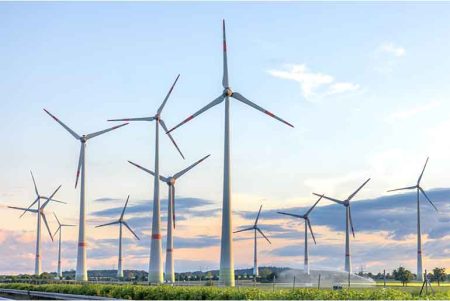
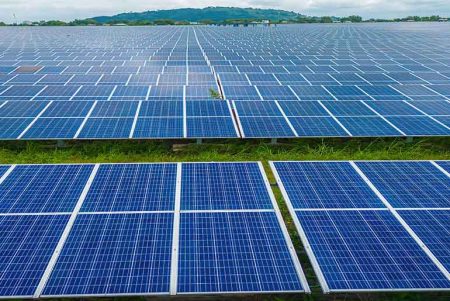
India’s renewable energy sector is thriving. According to the most recent report from the Ministry of Power, non-fossil fuel-based sources now comprise over 50% of the total installed capacity, hitting that milestone five years early, as India had target timelines for this to be accomplished sometime by 2030. We can say the renewable energy space has experienced astounding growth with its renewable energy development, but the intermittent nature of solar energy and wind energy presents challenges to grid reliability.
While India’s peak power demand in 2024 has surpassed 250 gigawatts, and it’s expected to keep climbing, the minimum amount of renewables we can successfully integrate into the grid while still maintaining stability has become a key national topic. Energy storage with batteries (BESS) can alleviate some of these problems, describing the ability to balance loads, do peak shaving, and provide frequency response so the country will continue to have a stable supply of energy.
To meet the 2030 target of 500 GW of installed capacity from non-fossil-fuel sources and overall Net-Zero by 2070, India must at a minimum deploy reliable storage solutions at scale. Again, BESS provides the momentum utilities and DISCOMs need in storing renewable energy for energy dispatch when needed.
Key Government Announcements, Schemes & Policy Push
To support BESS deployment, India has introduced several policies and incentives:
Here’s a quick summary of India’s actions to stimulate and scale up energy storage in the country.
1. PLI Scheme for Advanced Chemistry Cells (ACC): Introduced to enable local battery manufacturing with an outlay of INR 18,100 crore.
2. National Framework for Energy Storage Systems (2023): Drafted by the Ministry of Power laying out a regulatory and financial framework for scale up of energy storage.
3. Green Open Access Rules (2022): Enabling C&I consumers to procure renewable energy, and subsequently allowing BESS to be a financially viable technlogy for private developers.
4. Introduction of Energy Storage Obligation (ESO): under RPO guidelines, which mandated DISCOMs to procure certain percentage of power from storage sources.
5. Mission LiFE & Circular Economy push: to promote PLI objectives of reuse and recycling of components of batteries for better sustainability.
6. State-level tenders: Gujarat recently floated a standalone BESS tender for 2000 MW/4000 MWh in July 2025, indicating aggressive state level adoption.
SECI and NTPC are also actively issuing storage-linked tenders. For instance, SECI’s 1000 MWh tender attracted bids from leading players like JSW Neo, Tata Power, and ReNew Power.
How Tenders Are Shaping the Market
BESS tenders are changing the energy storage development landscape in India by creating competition, developing transparency, and increasing investor confidence. Tenders are generally either tariff-based competitions or viability gap funding (VGF), to support competitive pricing and ensure financial viability.
Some tenders are structured as hybrid opportunities (solar + wind + storage) that allow developers to broadly provide round-the-clock (RTC) power. Others are designed as stand-alone storage projects (like the 2000 MW Tender in Gujarat) that would allow for direct grid services like peak shaving and load balancing.
As an example, JSW Neo Energy was a winner in an SECI tender with a quoted price of ₹10.84 lakh/MWh/year. Examples like this show how tendering mechanisms are steadily improving the cost-competitiveness of BESS.
These new frameworks put governance in place to provide fixed payment models, as well as disbursement-linked milestones that clear guidelines on performance criteria, thus reducing uncertainty and risk in the market.
Key Players and Project Pipeline
Several prominent players are actively shaping India’s grid-scale BESS market:
- JSW Neo Energy
- Tata Power Solar
- ReNew Power
- Greenko
- NTPC Renewable Energy Ltd.
- Waaree Energies
All these companies are doing or tendering to do storage projects with capacity ranges of 250 MWh to 4000 MWh. International companies such as Fluence and companies related to Tesla are also working within the tendering process in India.
Opportunities and Challenges
In terms of positives, there is certainly momentum but we know there are several challenges ahead of us:
High CapEx: To begin with CapEx (Capital Expenditure) is high to install BESS (Battery Energy Storage Systems) installations, we still find ourselves in an environment with no sizeable subsidies provided.
Technology risk: Battery degradation and lack of infrastructure for recycling batteries continues to be an issue with regard to sustainability in the long-term.
Policy Gaps: More consistent policies from state to state level and more concrete revenue models for storage developers is very important.
In this respect, there are opportunities outweighing the challenges – Government localization targets for battery manufacturing will bring the cost of manufacture down. – The establishment of circular economy models will allow for greater reuse of batteries. – Expansion of open access and green hydrogen will create new demand for storage.
Future Projections
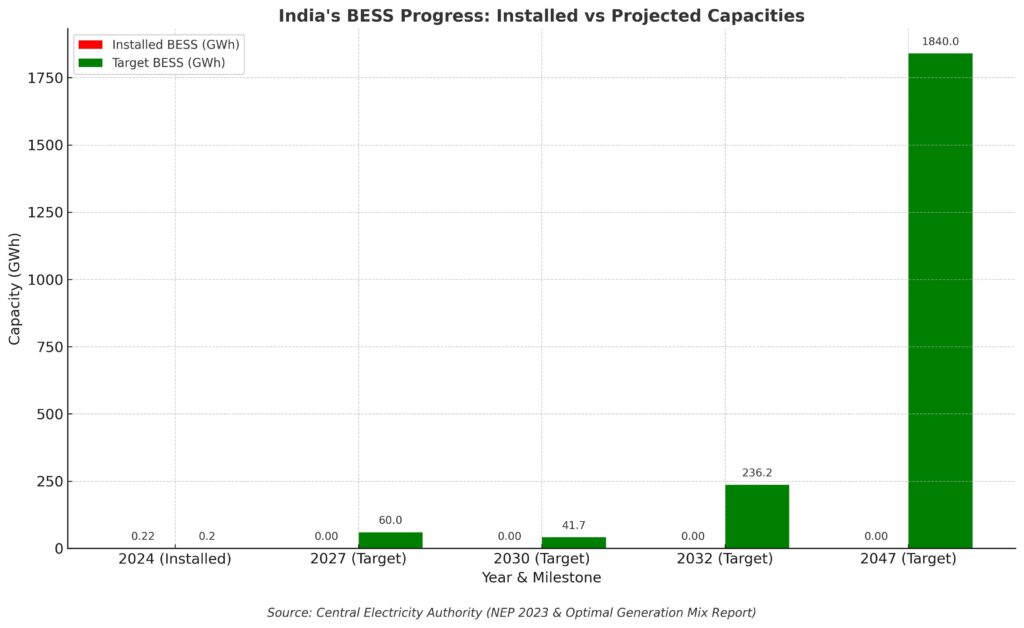
As per the draft National Electricity Plan 2023, India targets the deployment of 50 GW BESS capacity by 2030. Future tenders will be broader in scope and likely bundled with generation, and described to deliver firm dispatchable power.
Private actors in the C&I sectors are exploring behind-the-meter storage systems, and state DISCOMs are also looking to storage for demand-side management. The next-gen offering that appears to be on the cusp of development is hybrid RE + BESS + green hydrogen projects.
India’s clean energy transition depends on the adoption of robust and flexible energy storage infrastructure. BESS tenders, supported by strong policy drivers and competitive bidding, are laying the groundwork for a future grid. As prices decline and adoption rises, battery energy storage systems will be crucial in shaping India’s pathway to ongoing, sustainable green energy.
 Electrify your feed! Click here to join our Whatsapp group and to get the latest updates, expert insights, and innovations driving India’s energy storage revolution.