In 2025, India’s energy transition stands at a defining crossroads. For years, the conversation revolved around generation — how fast the country could build solar parks, wind farms, and hydropower plants to meet its 500 GW renewable energy target by 2030. But as renewable capacity soared past 188 GW this year, a new reality dawned: generation alone isn’t enough — what matters now is how we store it.
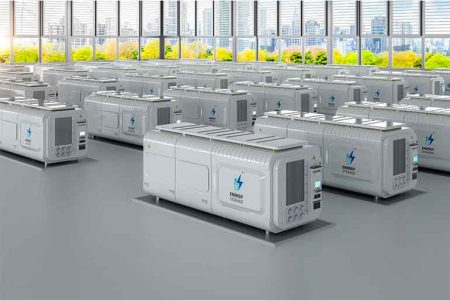
Energy storage has quietly moved from the periphery of policy discussions to the very core of India’s clean power strategy. What was once viewed as an auxiliary technology has evolved into the nation’s “power currency” — enabling grid stability, renewable reliability, and 24/7 green power delivery. In every conversation — from Delhi’s smart grid pilots to Ladakh’s gigawatt-scale solar park — Battery Energy Storage Systems (BESS) have emerged as the backbone of India’s next growth phase.
India’s ambition is substantial. Central planning documents and modelling show storage needs rising sharply as renewables grow: the Central Electricity Authority’s modelling estimates roughly 411.4 GWh of total energy-storage requirement (pumped hydro + battery) by 2031–32 — a figure widely cited in 2024–25 analysis. Other near-term official projections (e.g., NEP/CEA modelling for 2026–27) give smaller interim numbers, underscoring fast growth in demand for storage this decade.
The message is clear: the transition from fossil to renewable is only half the story — India now aims to master the art of storing its energy future.
Policymakers have responded: the government’s storage framework and related measures include support for domestic cell manufacturing under the ACC-PLI (₹18,100 crore for 50 GWh capacity), viability-gap funding schemes for BESS, and policy moves (including an ISTS transmission-charge waiver for certain renewables+storage projects) intended to lower costs and accelerate deployments.
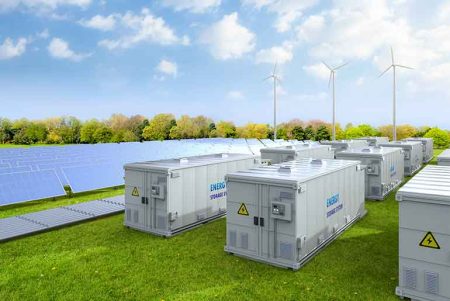
Across the country, signs of this new energy architecture are visible. Developers are tendering hybrid projects that pair solar with storage in states such as Rajasthan and Gujarat; utilities in Delhi and Bengaluru are piloting behind-the-meter batteries and distributed BESS for grid services; and plans for large hybrid renewable parks — including a proposed 13 GW hybrid RE park in Ladakh that explicitly includes storage — show how big-picture planning increasingly assumes co-located storage.
From megawatt-scale lithium-ion farms to sodium-ion pilots and pumped-hydro schemes, India’s energy landscape is shifting focus — from capacity addition to capacity retention. As policymakers, engineers and entrepreneurs align, success will be measured not only by megawatts produced but by megawatts preserved and dispatched when needed.
Policy Architecture: Laying the Foundation
India’s energy transition is no longer an abstract policy dream — it’s a national mission engineered through a structured framework of laws, incentives, and public–private collaborations. At the center of this architecture lies the government’s evolving playbook for Energy Storage Systems (ESS) — an instrument to decarbonize the grid, stabilize renewables, and accelerate e-mobility.
The Ministry of Power’s “National Framework for Promoting Energy Storage Systems”, notified in 2023, became the first comprehensive roadmap defining how India envisions storage in its energy mix. The framework identifies storage as a “strategic energy asset”, placing it alongside conventional infrastructure like transmission and generation. It sets targets, creates demand obligations for DISCOMs, and encourages hybridization of solar and wind assets with storage to provide round-the-clock (RTC) power.
In 2025, this framework was strengthened through a series of decisive policy actions:
- Viability Gap Funding (VGF) of ₹3,760 crore for 4,000 MWh of grid-scale BESS under the Strategic Interventions for Green Hydrogen Transition (SIGHT) and Energy Storage Program, ensuring that projects can achieve tariff parity with thermal power.
- Interstate Transmission System (ISTS) waiver, extended to renewable-plus-storage hybrid projects until June 2028, to reduce evacuation costs and attract private investments.
- Guidelines for tariff-based competitive bidding, standardizing procurement for standalone and co-located BESS projects — ensuring bankability and transparency.
- Battery Recycling Rules (2022, operationalized in 2025), promoting circularity by requiring manufacturers to collect, refurbish, and reuse used cells.
India’s Ministry of New and Renewable Energy (MNRE) and the Solar Energy Corporation of India (SECI) have increasingly shifted their focus — launching hybrid tenders and renewable-plus-storage projects that align commercial viability with grid resilience. SECI’s Hybrid & ESS arm already awards projects that combine renewables and battery storage, promoting integrated deployment.
While specific BESS deployment targets under MNRE are not public, India’s ambition is clear: through mechanisms like VGF-assisted tenders, rooftop-linked storage pilots and microgrids, the government expects energy storage to scale significantly this decade.
Policy momentum is reinforced by inter-ministerial coordination. The ACC-PLI (Advanced Chemistry Cell) scheme, administered by the Ministry of Heavy Industries and supported by NITI Aayog, aims to build 50 GWh of domestic cell manufacturing capacity by 2029. This links manufacturing capabilities to deployment pathways. Meanwhile, battery storage is increasingly viewed as a core component within EV policies, rooftop solar, grid modernization (e.g. under the RDSS scheme), and renewable park planning.
What sets India’s policy approach apart is integration over isolation. Storage is not treated as a stand-alone domain — it is being woven into every major clean energy initiative: rooftop solar, EV charging, grid reforms, and hybrid power parks. As a result, India’s energy policy landscape increasingly resembles an ecosystem — one that positions energy storage as the linchpin connecting generation, distribution and mobility.
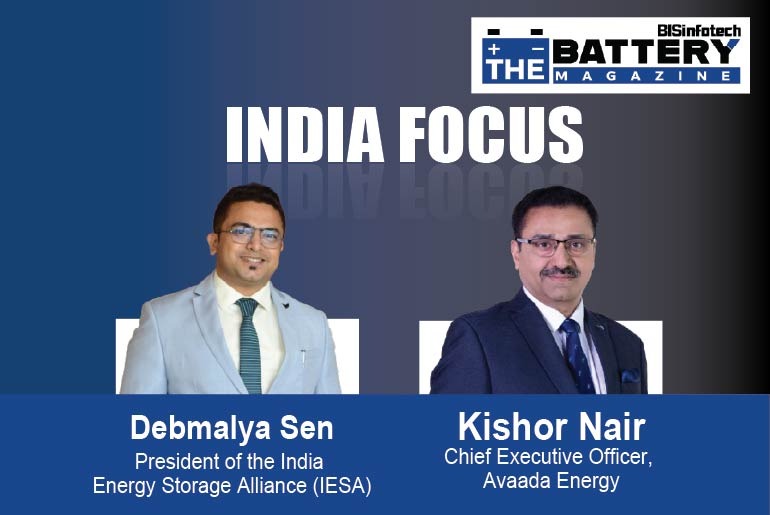
Debmalya Sen, President, India Energy Stroge Alliance, said , ” The requirement of BESS in the infian grid is huge, just going by the National Electricity Plan the requirement is of 236 GWh by 2031-32, a short term resource adequacy plan done by Grid India estimates that the indian grid will require 4 GW/ 17 GWh of bess by FY 2025-26. Thus requirement comes from india growing RE story and the ever increasing energy demand of India. In order to cater to this demand we need some form of buffer in the grid because renewables being variable there arises risk on energy security where storage has to chip in and play its role. With economics also now favorable storage comes as a viable alternative for India to look beyond coal and gas to adress ita peak demand. With around 81 GWh of BESS projects tendered and 18 GWh in construction stage, the next few years will see multiple of these projects being in execution phase. Pumped hydro will play a role but thats more in the next decade for now we see bess playing a critical role for india to achieve its 2030 targets sustainably.”
Market Acceleration: Solar + Storage + Hybrid Push
If 2023 and 2024 were about policy foundation, then 2025 is the year of deployment. India’s renewable market has entered a decisive acceleration phase — one that blends solar generation, battery energy storage systems (BESS), and hybrid architectures to create firm, dispatchable clean power.
Leading this charge is the Solar Energy Corporation of India (SECI), which in mid-2025 launched its largest-ever 1,200 MW solar-plus-600 MW BESS tender, inviting developers to design projects capable of round-the-clock (RTC) delivery. The discovered tariffs in these hybrid bids — hovering between ₹5.5–₹6 per kWh — may seem higher than traditional solar prices, but they represent a turning point: storage-backed power is now commercially bankable.
At the same time, the National Thermal Power Corporation (NTPC) and Greenko Group have commissioned India’s early flagship hybrid assets.
Major developers and system integrators are already building flagship projects or bidding large portfolios:
- Greenko’s Pinnapuram integrated project combines several gigawatts of renewables with pumped-hydro storage — the pumped-storage component is reported at 1.68 GW / 10.08 GWh, making it one of Asia’s largest integrated renewable+storage complexes.
- NTPC and other public sector players have issued and awarded BESS tenders and hybrid projects (NTPC and NVVN have been active in hybrid RfPs and BESS tenders). Several NTPC-linked or NVVN-backed hybrid contracts have moved from auction to project award stages in 2024–25.
- Private groups including Avaada, ReNew and Adani Green have announced multi-gigawatt hybrid portfolios and round-the-clock (RTC) proposals — ReNew, for example, is developing large RTC hybrid schemes that combine solar, wind and BESS to supply 24×7 clean power.
Mr Kishor Nair, Chief Executive Officer, Avaada Energy:-“India’s renewable energy story is entering a decisive new chapter — one defined by integration, innovation, and intelligence. The rise of solar-plus-storage and hybrid solutions marks a fundamental shift from intermittent generation to firm, round-the-clock green power. This evolution is not just technological; it reflects India’s determination to make clean energy as reliable and affordable as conventional power.
At Avaada, we see storage as the heartbeat of India’s green grid of tomorrow. Our 2,500 MWh BESS Project, which is India’s largest, integrated with a 1,560 MWp solar project in Rajasthan, and our upcoming 5 GWh storage portfolio in Gujarat are pioneering examples of how renewables, when paired with advanced storage, can deliver energy security, grid stability, and decarbonisation at scale.
We are complementing this with over 11 GW of pumped hydro storage projects, and 16 GWh of battery-energy storage projects which are under phased development along with a forthcoming battery manufacturing facility in Nagpur, which will strengthen India’s self-reliance in this critical segment.
The solar-plus-storage ecosystem is where India’s technological prowess meets its sustainability vision. At Avaada, we are proud to be at the forefront of this transformation — building a future where every electron is green, every megawatt is reliable, and every innovation powers both progress and the planet.”
However, the pace of commissioning still lags awarded capacity. Industry analysis shows that between 2022 and May 2025 India auctioned roughly 12.8 GWh of BESS capacity, but only about 219 MWh was reported operational by May 2025 — underscoring an execution gap between tendering and commissioning. This gap reflects manufacturing lead times, project financing and EPC challenges.
States and utilities are also experimenting with distributed and substation-level BESS, and corporate buyers are signing PPAs for storage-backed renewable supply — signalling demand from both system operators and commercial offtakers. Together, these trends indicate the market is transitioning from demonstration pilots to procurement frameworks and large-scale pipeline construction.
Technology & Innovation
India’s energy storage landscape is evolving beyond pilots — diversifying across chemistries and technologies.
Lithium-ion remains the backbone of both utility and behind-the-meter projects, driven by mature manufacturing and system-level innovations such as advanced BMS and modular pack designs that enhance efficiency and safety.
Sodium-ion is emerging as a strategic complement, with Reliance’s acquisition of Faradion and CATL’s mass production plans signalling commercial readiness. Safer, cheaper, and less mineral-dependent, it’s ideal for cost-sensitive EVs and stationary storage.
For long-duration needs, India is betting big on pumped hydro — Greenko’s 1.68 GW / 10.08 GWh Pinnapuram project being a global benchmark — alongside growing interest in thermal and flow storage.
Equally transformative is the rise of digital energy management systems (EMS), predictive software, and Virtual Power Plants (VPPs) that stack multiple revenue streams, turning batteries into intelligent grid assets.
Yet, despite over 12.8 GWh of BESS tendered by 2025, only ~219 MWh is operational, underscoring that India’s biggest challenge now lies in execution, not innovation.
Manufacturing & Supply Chain Localization
India’s shift from policy to deployment largely depends on whether it can build a domestic battery manufacturing ecosystem — one that spans cells, materials, components, and recycling. Without upstream strength, India risks being a buyer of others’ technologies rather than a global innovator.
PLI Scheme & ACC Manufacturing Push
- The Production-Linked Incentive (PLI) scheme for Advanced Chemistry Cells (ACC) was approved in May 2021, with an outlay of ₹18,100 crore, aiming to establish 50 GWh of domestic ACC capacity.
- Under the scheme’s rules, a beneficiary must achieve ≥ 25 % domestic value addition (DVA) within 2 years of commissioning, climbing to 60 % over five years.
- As of mid-2025, 40 GWh of ACC capacity has been allocated to firms, with 10 GWh reserved for grid-scale storage use cases.
- In February 2025, the government signed a Programme Agreement with Reliance New Energy Battery Ltd for 10 GWh of ACC capacity under the PLI scheme.
- However, no incentive disbursements have been made yet, because beneficiaries missed the December 2024 milestone. The government has imposed penalties and is reportedly considering extension requests from firms like Reliance, Ola, and Rajesh Exports.
- The government is reviewing aspects of the PLI scheme to ease rigidities, in light of execution delays and supply chain pressures.
Localization Beyond Cells: Components & Materials
Battery manufacturing is more than making cells — it needs a layered supply chain. Key localization needs include:
- Cathode & anode active materials: India still heavily depends on imports for lithium, nickel, cobalt, and specialized carbon materials.
- Electrolytes, additives & solvents: These chemical inputs require refinements and specialty chemical strength, which India is working to build.
- Separators, foils & casings: High precision polymers, thin foils, and packaging materials are largely imported; domestic capabilities are nascent.
- Recycling & second-life systems: The Battery Waste Management Rules, 2022 set out extended producer responsibility (EPR) obligations and collection / recycling targets. But scaling reverse logistics, safe processing, and market development for recycled materials remain major challenges.
- In the sodium-ion battery domain, some firms are exploring in-house production of Prussian white cathodes and hard carbon anodes to reduce dependence on imported inputs; these are early moves to localize key battery materials.
Strategic Moves & Private Investments
Beyond government policy, the private sector is taking bold steps toward localization in battery systems:
- Ashok Leyland has committed roughly ₹5,000 crore over 7–10 years to build a domestic battery ecosystem (cells, packs, components) in partnership with China’s CALB.
- Several automakers and component firms are exploring upstream alliances to strengthen domestic supply chains.
- To discourage imports and incentivize local manufacturing, the government has signalled policy shifts: some older policy changes raised lithium-ion battery import duties to 20%, and more recently (2025 budget) customs duty exemptions were introduced for battery waste, scrap, cobalt powder and other critical minerals to promote recycling and circular supply chains.
The Imperative for Vertical Integration
Companies that can internalize the full battery value chain — from raw material sourcing to recycling — are better positioned to capture margins, reduce reliance on volatile imports, and compete globally. The future battery leaders in India may well be those that:
- Secure raw materials (domestic mines or strategic partnerships)
- Build advanced component lines (cathode, anode, separators)
- Manufacture cells under PLI or equivalent incentives
- Operate recycling and second-life systems to recapture value
Such integration not only mitigates supply shock risk, but also enables scale, cost control and export readiness.
Grid Integration & Flexibility
If India’s renewable push signals ambition, then grid flexibility is the test of execution. It’s no longer enough to simply build capacity — the grid must also adapt, stabilize, and respond. The guiding operational philosophy: store when you can, dispatch when you must.
The Grid Challenge in Numbers
- In FY 2024–25, India met a record maximum power demand of 250 GW.
- According to the National Electricity Plan (NEP) 2023, India’s energy storage requirement is projected to grow from about 82.37 GWh by 2026–27 to 411.4 GWh by 2031–32 (split between pumped storage and BESS)
- The logical interpretation: as renewable penetration rises, demand for storage to buffer intermittency, manage daily peaks and support frequency is going to become critical.
BESS: The Backbone of a More Flexible Grid
- The Central Electricity Authority (CEA) in its “Advisory on Co-locating Energy Storage Systems with Solar Power Projects” refers to already operational pumped storage of 4.75 GW and ~0.11 GW of BESS (as of 2024) in its hybrid mix statistics.
- Deployment of grid-connected BESS is still limited but increasing.
- Utilities and DISCOMs are exploring integration: for example, experimental hybrid PPAs combining storage with solar or wind are being considered in states like Maharashtra, Karnataka, etc.
- Some large organizations (public & private) are planning or executing hybrid + storage systems to provide firming, ramp support and frequency services.
- The National Load Despatch Centre (NLDC) is reportedly working on operational frameworks for ancillary services and remuneration structures for storage (to allow ESS participation) in coming years (by ~2026) — making storage not just a behind-the-scenes buffer but a market actor.
Smart Grids, Distributed Storage & Microgrids
- The Revamped Distribution Sector Scheme (RDSS) pushes for smart metering, feeder automation and substation modernization. When these digital upgrades pair with localized storage banks (5–10 MWh scale), they enable “mini-balancing zones” that can isolate and manage disturbances locally.
- Real-world pilot projects are underway:
- NDMC (Delhi) is experimenting with a 5 MW solar + 7 MWh BESS microgrid for critical loads.
- Delhi’s IGI Airport is reported to have a 40 MWh behind-the-meter BESS for reliability and EV fleet backup (though details of commissioning and revenue structure are still being validated).
- Bengaluru smart grid pilots are integrating rooftop solar, EV chargers and community BESS at feeder levels to smoother voltage and load balancing.
Each of these shows how distributed storage + digital control can increase resilience.
Virtual Power Plants & AI Aggregation
- The future lies in Virtual Power Plants (VPPs) — aggregating small-scale assets (rooftop solar, EV batteries, community storage) into controllable grid resources.
- AI-driven EMS, digital twins and orchestration platforms will be essential: they allow bids in day-ahead, real-time and ancillary markets, dynamically managing dispatch.
- Global forecasts support the trend: e.g. VPP & V2G orchestration market is projected to grow strongly (from ~USD 5.7 billion in 2025 to USD 28.4 billion by 2035).
- In India, a key demonstration is the Vehicle-to-Grid (V2G) pilot by ISGF (India Smart Grid Forum) — the first practical demonstration of bidirectional flow from EVs to grid.
Integration with the EV Ecosystem
- India’s EV fleet is expanding, and V2G is gaining attention as a source of grid flexibility.
- Pilot trials — for example under ISGF — are exploring how parked EVs can discharge surplus energy back to the grid during peak hours.
- Some studies suggest that if V2G scales, 10–15 GWh of distributed flexibility capacity could be tapped by 2030 (if regulatory and technical enablers align) (this is forward-looking but often cited in EV policy discussions).
Toward a Responsive, Renewable Grid
In 2025, India’s grid is evolving from a one-way supply system to a two-way intelligent network. Battery Energy Storage Systems (BESS) are no longer backup assets; they’re becoming operational control tools — optimizing grid frequency, absorbing renewable surpluses, and ensuring stability during demand spikes.
From utility-scale hybrid assets to AI-driven distributed networks, storage has become the invisible infrastructure that allows India’s clean power to flow seamlessly — across states, sectors, and time zones.
Investment & Policy Gaps — Where Ambition Meets Execution
India’s policy scaffolding for energy storage is strong. But ambition without execution leaves projects stuck on paper, and investors wary. The urgent task now is not imagining storage’s potential — it’s converting awarded tenders, policy promises, and industrial landings into commissioned megawatts that stabilize the grid in real time.
The Execution Gap: Awards vs Commissioning
Between 2022 and May 2025, India auctioned approximately 12.8 GWh of BESS (hybrid and standalone). Yet only about 219 MWh is reported operational. This stark conversion rate highlights deep bottlenecks in finance, concept-to-commissioning, and supply chains.
Financing Frictions: Tenors, Bankability & Risk Allocation
Large infrastructure projects rely on long-term, predictable cashflows (15–20 years). But storage projects tend to yield short, fragmented revenue streams — arbitrage, ancillary services, or capacity payments — whose rules are still evolving in India. Many tenders also come with merchant risk or short offtake contracts, making lenders hesitant.
Policy & Procurement Design Weaknesses
Tenders have proliferated: in early 2025 alone, large standalone ESS tenders worth several GW were announced. But many suffer from overly complex designs, unclear assignment of service payments (who pays for frequency response? who covers degradation risk?), and delayed PPA signings. In some high-profile cases, the structure or location has made projects commercially unattractive, leading to cancellations or under-subscription.
Manufacturing & PLI Execution Uncertainty
The ACC PLI scheme was intended to anchor domestic cell manufacturing. However, several beneficiary firms missed production milestones, requested deadline extensions, or have not yet begun commercial operations. The delay creates uncertainty: many BESS projects still rely on imported cells, exposing them to global supply chain risk.
Tariff & Market Design: Evolving but Incomplete
Hybrid and solar+storage tenders are gradually producing competitive tariffs. In a recent SJVN tender, a solar + 4-hour BESS block achieved a ₹3.32/kWh tariff — among the lowest seen. But in many urban or constrained markets, prices still clear higher, and clarity on payments for fast-response or frequency services is limited. Market liquidity and standardized ancillary markets are still nascent.
Circularity & Recycling: Policy Moves, Scale Challenge
In September 2025, the Union Cabinet approved a ₹1,500 crore incentive scheme to promote critical mineral recycling (targeting battery waste, e-waste, etc.) over FY26–31. The scheme offers capex & opex subsidies, with a cap of ₹50 crore per large entity and ₹25 crore for smaller ones, and aims to create 270 kt recycling capacity and ~40 kt annual critical mineral production. However, existing recycling capacity is still minimal; collection networks, processing plants, and market linkages remain underdeveloped.
India has the vision and a growing project pipeline. What it now needs is disciplined execution — streamlined contracts, financing innovation, component supply certainty, and market clarity that rewards flexibility. If policymakers and industry can close these gaps, the gigawatts on paper can finally become gigawatts on the ground — and India’s energy transition will shift from promise to proof.
Vision 2030 – The Decade India Stores Its Power
Every major energy transition in history has a defining decade — one where policy, technology and capital converge. For India, that decade may well be 2025 to 2030. In these years, the country faces a pivotal choice: remain a renewables superpower, or evolve into a storage superpower capable of producing, integrating and exporting clean power solutions.
India’s ambition has scale. According to the CEA (via CII analysis), the target by 2030 includes 41.7 GW / 208 GWh of battery storage capacity to support grid stability and renewable integration.
Some industry reports and market watchers project that India’s BESS market could reach around 208 GWh by 2030 (i.e., installed capacity, not cumulative auctions) — though actual deployment may vary.
Other scenario analyses (e.g. RMI) suggest a cumulative battery demand range of 106–260 GWh by 2030, depending on the pace of grid decarbonization, EV adoption and flexibility requirements.
If even a fraction of that capacity is locally manufactured and effectively deployed, India’s energy storage industry could command tens of billions of dollars in value, and support hundreds of thousands (or more) of jobs across manufacturing, O&M, system design, recycling and more.
However, leadership won’t be defined by size alone. The differentiator will be integration — policy, people and purpose:
- Policy must evolve from incentive-driven schemes to outcome-based frameworks that reward flexibility, reliability, circularity and lifecycle performance.
- Industry must go beyond bidding — toward product innovation, embedding intelligence, modularity and sustainability into every cell, pack and system.
- Finance must shift from risk aversion to opportunity capture — developing green-bond–style storage portfolios, long-tenor funding structures and credit models specifically for battery-backed infrastructure.
By 2030, India’s energy storage agenda could become the backbone of a new economic model — one where renewable energy is not just generated, but curated, timed and traded. In this paradigm, energy storage becomes a currency of energy sovereignty, shaping not how much power the nation can produce, but how reliably it can deliver it.
India has already penned its opening chapters — policies, pilot projects and early tenders have laid the groundwork. The final act lies ahead: scaling what works, simplifying what stalls, and sustaining what succeeds. The decade ahead will be not just about generating clean power — but about storing trust, reliability and the promise of a self-reliant energy future.
 Electrify your feed! Click here to join our Whatsapp group and to get the latest updates, expert insights, and innovations driving India’s energy storage revolution.