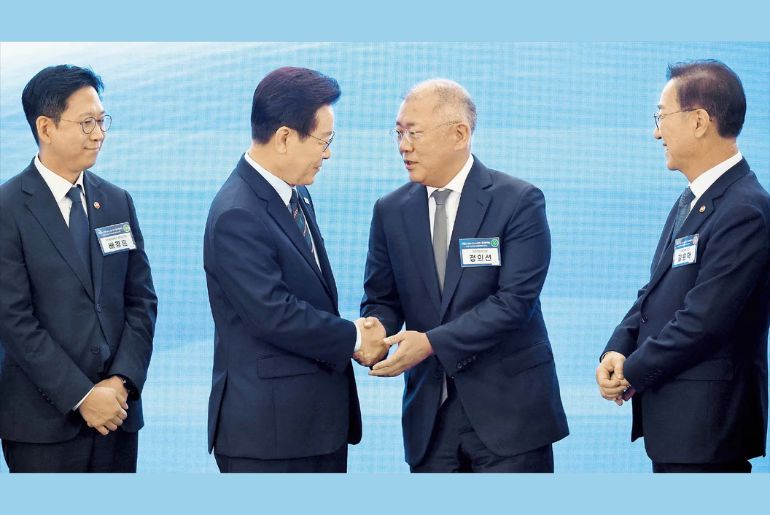
Hyundai Motor Group has signed a Memorandum of Understanding (MOU) with the South Korean government and Jeonbuk State to build a big innovation center in the Saemangeum area of Gunsan city. The Group plans to spend about KRW 9 trillion starting in 2026 to build a new industrial complex that will focus on robotics, artificial intelligence (AI), and hydrogen energy solutions.
This initiative forms part of the Group’s broader plan to invest KRW 125.2 trillion in Korea between 2026 and 2030. Saemangeum was selected due to its strong renewable energy potential and well-developed transport links, including rail, port and airport infrastructure.
Jaehoon Chang, Vice Chair of Hyundai Motor Group, said, “What we’re building in Saemangeum will reshape not just a region, but Korea’s industrial future. Hyundai Motor Group brings together the manufacturing excellence, AI capabilities, and hydrogen energy expertise needed to establish a truly advanced industrial ecosystem. This is how we translate our commitment to ‘Progress for Humanity’ into reality.”
Five Key Investment Areas
The investment will be distributed across five major areas:
• AI Data Center Infrastructure – KRW 5.8 trillion
• Robotics Manufacturing Cluster – KRW 400 billion
• 200 MW-class PEM Electrolyzer Plant – KRW 1 trillion
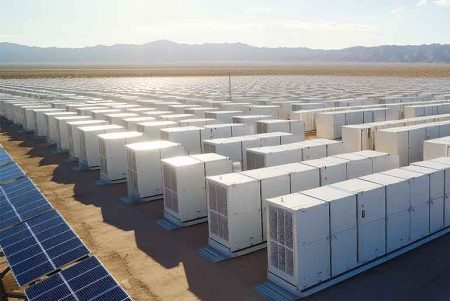
• Solar Power Infrastructure – KRW 1.3 trillion
• AI Hydrogen Smart City Development – KRW 400 billion
Construction of the AI data center and solar facilities is expected to begin in 2027 and conclude by 2029. The PEM electrolyzer plant will also break ground in 2027, begin operations in 2029 and expand in phases. The robotics cluster is scheduled for construction in 2028 with completion targeted for 2029.
AI Data Center and Robotics Cluster
The AI data center will support autonomous driving and robotics through phased deployment of up to 50,000 GPUs and large-scale data storage. It will provide integrated infrastructure for software-defined vehicles, smart factories and AI-driven innovation.
The robotics cluster will make about 30,000 robots a year and have a foundry plant and a place to get parts. There will also be a Robot Application Center where AI-based software can be tested and validated.
Strengthening Korea’s Hydrogen Economy
The 200 MW PEM electrolyzer plant will produce clean hydrogen using renewable energy. The facility will support hydrogen refueling stations, distribution networks and future mobility solutions such as buses and trams. The Group aims to expand electrolyzer capacity to 1 GW nationwide. Its proprietary PEM technology has achieved over 90 percent localization.
Economic and Global Impact
The project is expected to generate KRW 16 trillion in economic impact and create around 71,000 jobs. The innovation hub will integrate AI, hydrogen and robotics under a smart city framework, positioning Korea as a global leader in advanced industrial ecosystems and clean energy transformation.
 Electrify your feed! Click here to join our Whatsapp group and to get the latest updates, expert insights, and innovations driving India’s energy storage revolution.