India marked a significant milestone in its clean energy transition with the exchange of 11 Green Ammonia Agreements for the fertiliser sector under the National Green Hydrogen Mission. The agreements were formalised on March 30, 2026, at Atal Akshay Urja Bhawan in New Delhi, signalling strong progress in building a domestic green hydrogen ecosystem.
Large-Scale Supply Commitments Under SIGHT Scheme
Facilitated by the Solar Energy Corporation of India under the Strategic Interventions for Green Hydrogen Transition (SIGHT) scheme, the agreements have been signed for a tenure of 10 years. These contracts will enable the supply of approximately 7.24 lakh metric tonnes per annum of green ammonia to 13 fertiliser plants across India.
The initiative is a big step toward bringing together demand and creating a market for green ammonia, which is expected to be very important in making the fertiliser industry less carbon-intensive.
Government Highlights Strategic Importance
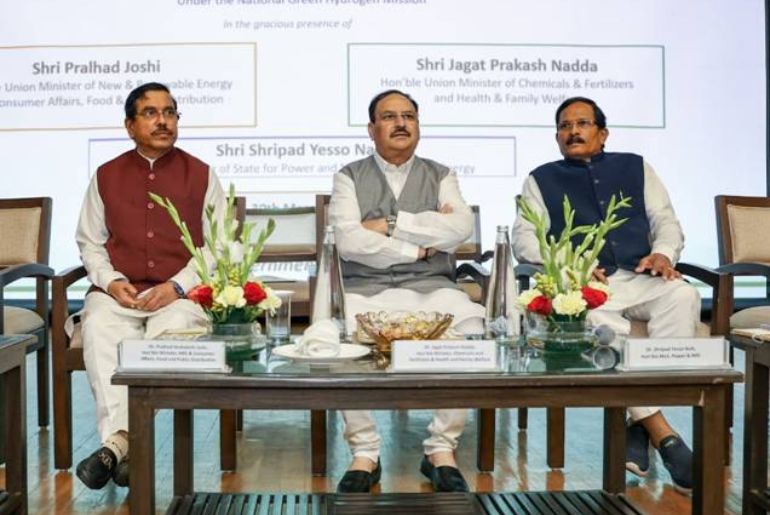
The event was attended by key policymakers, including J. P. Nadda, Pralhad Joshi, and Shripad Yesso Naik.
Shri J. P. Nadda called the development a “historic and forward-looking step toward operationalising a robust green ammonia ecosystem.”
He talked about how important it was for farmers to have access to fertiliser that was less dependent on imports, more affordable, and more self-sufficient.
Shri Pralhad Joshi highlighted India’s dual focus on growth and sustainability, stating, “India has demonstrated how economic growth and climate action can move together at scale and speed.” He further added that “energy security is now integral to national security,” noting that replacing imported grey ammonia with green alternatives could generate foreign exchange savings of around $2.5 billion over the agreement period.
Driving Industrial Decarbonisation and Energy Security
The agreements should speed up the use of green ammonia in industries that are hard to clean up, like fertilisers, refineries, steel, and transportation. The project strengthens India’s push for affordable clean energy solutions by offering prices that are said to be lower than global benchmarks.
Overall, the development by India represents a key allocation milestone under the National Green Hydrogen Mission, reinforcing efforts to boost domestic production, enhance supply chain resilience, and support India’s broader goal of achieving a sustainable and self-reliant energy future.
 Electrify your feed! Click here to join our Whatsapp group and to get the latest updates, expert insights, and innovations driving India’s energy storage revolution.