Minister of State in the Ministry of Power, Shri Shripad Naik submitted a written reply in Rajya Sabha stated that India is continuously assessing grid readiness and stability to support the rapid growth of renewable energy (RE). System studies such as load flow studies, dynamic stability studies, and contingency analysis are regularly conducted to evaluate the impact of renewable energy variability, intermittency, and peak-load requirements on the national grid.
These tests help make sure that renewable energy can be safely and reliably added to the grid without causing problems or outages.
Transmission Infrastructure Planned for 500 GW Renewable Capacity
The government has set up the transmission system so that more than 500 GW of renewable energy capacity can be added by 2030. Phased implementation of transmission schemes linked to renewable projects is happening at the same time as new renewable capacity is being added.
Simultaneously, intra-state transmission networks are being strengthened to match the expansion of renewable power installations. Strong interconnections between Inter-State Transmission System (ISTS) renewable schemes and intra-state networks are being developed to enhance reliability, voltage stability, angular stability, and reduce transmission losses.
Green Energy Corridor Supporting Renewable Integration
Under the Green Energy Corridor (GEC) Scheme, the government is also helping states with Central Financial Assistance (CFA).
Key highlights include:
- The Intra-State Green Energy Corridor Scheme is being implemented in 10 states by the Ministry of New and Renewable Energy (MNRE).
- 24 GW renewable evacuation capacity under GEC Phase-I has already been commissioned.
- GEC Phase-II, designed to evacuate around 20 GW renewable power, is currently under implementation.
Advanced Grid Management and Market Mechanisms
To manage renewable variability and improve forecasting, Regional Energy Management Centers (REMCs) have been established to assist grid operators in handling intermittent renewable power.
Several market and operational mechanisms have also been introduced, including:
- Green Term Ahead Market (GTAM) and Green Day Ahead Market (GDAM) for renewable energy trading
- Flexible scheduling of thermal and hydro power plants to manage renewable fluctuations
- Automatic Generation Control (AGC) sending secondary reserve signals every four seconds to maintain grid frequency
- Market-based Tertiary Reserve Ancillary Services (TRAS) to address real-time demand-supply imbalances
Energy Storage and Grid Support Technologies
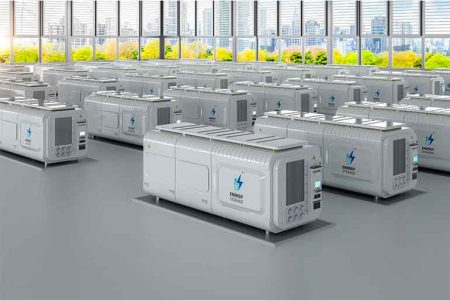
To mitigate renewable variability and provide frequency support, the government is promoting hybrid renewable power plants, energy storage systems, and pumped storage projects.
Important initiatives include:
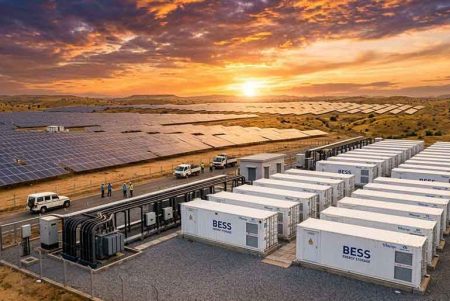
- Viability Gap Funding (VGF) scheme supporting 43 GWh Battery Energy Storage System (BESS) deployment
- Installation of STATCOMs, SVCs, and synchronous condensers to maintain voltage stability
- Switching of reactors within renewable complexes to maintain voltage within safe operating limits
The Production Linked Incentive (PLI) Scheme for Advanced Chemistry Cell (ACC) Battery Storage, which has a budget of ₹18,100 crore, also aims to build 50 GWh of manufacturing capacity in India, including 10 GWh for stationary storage on the grid.
Improved Forecasting Through Weather Monitoring
The Central Electricity Authority (CEA) has told solar and wind power plants that they must put up Automatic Weather Stations (AWS) by July 7, 2025. These systems will measure important weather conditions in real time, which will help with better forecasting of renewable energy generation, higher efficiency, and more reliable grids.
National Electricity Plan to Strengthen Transmission Network
To support rising electricity demand, the Government of India notified the National Electricity Plan (Transmission) 2024, covering transmission requirements for 2023–2032.
India’s peak electricity demand is expected to reach 446 GW, while energy requirement may rise to 3215 billion units by 2034–35.
Major Capacity Additions Planned
The government has plans to add a lot of capacity to different energy sources to meet future demand.
Thermal Power
- Target thermal capacity by 2034–35: 307 GW
- Installed capacity (March 2023): 211,855 MW
- Additional planned thermal capacity: 97,000 MW
Current status:
- 18,160 MW commissioned since April 2023
- 38,745 MW under construction
- 22,920 MW contracts awarded
- 24,020 MW in planning stages
Hydropower
- 12,723.5 MW under construction
- 4,274 MW in planning, targeted by 2031–32
Nuclear Power
- 6,600 MW under construction (target completion by 2029–30)
- 7,000 MW in planning stages
Renewable Energy
- 157,800 MW under construction, including:
- 67,280 MW solar
- 6,500 MW wind
- 60,040 MW hybrid
48,720 MW under planning, including:
- 35,440 MW solar
- 11,480 MW hybrid
Energy Storage
- 11,620 MW / 69,720 MWh pumped storage under construction
- 6,580 MW / 39,480 MWh pumped storage approved
- 9,653.94 MW / 26,729.32 MWh BESS under construction
- 19,797.65 MW / 61,013.40 MWh BESS in tendering stage
 Electrify your feed! Click here to join our Whatsapp group and to get the latest updates, expert insights, and innovations driving India’s energy storage revolution.