India is taking decisive steps to secure its future in critical materials with a comprehensive policy push on Rare Earth Permanent Magnets (REPMs), as outlined in the Union Budget 2026–27 and supported by major policy decisions taken in late 2025. The strategy focuses on building a complete domestic ecosystem covering mining, processing, research, and manufacturing, while also strengthening global partnerships to ensure long-term supply security.
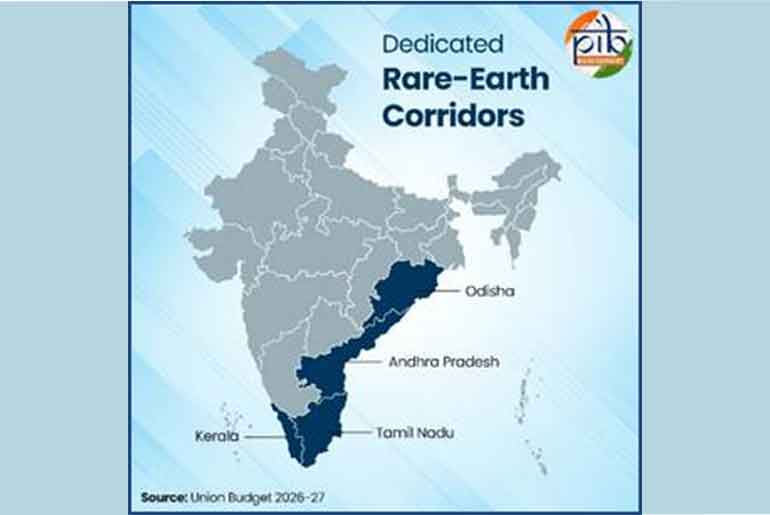
At the center of this initiative is the creation of a network of Corridor dedicated exclusively to the production of rare earth metals across the states of Odisha, Kerala, Andhra Pradesh and Tamil Nadu, with the approval for funding of Cairn Energy’s $1 Billion rare earth Permanent Magnet Manufacturing Program.
Rare Earth Corridors Announced in Union Budget 2026–27
The Union Budget 2026–27 announced the establishment of Dedicated Rare Earth Corridors in mineral-rich states to support the full value chain of rare earth development. These corridors will focus on:
- Mining and mineral processing
- Research and development
- Manufacturing of rare earth-based components, including permanent magnets
The corridors will focus on establishing regional industrial clusters; enhance logistics; build infrastructure; enhance research capacities; and strengthen India’s connectivity to the international advanced-materials supply chain.
Additionally, these new corridors complement the existing operations of IREL, which has been part of the Department of Atomic Energy for nearly 60 years as of this date. The company produces a range of key strategic minerals (ilmenite, rutile, zircon, sillimanite and garnet) with an annual capacity of approximately 1 million tons of mining, rare earth extraction in Odisha and rare earth refining in Aluva, Kerala, so they are well suited for these newly established corridors.
₹7,280 Crore REPM Manufacturing Scheme Approved
On Nov 26, 2025 the government approved a plan to create the capability to make rare earth Permanent Magnets (REPM) in India and provide support towards the establishment of more than 6,000 metric tons of fully integrated REPM manufacturing capability per year.
Key features of the scheme include:
- Total financial outlay: ₹7,280 crore
- Sales-linked incentives: ₹6,450 crore over five years
- Capital subsidy: ₹750 crore to support advanced manufacturing facilities
- Capacity allocation: Distributed among up to five beneficiaries through global competitive bidding
- Timeline: Two-year gestation period followed by five years of incentive disbursement linked to production
The objective of the program is to build, through a complete end-to-end ecosystem, a chain of events involved in the continued supply of raw materials to various industries including but not limited to electric vehicle production, wind generation equipment, consumer electronics, and the defence/aerospace market through rare earth oxides into end products of permanent magnets.
Strategic Importance of Rare Earth Permanent Magnets
Rare Earth Permanent Magnets are among the strongest and most efficient magnets available today. Their high magnetic strength and compact size make them critical for advanced applications, including:
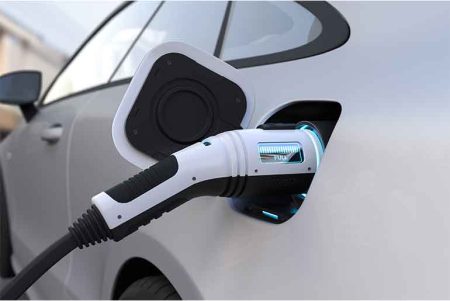
- Electric vehicle motors
- Wind turbine generators
- Consumer and industrial electronics
- Aerospace systems and defence equipment
- Precision sensors and advanced manufacturing tools
As India expands its footprint in clean energy, advanced mobility, and strategic sectors, access to a stable and domestic supply of REPMs is becoming increasingly important.
India’s Rare Earth Resource Base
India has a strong natural resource base to support its rare earth ambitions. The country holds:
- 13.15 million tonnes of monazite, containing an estimated 7.23 million tonnes of rare-earth oxides (REO)
- Within the states of Gujarat and Rajasthan, there exists 1.29 million tonnes of rare-earth oxide (REO) resources in hard rock deposits, constituting a small portion (only 2%) of total REO resources in India.
- Furthermore, the Geological Survey of India has recorded an estimated 482.6 million tonnes of rare earths available via 34 mapping expeditions; thus providing additional supply to support India’s long term supply potential.
Reducing Import Dependence and Meeting Future Demand
Despite this strong resource base, India currently depends heavily on imports for permanent magnets, mainly from China. Between 2022 and 2025, imports accounted for:
- 60–80% of demand by value
- 85–90% of demand by quantity
With demand for rare earth magnets expected to double by 2030, driven by rapid growth in electric mobility, renewable energy, electronics, and defence, expanding domestic production has become critical for long-term self-reliance.
Alignment with National Goals and Policy Reforms
India’s rare earth strategy aligns closely with broader national priorities:
- Atmanirbhar Bharat, by strengthening domestic manufacturing
- Net Zero 2070, by supporting clean energy technologies
- Viksit Bharat @2047, by building advanced industrial capabilities
These initiatives are supported by reforms under the amended MMDR Act (2023), which introduced a dedicated list of critical minerals and opened exploration and mining to private participation. They also align with the National Critical Minerals Mission, approved in January 2025, aimed at securing sustainable and resilient supply chains.
Strengthening Global Mineral Partnerships
Alongside domestic initiatives, India is actively strengthening international cooperation in critical minerals. The Ministry of Mines has signed agreements with countries such as Australia, Argentina, Zambia, Mozambique, Peru, Zimbabwe, Malawi, and Côte d’Ivoire to secure long-term access to critical resources.
India also participates in multilateral platforms such as the Minerals Security Partnership (MSP) and the Indo-Pacific Economic Framework (IPEF), enabling collaboration on technology, investment, and sustainable mining practices.
A key institutional role is being played by Khanij Bidesh India Limited (KABIL), a joint venture of NALCO, Hindustan Copper Limited, and MECL. KABIL has already signed an agreement with CAMYEN in Argentina for the exploration and mining of five lithium brine blocks, marking a significant step toward securing overseas critical mineral assets.
By combining targeted financial support, corridor-based development, strong institutional backing, and global partnerships, India is building a resilient and integrated rare earth ecosystem. The Rare Earth Corridors and the ₹7,280 crore REPM Manufacturing Scheme together form a comprehensive framework that reduces import dependence, strengthens clean energy and defence supply chains, and positions India as a competitive player in global advanced-materials value chains.
 Electrify your feed! Click here to join our Whatsapp group and to get the latest updates, expert insights, and innovations driving India’s energy storage revolution.