India added 17.04 GW of renewable energy capacity during the first four months of the financial year 2026-27, from April through July 2026, with solar and wind power accounting for more than 96% of the total additions, according to data released by the Ministry of New and Renewable Energy (MNRE).
Solar remained the dominant source of new renewable capacity, with 14.33 GW commissioned during the period. Wind contributed a further 2.04 GW, bringing combined solar and wind additions to 16.38 GW between April and July.
As of July 31, 2026, India’s total renewable energy capacity, including large hydro, had reached 291.73 GW. Renewable capacity excluding large hydropower stood at 239.66 GW.
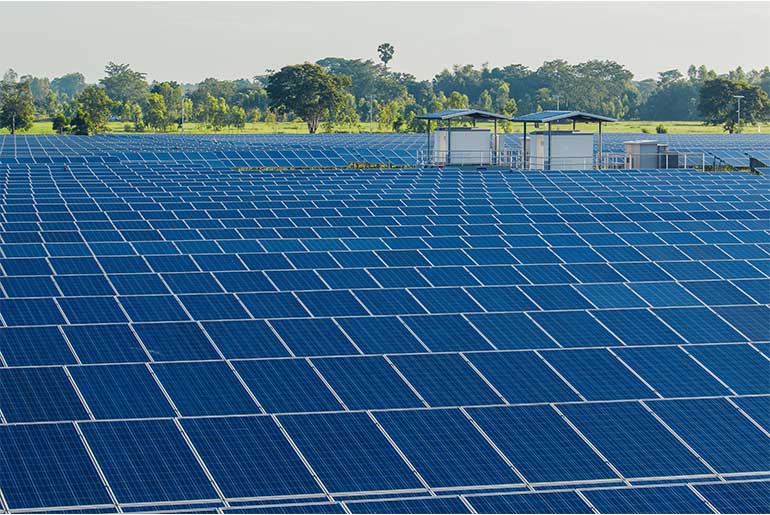
Solar power accounted for roughly 84% of the renewable capacity added during the first four months of FY27. MNRE data shows that India installed 14,334.05 MW of solar capacity during the period, taking the country’s cumulative installed solar capacity to 164.59 GW.
Ground-mounted solar projects continued to represent the largest share, with 122.57 GW installed. Grid-connected rooftop solar capacity reached 30.74 GW, while the solar component of hybrid projects stood at 4.77 GW. Off-grid solar installations accounted for another 6.51 GW.
Solar additions slowed during July, with 2,442.75 MW commissioned during the month. This compared with approximately 2.81 GW in May and 5.11 GW in June. June therefore recorded the strongest monthly solar addition among the three months.
The April-June period had already delivered 11.89 GW of new solar capacity, followed by another 2.44 GW in July. MNRE figures show solar additions of 11,891.30 MW during the first quarter of FY27 and 14,334.05 MW by the end of July.
The slowdown in July can partly be linked to seasonal monsoon conditions, while the implementation of the Approved List of Models and Manufacturers (ALMM) requirements from June 1 also affected project activity. Subsequent modifications and exemptions to the rules in July are expected to provide greater flexibility to developers and potentially support faster project execution in the coming months.
Wind power also maintained strong momentum during the period. India added 2,042.05 MW of new wind capacity between April and July, taking cumulative installed wind capacity to 58.14 GW.
July was particularly strong for the wind sector, with 693.5 MW commissioned during the month. Wind additions in the first three months of FY27 totalled 1,348.55 MW, including 636.35 MW in June.
May also recorded healthy growth, with 370.45 MW of wind capacity added compared with 233.7 MW during May 2025. This represents year-on-year growth of approximately 58.5%.
Across all renewable technologies, India added 3,136.25 MW of capacity in July, excluding large hydro. Solar accounted for 2,442.75 MW, while wind contributed 693.5 MW, together making up almost the entire monthly increase.
For the April-July period, total renewable energy capacity additions, including large hydro, reached 17,037.54 MW. Large hydropower contributed 650 MW, while small hydro added 10.4 MW. The balance came primarily from solar and wind, along with other renewable technologies.
The latest capacity figures highlight the continued importance of solar power in India’s clean-energy expansion. With project activity expected to improve as monsoon-related disruptions ease and recent ALMM changes provide additional flexibility, renewable capacity additions could accelerate further during the remaining months of FY27.
 Electrify your feed! Click here to join our Whatsapp group and to get the latest updates, expert insights, and innovations driving India’s energy storage revolution.