
KPI Green Energy Ltd has announced its FY26 results. The Gujarat-based renewable energy firm saw sharp growth in revenue and profit, driven by the rapid execution of solar and hybrid projects. At the same time, it took on significantly more debt to fund expansion into battery energy storage, green hydrogen, and large-scale clean energy infrastructure.
The solar and BESS-focused EPC and developer reported a consolidated net profit of Rs 509 crore for the year ended March 2026. That’s 57% higher than the Rs 325 crore profit in the previous fiscal year. Revenue from operations rose 54% to Rs 2,696 crore, up from Rs 1,755 crore a year ago, continuing the growth trend since FY23.
In Q4, the company led by Faruk Patel posted a net profit of Rs 155 crore compared to Rs 104 crore in the same quarter last year. Quarterly revenue climbed to Rs 796 crore from Rs 569 crore.
The profit growth came from higher contributions by the company’s captive power producer and independent power producer businesses, along with more renewable capacity added during the year. But the expansion was largely debt-funded.
Long-term borrowings jumped to Rs 3,666 crore at the end of FY26 from Rs 862 crore a year earlier. Short-term borrowings rose to Rs 866 crore from Rs 264 crore. As a result, the debt-to-equity ratio increased to 1.49 from 0.46 in FY25, and finance costs more than doubled to Rs 182 crore from Rs 79 crore. Property, plant, and equipment nearly doubled to Rs 4,429 crore from Rs 2,279 crore, reflecting big investments in renewable assets and infrastructure.
The strong results lifted the stock on NSE and BSE, with shares rising up to 10% to over Rs 507 before trimming gains.
Even with higher leverage, KPI Green kept scaling up fast. It’s installed, and upcoming renewable capacity grew to around 6.26 GW from 3.91 GW a year ago.
The IPP portfolio now stands at 2.57 GW, including 1.61 GW under execution. The CPP portfolio has expanded to 3.69 GW.
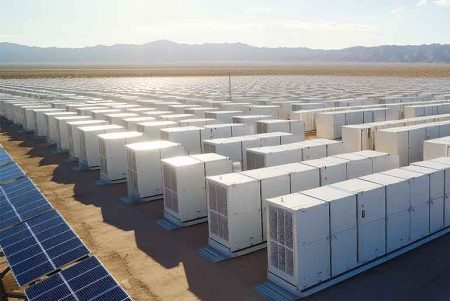
The company also pushed harder into BESS, a key part of India’s push for round-the-clock clean power. Key wins include a 445 MW/890 MWh standalone BESS project and a 120 MW/240 MWh storage project from Gujarat Urja Vikas Nigam Ltd to subsidiary Sun Drops Energia.
KPI Green said these BESS projects will help with peak-load management, frequency regulation, and balancing intermittent renewable generation. It also secured major wind and solar orders: a 300 MW wind project from SJVN, a 150 MW wind project from GUVNL, and a 250 MW solar EPC project in Gujarat.
KPI Green is expanding into green hydrogen, offshore wind, floating solar, and pumped storage projects as developers diversify into emerging clean energy areas. It commissioned a 1 MW green hydrogen facility at Matar in Gujarat and secured a 1-tonne-per-day green hydrogen project. It is also evaluating offshore wind opportunities near Gujarat and Tamil Nadu.
Globally, KPI Green has started expanding through partnerships in Botswana, the UAE, and South Korea. It signed an MoU with the Government of Botswana for a 5 GW renewable energy pipeline. In the UAE, its subsidiary won a solar-plus-storage order for a containerised data centre facility.
Analysts said KPI Green’s rapid scale-up mirrors the broader shift among Indian renewable firms toward integrated platforms covering solar, wind, storage, and hydrogen. However, they cautioned that the aggressive expansion is becoming increasingly capital-intensive and leverage-driven, even as the sector faces rising competition, execution pressure, and higher financing costs.
 Electrify your feed! Click here to join our Whatsapp group and to get the latest updates, expert insights, and innovations driving India’s energy storage revolution.