

India’s battery industry is entering a critical phase, with electric mobility, renewable energy integration and energy storage creating demand for reliable, locally manufactured battery solutions. Meeting this demand requires more than expanding production; it also calls for stronger domestic supply chains and responsible management of batteries at the end of their useful lives. Maxvolt Energy Industries Limited is expanding its presence across these areas, combining lithium-ion battery manufacturing with energy storage solutions and plans for battery recycling.
The company manufactures lithium battery packs for electric mobility and stationary applications. Its existing manufacturing facility in Duhai, Ghaziabad, supports battery-pack production, while its planned ₹700 crore Aligarh manufacturing project is intended to add 10 GWh of annual capacity in two phases. Maxvolt has also established Maxvolt ReEarth, a dedicated subsidiary developing a lithium-ion battery recycling ecosystem focused on recovering critical materials. These developments reflect the company’s ambition to participate in more stages of the battery value chain, from manufacturing to material recovery.
At The Battery Show and REI India 2026, Shweta from The Battery Magazine spoke with Mukesh Gupta, Chief Marketing Officer, Maxvolt, about the company’s product portfolio, manufacturing expansion, recycling ambitions and the evolving relationship between electric mobility and energy storage. The conversation examines the opportunities ahead, the challenge of dependence on imported raw materials and the capabilities needed to build a more resilient domestic battery ecosystem.
Could you introduce Maxvolt, explain its current business focus and tell us about the products you are showcasing at REI India 2026?
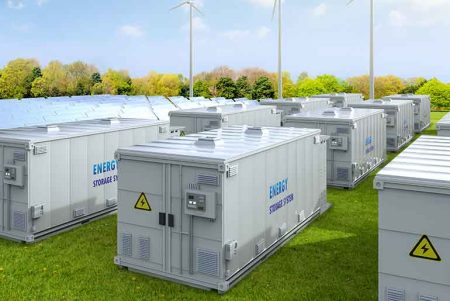
At Maxvolt, we manufacture lithium-ion batteries for various electric vehicle applications, including two-wheelers, three-wheelers and electric loaders. We also manufacture energy storage solutions, ranging from smaller systems to containerised solutions of up to 5 MWh. We offer solutions ranging from 12-volt systems commonly used in homes to systems for offices and larger installations. We manufacture systems in the 5 kW and 10 kW categories, along with rack-based solutions of up to 25 kW.
Maxvolt has announced a ₹700 crore investment in a new battery manufacturing facility in Aligarh. What does this expansion involve, and how will it strengthen the company’s manufacturing capabilities?
At Aligarh, we are expanding our manufacturing capabilities to support the growing demand for lithium-ion batteries across electric mobility and energy storage applications.
The planned facility will have an annual manufacturing capacity of 10 GWh, developed in two phases of 5 GWh each. Together with our existing Duhai facility, this expansion is expected to take our planned manufacturing capacity to 12.5 GWh annually.
The facility is being developed to serve multiple applications, including electric vehicles, Energy Storage Systems (ESS), telecom, power backup and original equipment manufacturer (OEM) requirements. It will also support the development of battery solutions for a wider range of electric mobility applications, including four-wheelers.
Our objective is to strengthen our manufacturing infrastructure and build the capacity required to serve a rapidly expanding market. By scaling up production and broadening our application portfolio, we aim to contribute to India’s domestic battery manufacturing ecosystem and meet the evolving requirements of customers across different sectors.
Maxvolt has established Maxvolt ReEarth as a dedicated battery recycling subsidiary. How does this initiative fit into the company’s long-term strategy, and what technologies are being developed to recover valuable materials from used batteries?
Maxvolt ReEarth is our wholly owned subsidiary, established to develop a dedicated lithium-ion battery recycling ecosystem. Recycling is an important part of our long-term strategy because we believe that responsible battery manufacturing must also address what happens to batteries at the end of their useful lives.
Through ReEarth, we are working towards recovering valuable materials such as lithium, cobalt, nickel and manganese from spent batteries and returning these materials to the battery supply chain. Our published plans cover different lithium-ion battery chemistries, including LFP, NMC, NCA and LCO, which require appropriate processing and material-recovery approaches.
Our recycling roadmap includes battery collection, processing, black-mass production and the subsequent recovery of critical minerals. We are also developing capabilities in hydrometallurgical processing and exploring advanced recycling technologies to improve material recovery and support a more circular battery ecosystem.
This initiative is particularly important for India because reducing dependence on imported raw materials requires us to strengthen domestic recovery and recycling capabilities. Through Maxvolt ReEarth, we aim to support more sustainable battery manufacturing, improve resource utilisation and contribute to a stronger domestic battery supply chain.
Having witnessed the development of the energy sector over the last decade, what major changes have you observed, and what do you expect from India’s power sector in the coming years?
Electric mobility has emerged as a major development, and the demand for energy storage has increased accordingly. Electric vehicles require electricity for charging, and energy storage will play a significant role in supporting this growth.
Earlier, transportation was largely dependent on internal combustion engine vehicles running on diesel and petrol. Now, the power sector is expected to generate substantial demand for energy. Energy resources are available to us, but we have not fully utilised their potential.
The time has come to harness these resources more effectively, store energy and use it efficiently. This will help us protect the environment and build a more sustainable future.
What do you consider the biggest challenge facing India’s battery industry today, and how can it be addressed?
One of the major challenges is our dependence on other countries for lithium-related raw materials, particularly China. This dependence needs to be reduced.
Battery recycling can help address this challenge. If we manufacture batteries in India and establish effective recycling systems, materials from used batteries that might otherwise be discarded can be recovered and reused.
Through recycling, we can reduce our dependence on other countries for raw materials and make domestic battery manufacturing more sustainable.
What can the industry expect from Maxvolt over the next few years?
Maxvolt Energy is expanding across different segments of electric mobility and energy storage. We have already started manufacturing, and we plan to begin our recycling operations over the next one and a half years.
We are working across different parts of the electric mobility, energy storage and renewable energy ecosystem, and we intend to strengthen our presence in these areas.
How is MaxVolt ReEarth approaching material recovery across LFP and NMC chemistries, and what steps are being taken to improve recovery efficiency, material purity and commercial viability?
MaxVolt ReEarth, a subsidiary of MaxVolt Energy Industries Limited, is building a chemistry-specific lithium-ion battery recycling ecosystem to recover critical materials from end-of-life batteries.
For NMC batteries, we use mechanical pre-processing to separate material fractions and produce black mass. Hydrometallurgical processing (controlled leaching, selective recovery and purification) then recovers lithium, nickel, cobalt and manganese as battery-grade metal salts and precursor materials.
For LFP batteries, which contain no nickel or cobalt and so have lower feedstock value, we are developing direct recycling. Regeneration and relithiation restore the spent cathode’s structure and electrochemical performance, which improves recycling economics. Graphite recovery is also being evaluated.
To improve efficiency and purity, we optimise process parameters and sequencing, improve selective separation, and reduce impurity carryover such as aluminium, copper and iron. Mass-balance tracking and material characterisation at every stage confirm whether recovered materials are fit for reuse. AI/ML-based digital twin models help predict and optimise recovery and purity.
For commercial viability, we assess each route’s yields, reagent and utility use, costs, feedstock variability and product quality, from lab to plant scale. Being part of the MaxVolt group gives us access to manufacturing scrap, end-of-life feedstock and a pathway back into the battery supply chain.
We favour low-temperature hydrometallurgical and direct recycling routes over energy-intensive pyrometallurgy, and use life-cycle assessment to measure each route’s carbon footprint. Together, these strategies support EPR compliance, reduce dependence on mined materials and advance India’s circular battery economy.
How does MaxVolt Energy adapt its BMS, thermal protection and validation procedures to the different safety and operating requirements of electric mobility and stationary storage, and what testing processes are used to assess performance, reliability and service life?
MaxVolt Energy Industries Limited, listed on NSE Emerge since February 2025, makes lithium-ion battery packs for electric mobility, energy storage, telecom, power backup, medical and industrial use. Its Duhai facility produces about 40,000 batteries a month, and a 10 GWh/year campus is planned in Aligarh, Uttar Pradesh.
- BMS by application: We are developing AI-enabled smart BMS with predictive diagnostics and early fault detection. For mobility, the focus is accurate SoC and SoH estimation, abnormal cell detection and thermal anomaly identification. For stationary storage, it is degradation forecasting, Remaining Useful Life estimation and predictive maintenance. This work is supported by our in-house R&D team and partnerships with IIT Delhi and IIT Roorkee.
- Thermal protection: Epoxy-based encapsulation adds thermal and physical protection; internal heating tests showed no sustained flame under the conditions tested. The BMS protects against overcharge, over-discharge, overcurrent, short circuits and excessive temperatures.
- Traceability: MaxTrace, our in-house platform, tracks cell registration, assembly, quality control, testing and dispatch. We are also building a Digital Battery Passport, “Battery Aadhaar”, to record each battery’s full lifecycle history.
- Testing and validation: Our EV batteries hold AIS-156 certification for applicable models, and our cells come from BIS-compliant suppliers. Validation covers electrical safety, thermal response, BMS fault detection, capacity and internal resistance, cycle life and, where applicable, mechanical and environmental testing. Protocols are adapted to each application and its regulations.
- Service life: Our dealer and service network supports customers, OEMs and fleets. Through our buy-back policy, returned batteries are assessed, then refurbished, given a second life or recycled by MaxVolt ReEarth. Field and warranty data on capacity, resistance and temperature trends help us improve future designs.
 Electrify your feed! Click here to join our Whatsapp group and to get the latest updates, expert insights, and innovations driving India’s energy storage revolution.