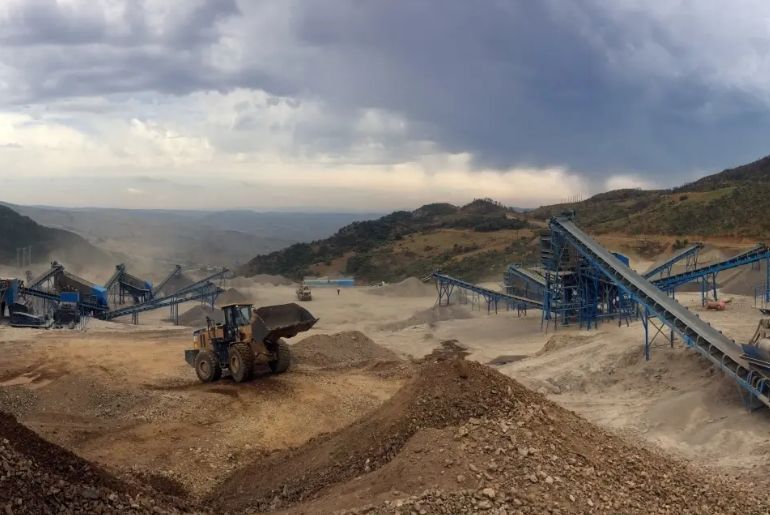
The Ministry of Mines has notified the Minerals (Other than Atomic and Hydro Carbons Energy Minerals) Concession (Second Amendment) Rules, 2026 on March 30, 2026. The amendment introduces a detailed framework for including contiguous areas in mining leases and composite licences for deep-seated minerals, along with provisions for adding associated minerals to both major and minor mineral leases.
Aligned with MMDR Amendment Act, 2025
The new rules are based on changes that were made to the Mines and Minerals (Development and Regulation) Act, 1957 by the MMDR Amendment Act, 2025, which went into effect on September 1, 2025. The changes are meant to encourage more exploration and production of important minerals that India needs for its industrial growth and to support the idea of Atmanirbhar Bharat.
Simplified Process for Contiguous Area Inclusion
The new rules make it easier and faster for leaseholders to add adjacent (contiguous) land to their mining areas.
Key Provisions:
- Mining Lease (ML): Contiguous area addition capped at 10%
- Composite Licence (CL): Contiguous area addition capped at 30%
- Auctioned leases: 10% of auction premium payable on minerals from added area
- Non-auctioned leases: Additional payment equal to royalty applicable
This provision is expected to enable efficient extraction of deep-seated minerals that may otherwise remain unutilised due to economic or operational constraints.
Inclusion of Associated and Major Minerals
The rules also spell out how to add more minerals, even small ones, to existing leases. Within 30 days, state governments must approve these kinds of applications.
Notably, no additional charges will be levied for including critical, strategic, or deep-seated minerals listed under the Seventh Schedule of the MMDR Act, thereby incentivising their production despite extraction challenges.
Strengthening Exploration and Auction Framework
The amendment also mandates that future leases for minor minerals (excluding sand) will be granted only after exploration up to the G3 level. If major minerals are discovered during exploration, the area must be auctioned as a major mineral block.
Additional Measures:
- Inclusion of major minerals in pre-2025 minor mineral leases permitted
- Ensures optimal utilisation of mineral resources
- Promotes scientific and structured mining practices
Removal of Sale Restrictions for Captive Mines
Another significant reform is the removal of restrictions on the sale of minerals from captive mines. Lessees can now sell surplus minerals after meeting the full capacity requirements of their end-use plants. If operating below capacity, sales are limited to the quantity consumed annually.
This move is expected to enhance mineral availability in the market, particularly benefiting MSMEs.
Boost to Ease of Doing Business and Sector Growth
The goal of the amendment is to make rules easier to follow, make it easier to do business, and boost the production of important and strategic minerals. It should also bring in more money for state governments while making better use of resources.
The rules were formulated following extensive consultations with state governments, central ministries, industry stakeholders, and associations.
 Electrify your feed! Click here to join our Whatsapp group and to get the latest updates, expert insights, and innovations driving India’s energy storage revolution.