
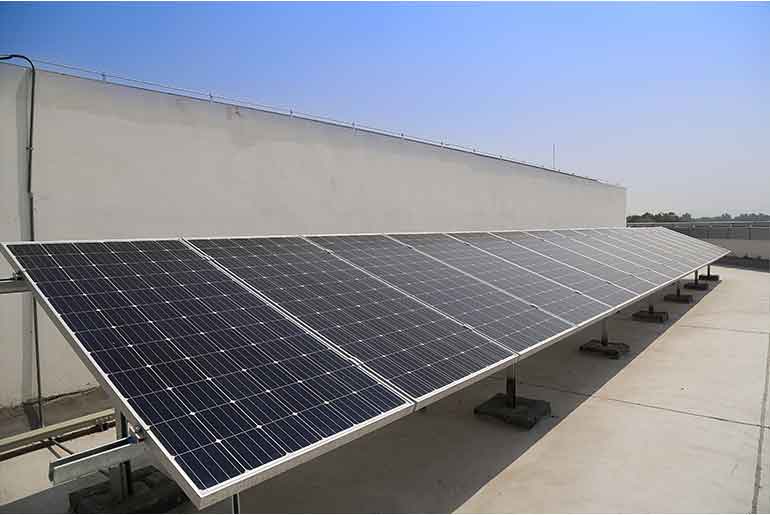
The Ministry of New and Renewable Energy (MNRE) has approved the installation of nearly 13 lakh rooftop solar systems across 10 states and Union Territories under the Utility-Led Aggregation (ULA) model of the PM Surya Ghar Muft Bijli Yojana. This approval represents a significant step in changing the country’s approach to rooftop solar deployment.
Previously, homeowners were responsible for coordinating their own installers, receiving the necessary subsidies and getting the required approvals from vendors. The new ULA model assigns all responsibility for implementing the plan to power distribution companies (“Discoms”). In this new approach, Discoms will aggregate the solar installation demands of tens of thousands of homes and issue large-scale contracts to install solar panels on people’s homes.
By procuring in bulk, there will likely be a very large reduction in installation costs. The quality control and standardisation will also enhance through contracting multiple providers. Larger developers will also benefit from the economies of scale available to them once the rooftop installations become more centralised and organised within a structure.
The growing use of the Renewable Energy Service Company (RESCO) framework is one of the best things about the plan. Private developers can set up and maintain rooftop solar systems under this method, and customers don’t have to pay anything up front. Under the PM Surya Ghar plan, households get cheaper or free energy in exchange, and developers get their money back through long-term operational revenues.
The ULA model also addresses one of the biggest challenges in India’s rooftop solar sector — the reluctance of Discoms to support large-scale residential solar adoption. By involving utilities directly in project execution, the government aims to align rooftop solar expansion with Renewable Purchase Obligation (RPO) targets and grid management requirements.
According to government data, India has already installed more than 31 lakh rooftop solar systems with cumulative capacity exceeding 11 GW under the PM Surya Ghar Muft Bijli Yojana. The government is targeting one crore rooftop solar installations by March 2027, with nearly 30 lakh systems expected to come through the ULA model itself.
Industry experts believe the approval could become a major turning point for India’s distributed renewable energy sector by simplifying deployment, lowering costs and accelerating rooftop solar adoption nationwide.
 Electrify your feed! Click here to join our Whatsapp group and to get the latest updates, expert insights, and innovations driving India’s energy storage revolution.