The Ministry of New and Renewable Energy (MNRE) has issued a key clarification stating that developers will not be required to obtain a no-objection certificate (NOC) from procurers to sell electricity generated from energy storage systems (ESS) in the open market, provided such systems are charged using non-renewable sources and the associated renewable energy project has not yet been commissioned.
The recent memo that made things clearer applies to both current and future projects that fall under the firm and dispatchable renewable energy (FDRE) framework.
Clarity on Treatment of ESS Under FDRE
The move comes in response to industry concerns regarding ambiguity in handling ESS operations within FDRE guidelines. MNRE reiterated that electricity discharged from storage systems charged using non-renewable power does not qualify as renewable energy and therefore cannot be supplied under renewable-linked power purchase agreements (PPAs).
“In such cases, the developer is free to sell power through merchant or third-party routes, without requiring NOC from the intermediary or end procurer,” the ministry said.
The ministry further clarified that the “right of first refusal” applies only to renewable power generated from commissioned solar or wind assets and not to electricity discharged from storage systems charged using non-renewable sources.
Addressing Operational Challenges
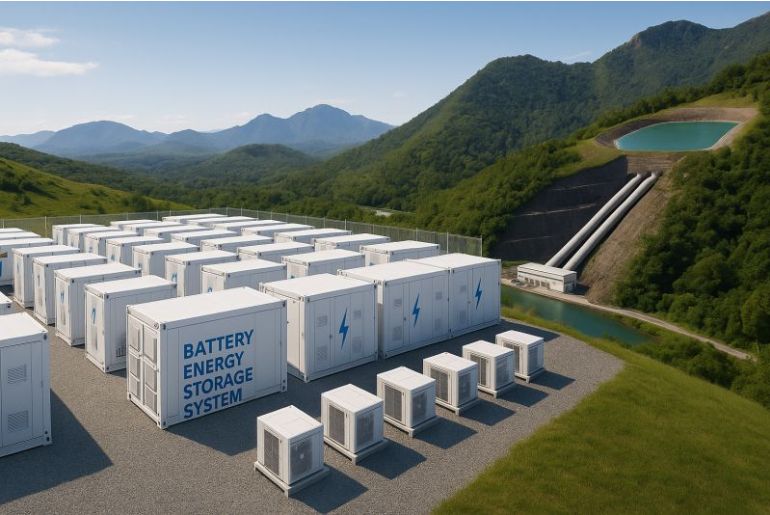
The clarification deals with a problem that many developers have: many hybrid and storage-linked renewable projects are done in stages. Battery energy storage systems (BESS) are sometimes put into use before solar or wind assets, which means that developers have to use grid power to charge them.
This had led to confusion over whether such electricity could be treated as renewable or required approvals before being sold in the open market. MNRE noted that requiring NOC in such scenarios would create regulatory inconsistencies, as procurers would effectively be purchasing non-renewable power under renewable contracts.
Boost to Project Flexibility and Viability
It is expected that the choice will give developers more operational freedom and get rid of procedural roadblocks. The clarification helps projects become more viable and improve cash flow by allowing early-stage storage assets to be sold without needing extra approvals.
It also ensures better alignment between policy intent and implementation, particularly as India scales up complex renewable energy projects involving hybrid and storage components.
The clarification has been sent to important agencies that will be carrying it out, such as the Solar Energy Corporation of India and NTPC Limited. This strengthens a streamlined approach to putting in place energy storage under the FDRE framework.
 Electrify your feed! Click here to join our Whatsapp group and to get the latest updates, expert insights, and innovations driving India’s energy storage revolution.