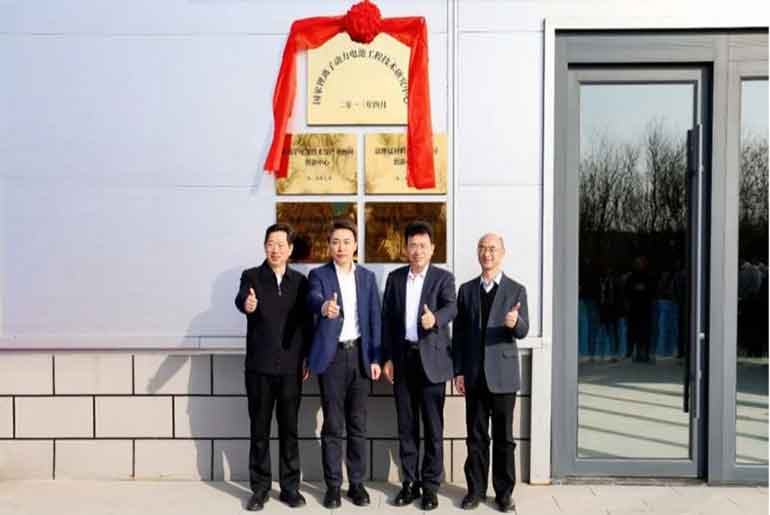
Researchers at Nankai University in China have announced a major breakthrough in electric vehicle battery technology, successfully testing a semi-solid-state lithium battery capable of delivering more than 1,000 kilometers of driving range in a real vehicle demonstration. The development was led by Professor Chen Jun, an academician of the Chinese Academy of Sciences and Executive Vice President of Nankai University, along with a multidisciplinary research team focused on next-generation energy storage technologies.
According to the university’s official announcement, the battery features an advanced hybrid solid–liquid electrolyte architecture, commonly described as a semi-solid-state design, which combines the stability of solid electrolytes with the high ionic conductivity of liquid electrolytes. This approach aims to overcome many of the safety and energy-density limitations associated with conventional lithium-ion batteries used in electric vehicles today.
The newly developed battery reportedly achieves a cell-level energy density exceeding 500 Wh/kg, placing it significantly above the energy density of current commercial lithium-ion batteries. For comparison, widely used lithium iron phosphate (LFP) batteries typically offer around 160–200 Wh/kg, while nickel-manganese-cobalt (NMC) batteries used in premium EVs generally reach 250–300 Wh/kg. At the battery pack level, the system developed by the Nankai team reaches an energy density of approximately 288 Wh/kg.
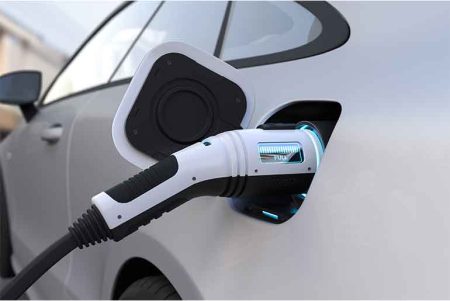
The prototype battery pack used in the demonstration vehicle has a total capacity of 142 kWh, enabling the EV to exceed 1,000 kilometers of driving range on a single charge under testing conditions. Researchers indicate that the battery was integrated into a vehicle platform developed in collaboration with FAW Group, one of China’s largest automotive manufacturers, through its battery subsidiary China Automotive New Energy Battery Technology Co. Some reports suggest the technology may be linked to future Hongqi electric vehicle platforms, though further confirmation has not been provided.
A key innovation behind the battery is the use of a lithium-rich manganese-based cathode combined with a lithium metal architecture, which significantly increases energy storage capacity. The design also incorporates what researchers describe as a “super-wetting electrolyte”, a specialized electrolyte formulation that enhances the interface contact between the electrodes and the electrolyte. This improved contact helps accelerate ion transport while maintaining structural stability within the battery.
The research team states that the technology is still evolving and that future versions could reach energy densities approaching 600 Wh/kg. With further optimization, the researchers believe battery pack capacities could increase to 200 kWh, potentially enabling electric vehicles to achieve driving ranges of up to 1,600 kilometers (around 1,000 miles) on a single charge.
While the development represents a significant milestone, experts note that the technology is classified as semi-solid-state rather than fully solid-state. Unlike fully solid batteries that use entirely solid electrolytes, semi-solid designs retain small amounts of liquid electrolyte to improve ion conductivity and manufacturability. Many battery manufacturers view this hybrid approach as a practical intermediate step toward the commercialization of fully solid-state batteries.
Globally, several major players including Toyota, CATL, and QuantumScape are also racing to commercialize solid-state battery technologies, with large-scale production expected later this decade.
Although the Nankai University demonstration highlights promising performance metrics, further independent validation, large-scale manufacturing trials, and long-term cycle-life testing will be required before the technology can move toward commercial deployment.
If successfully commercialized, high-energy semi-solid-state batteries could significantly extend EV driving ranges, improve battery safety, and accelerate the global transition toward next-generation electric mobility.
 Electrify your feed! Click here to join our Whatsapp group and to get the latest updates, expert insights, and innovations driving India’s energy storage revolution.