Natrion has announced plans to manufacture defense-focused battery cells alongside its existing portfolio of battery materials and components. The newly developed cells are tailored for battery-powered uncrewed platforms such as drones, underwater and surface vessels, ground vehicles, and humanoid systems. According to the company, the batteries offer close to 80% higher energy density compared to conventional lithium-ion alternatives while remaining economically viable and compliant with National Defense Authorization Act (NDAA) Section 842 supply chain standards. The launch further strengthens Natrion’s ongoing collaboration with the United States Air Force and Navy, both of which have supported the company through multiple contracts over the years.
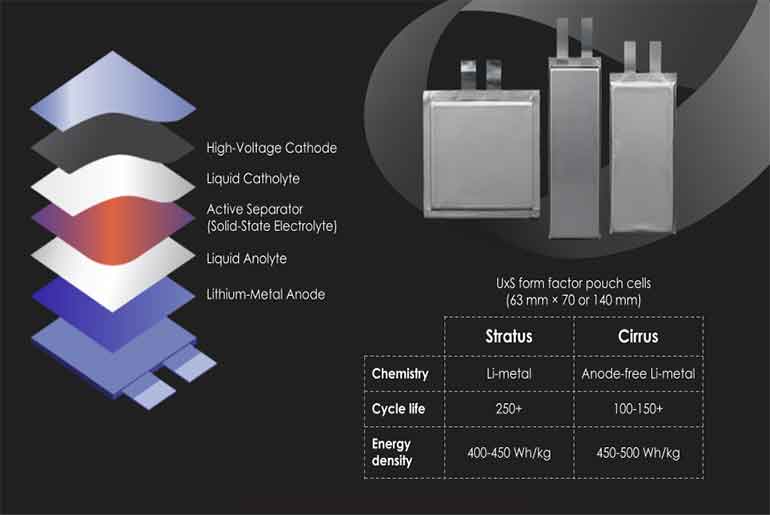
Natrion is expanding its capabilities to manufacture full battery cells end-to-end in support of these new product lines. Called Cirrus and Stratus, the new cells leverage anode-free and lithium-metal architectures, respectively, based on the company’s proprietary Active Separator material. The pouch cells are specifically sized to be dimensionally equivalent to existing battery packs assembled from more typical 21700-type Li-ion cylindrical cells. That means Cirrus- and Stratus-based packs can be swapped in place of standard Li-ion packs in virtually any system, delivering the same form factor and up to 80% more energy capacity with virtually no added weight. The technology unlocks cost-saving, superior battery performance across multiple defense and commercial applications.
“The defense sector in particular desperately needs better-performing, US-made battery cells that are right-sized and optimized for these applications,” said Alex Kosyakov, cofounder and CEO at Natrion. “Despite their vastly different requirements, current military systems have long been forced to rely on one-size-fits-all lithium-ion batteries that increase battery costs and waste precious rare minerals, while being poorly optimized for their mission. It’s a lose-lose. Today, we’re fixing that: creating mission-optimized battery cells at a dramatically lower price point, with better endurance and capability, reduced reliance on rare minerals, and manufactured on American soil.”
The ratio of battery energy capacity to weight is known as energy density, and in drones this is a key metric that influences operating time, payload capability, and maneuverability. While standard Li-ion cells top out at roughly 250-280 watt-hours of energy per kilogram (Wh/kg), Natrion’s anode-free cells exceed 450 Wh/kg, meaning a drone carrying the same payload can fly significantly farther and faster. Offering 100 to 250+ charge/discharge cycles of lifespan, Natrion’s new cells are optimized for attritable high-performance platforms.
“Higher-energy density Li-ion cells exist, but the tradeoff for performance is often much higher cost,” said Philip Lee, Natrion’s VP of Business Development for Asia-Pacific and former naval aviator in the Republic of Korea Navy. “Attritable uncrewed systems need inexpensive power sources that are readily replaceable with robust, local production supply chains, in addition to being very high in energy density. That is what we are offering with Cirrus and Stratus.”
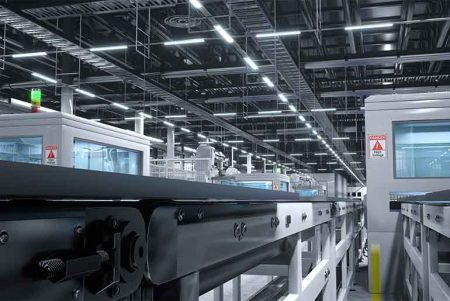
Normally, Li-ion batteries are assembled in specialized “dry rooms” with precise humidity control. The cells can then take weeks to finish aging following assembly before being shipped. Natrion’s new Cirrus cells have been specifically designed for low-cost, open-air assembly with standard equipment and require less than two days of aging.
“This dramatically lowers capital and operational costs, allowing us to replace batteries at unprecedented rates. The improved energy density enables extended duration and new mission capabilities that Li-ion simply can’t match,” added Lee.
Natrion is shipping these defense battery cell samples for user testing. Expansion of the company’s cell production capabilities has been accelerated by Natrion’s existing high-volume Active Separator manufacturing line in Buffalo, NY.
 Electrify your feed! Click here to join our Whatsapp group and to get the latest updates, expert insights, and innovations driving India’s energy storage revolution.