State-owned NLC India Limited has signed a Memorandum of Understanding (MoU) with CSIR-Central Electrochemical Research Institute (CSIR-CECRI) to jointly develop advanced technologies for the beneficiation and extraction of critical and strategic minerals. The partnership marks a significant step toward strengthening India’s critical mineral ecosystem and supporting the objectives of the National Critical Mineral Mission.
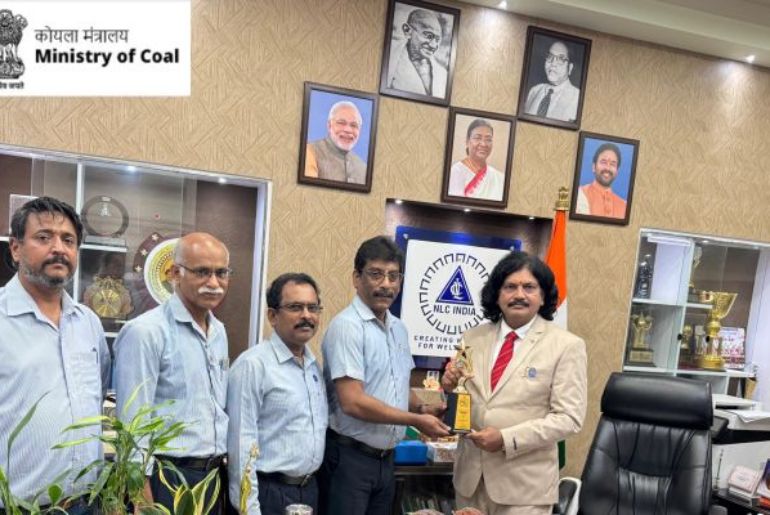
The MoU was signed on June 10, 2026, at Neyveli, Tamil Nadu, by I.S. Jasper Rose, Executive Director (Mines & Land), NLC India, and Dr. K. Ramesha, Director of CSIR-CECRI, in the presence of senior officials from both organizations, including NLC India Chairman and Managing Director Prasanna Kumar Motupalli.
Under the agreement, the two organizations will undertake detailed studies on overburden materials, mine waste, and tailings generated from NLC India’s mining operations in Neyveli. The objective is to assess the potential recovery of Rare Earth Elements (REEs) and other critical minerals that are increasingly essential for clean energy technologies, electric vehicles, electronics manufacturing, and strategic industries.
The collaboration will focus on developing innovative extraction and beneficiation technologies that can help unlock value from secondary mineral resources while reducing dependence on imports. The initiative aligns with India’s broader strategy to secure reliable supplies of critical minerals needed for the energy transition and advanced manufacturing sectors.
NLC India has been actively expanding its presence in the critical minerals sector through resource acquisition, exploration, and research partnerships. The company believes that integrating advanced mineral recovery technologies into its mining operations can create new opportunities for resource utilization and sustainable mining practices.
The NLC India–CSIR-CECRI partnership is expected to strengthen domestic technological capabilities in mineral processing and contribute to the vision of a self-reliant India by enhancing access to strategically important mineral resources.
 Electrify your feed! Click here to join our Whatsapp group and to get the latest updates, expert insights, and innovations driving India’s energy storage revolution.