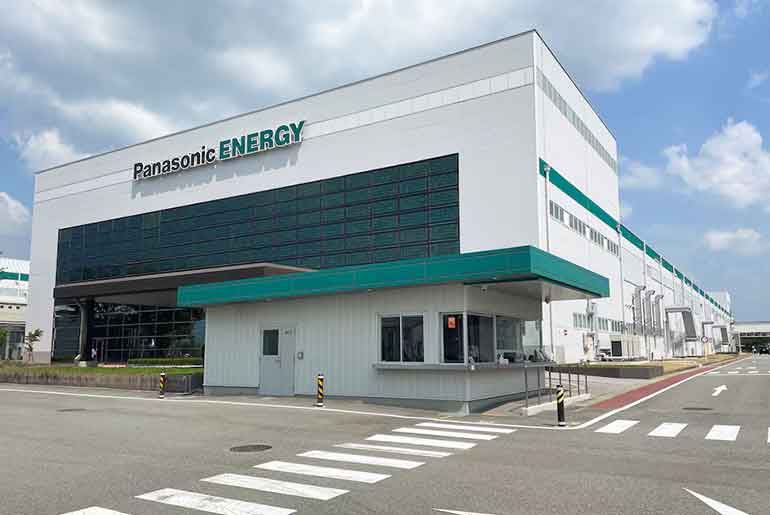
Panasonic Energy has developed a new solid-state battery capable of operating at temperatures of up to 150°C (302°F), expanding the potential applications of the technology beyond conventional battery use. The company plans to begin sample shipments between October and December 2026, according to Panasonic Energy Chief Technology Officer Shoichiro Watanabe.
The new battery raises the maximum operating temperature of Panasonic Energy’s solid-state technology from 125°C to 150°C. The company has also developed a new small-format prismatic cell design, which Watanabe said can offer greater flexibility in product layouts compared with coin-shaped cells.
Targeting Industrial and Sensor Applications
Panasonic Energy is initially focusing on applications in industrial machinery and vehicle sensors, rather than electric vehicles. The higher temperature tolerance could open opportunities in environments where conventional battery technologies face operating limitations.
According to Watanabe, potential applications could include medical equipment sterilisation, where batteries and electronic components may need to function under elevated-temperature conditions.
The company plans to begin mass production one to two years after the start of sample shipments, subject to development and commercialisation progress.
Panasonic Accelerates Battery Development for Humanoid Robots
Alongside its solid-state battery development, Panasonic Energy is also accelerating work on cylindrical batteries for humanoid robots.
Watanabe said the cylindrical format is well suited to humanoid robots because the cells can be integrated into compact spaces and rounded structures within robotic systems.
The developments highlight Panasonic Energy’s broader strategy of expanding its battery technology beyond electric vehicles into industrial equipment, sensors, robotics and other emerging applications where specialised battery performance is required.
The ability of its latest solid-state battery to withstand temperatures of up to 150°C could provide Panasonic Energy with an advantage in applications requiring high-temperature durability, while the new prismatic design could offer manufacturers greater flexibility in integrating batteries into compact systems.
 Electrify your feed! Click here to join our Whatsapp group and to get the latest updates, expert insights, and innovations driving India’s energy storage revolution.