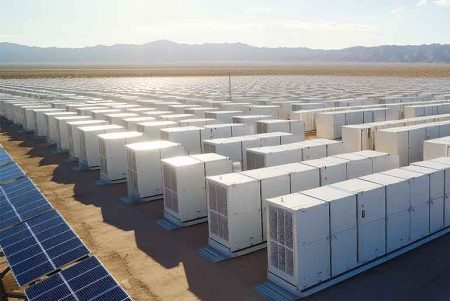
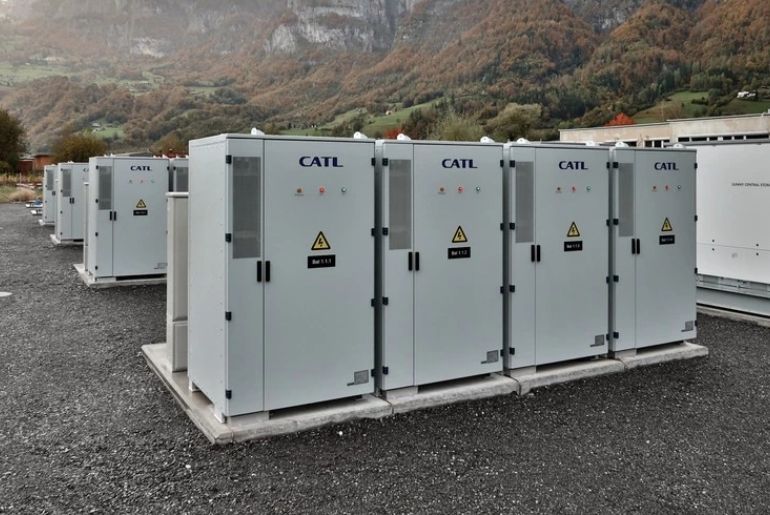
Argentine energy company PCR is advancing its renewable energy strategy with a project pipeline exceeding 500 MW of wind and solar capacity, while also assessing opportunities in the country’s developing energy storage sector. The company is currently evaluating participation in the AlmaSADI tender, which aims to deploy 700 MW of stand-alone Battery Energy Storage Systems (BESS) across Argentina’s national grid.
“We are analysing the different nodes included in the AlmaSADI battery tender,” said Lucas Méndez Trongé, Director of Institutional Affairs and Communications at PCR. “We will have to see how we compete. It seems there will be strong competition and many players involved, so we will see how we perform in this first experience with BESS systems,” he added during the Future Energy Summit Argentina.
Growing Renewable Energy Portfolio
PCR currently operates 545 MW of renewable capacity, with an additional 220 MW under construction. The company is also advancing new projects supported by transmission infrastructure upgrades and dispatch priority allocations under Argentina’s Renewable Energy Term Market (MATER).
“We have close to 180 MW with dispatch priority in Buenos Aires province, which became possible thanks to a recent transmission expansion. We also have a solar project in northern Argentina of around 350 MW that could be built,” Méndez Trongé stated.
The solar initiative, PS La Aconquija, secured 210 MW in the unified first and second quarter 2025 MATER auction. The project also includes installation of series capacitors at the Monte Quemado substation, enabling an additional 350 MW of transmission capacity along key 500 kV corridors.
Wind Projects and Infrastructure Expansion
Among its ongoing developments, PCR is expanding the Mataco–San Jorge wind farm by 37 MW, increasing total capacity to 240 MW in Buenos Aires province. Additionally, the Olavarría wind farm is set to add approximately 185 MW under Argentina’s Large Investment Incentive Regime (RIGI).
“The Olavarría wind farm is progressing according to schedule. We have already completed around 20 turbine foundations, while at the same time we are working on the construction of the two transmission expansion projects,” Méndez Trongé noted.
Policy Support and Regulatory Outlook
PCR emphasised the importance of regulatory stability to sustain renewable energy growth. While RIGI supports large-scale investments, the company highlighted the need to extend Law No. 27,191, which has driven over USD 8 billion in sector investments.
“For the entire renewable sector to maintain that incentive, what we need is the renewal or extension of Law No. 27,191,” Méndez Trongé said.
The company’s strategy underscores its focus on expanding clean energy capacity while positioning for future growth in energy storage.
 Electrify your feed! Click here to join our Whatsapp group and to get the latest updates, expert insights, and innovations driving India’s energy storage revolution.