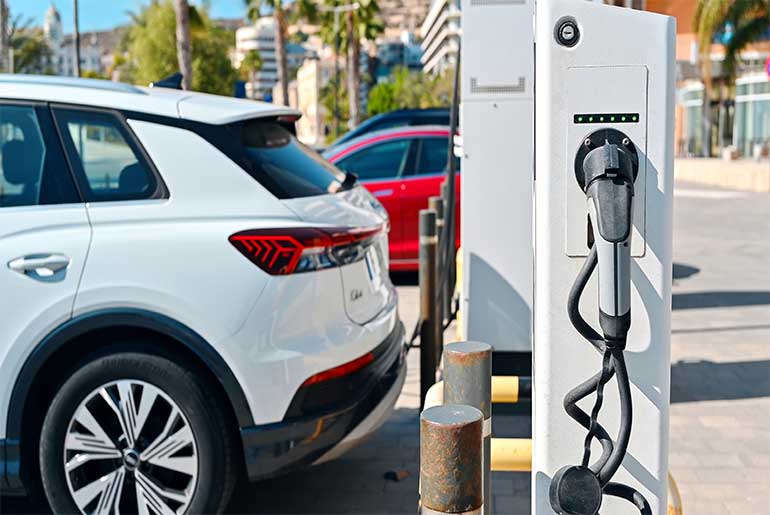
The Government of India has approved ₹689 crore for the deployment of 6,562 electric vehicle public charging stations (EVPCS) under the PM Electric Drive Revolution in Innovative Vehicle Enhancement (PM E-DRIVE) Scheme, as the country continues to expand its electric mobility ecosystem.
The PM E-DRIVE scheme has been implemented across India, including Tier-II and Tier-III cities and aspirational regions, to accelerate electric vehicle adoption and support the government’s vision of Viksit Bharat @2047.
The scheme has an overall allocation of ₹2,000 crore for the deployment of public EV charging infrastructure across the country. As of July 1, 2026, ₹689 crore has been approved for 6,562 chargers to be deployed by three Oil Marketing Companies (OMCs) and nine states.
The government has also allocated 14,000 electric buses under the scheme. Letters of Confirmation of Demand (LoCD) have been issued to the respective cities and State Transport Undertakings (STUs), while Letters of Confirmation of Quantity (LoCQ) have been issued to successful bidders for 13,800 e-buses.
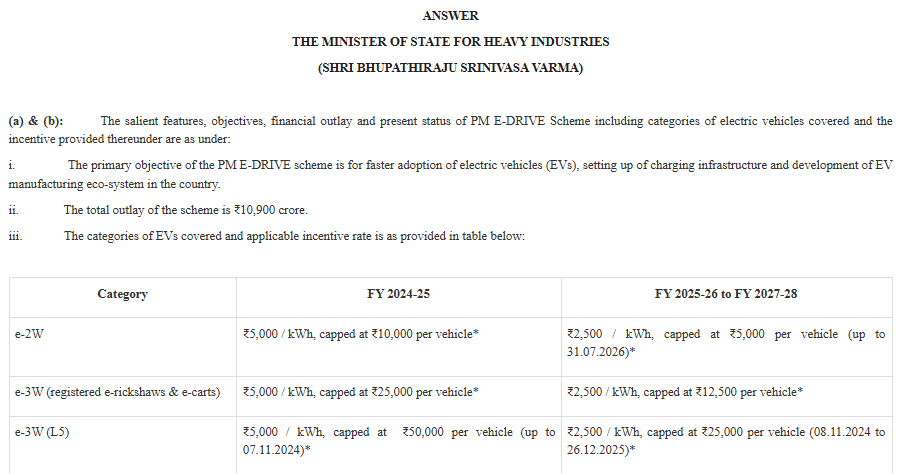
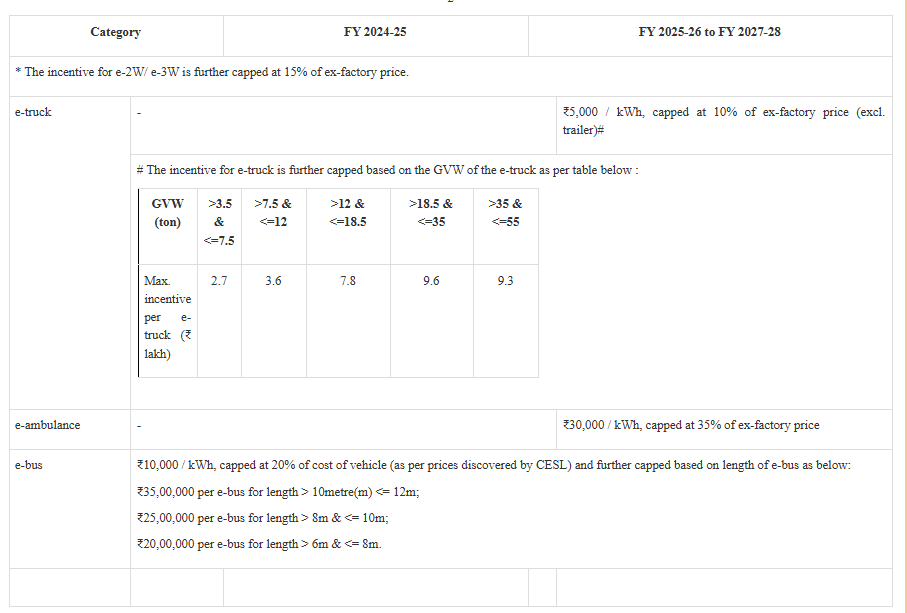
So far, Surat and Hyderabad have signed concession agreements covering 600 and 915 electric buses, respectively. The selected bidders are required to obtain approval for their e-bus prototypes before deploying the vehicles.
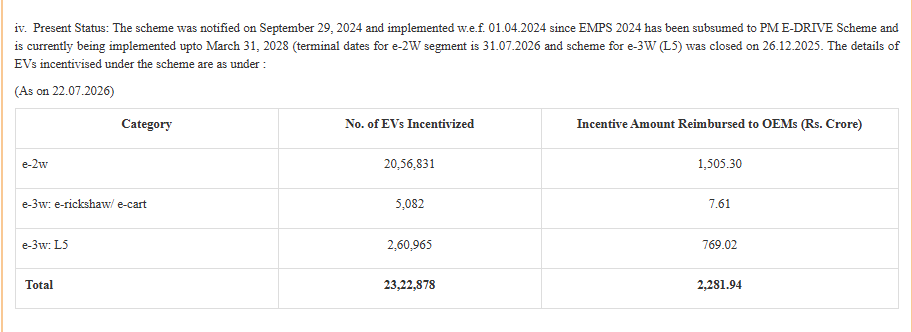
The government, however, stated that no state-wise allocation has been made under the demand incentive component of the PM E-DRIVE scheme. As a result, state-wise data on the number of EVs incentivised under the scheme is not maintained.
While the government has not undertaken a specific assessment of the PM E-DRIVE scheme’s impact on reducing fossil fuel consumption, lowering vehicular emissions and promoting domestic manufacturing, EV penetration in India has increased significantly in recent years.
According to the government, EV penetration rose from 0.7% in FY 2019-20 to 8.2% in FY 2025-26, supported by PM E-DRIVE, the earlier FAME-II scheme and other government policies and initiatives.
The government is also focusing on strengthening domestic EV and battery manufacturing. Original Equipment Manufacturers (OEMs) registered under the PM E-DRIVE scheme have localised their EV models in line with the scheme’s requirements and obtained certificates of compliance with the Phased Manufacturing Programme (PMP) from testing agencies under the Ministry of Heavy Industries (MHI).
On the battery manufacturing front, the government has implemented the Production Linked Incentive (PLI) Scheme for the National Programme on Advanced Chemistry Cell (ACC) Battery Storage. Launched on May 12, 2021, the scheme has a total budgetary outlay of ₹18,100 crore and aims to establish a competitive domestic manufacturing ecosystem with a capacity of 50 GWh for advanced chemistry cells.
The government has also introduced the Battery Waste Management Rules, 2022, notified by the Ministry of Environment, Forest and Climate Change (MoEFCC) on August 22, 2022, to address environmental concerns related to battery waste and promote responsible battery management.
With investments in public charging infrastructure, electric buses, domestic battery manufacturing and battery waste management, the PM E-DRIVE framework is aimed at supporting the broader transition towards electric mobility across India’s urban and emerging markets.
 Electrify your feed! Click here to join our Whatsapp group and to get the latest updates, expert insights, and innovations driving India’s energy storage revolution.