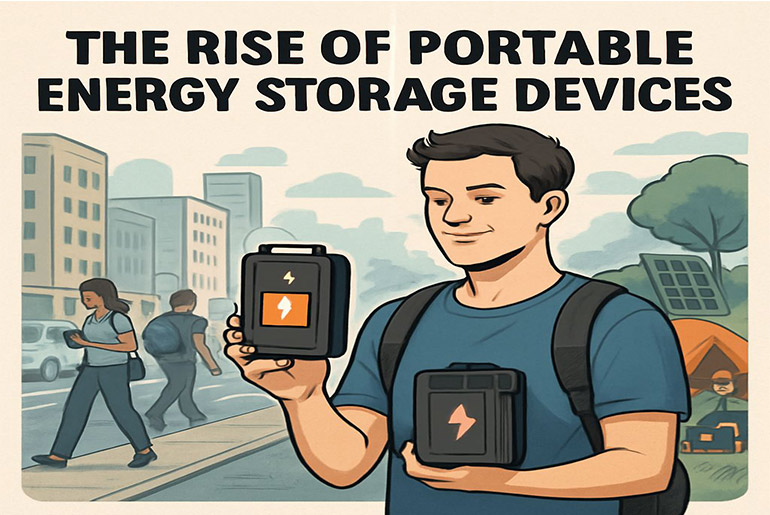
In a world that increasingly demands mobility, convenience, and energy independence, portable energy storage devices (PESDs) have become indispensable. From the bustling streets of Mumbai to the camping trails of California, people are carrying more than just gadgets—they’re carrying power itself. Once a niche accessory limited to power banks for mobile phones, portable energy solutions are now a thriving segment of the global battery industry, driven by lifestyle shifts, outdoor utility, and energy insecurity.
As the boundaries between work, leisure, and travel blur, portable power is no longer a luxury. It’s a modern necessity, shaping consumer behavior, industrial design, and even national energy policies.
Fueling a Thriving Market
According to Fortune Business Insights, the global portable battery market was estimated to be worth USD 12.1 billion in 2023 and is expected to reach USD 27.8 billion by 2032, and it is projected to grow at a CAGR of 9.6%. The portable storage market in India has been riding the wave of renewables, EV accessories, and growing need for off-grid energy access in Tier 2 and rural areas.
The work-from-anywhere culture, plus an increasing number of climate-related power outages, is speeding up the rate of adoption. The growth of outdoor and recreational enthusiasts—specifically in millennials and Gen Z—makes compact, rugged energy packs a key user need.
What Are Portable Energy Storage Devices (PESDs)?
Portable Energy Storage Devices are compact, rechargeable systems that store and release electrical energy to use when that energy is needed. Notable types of portable energy storage devices (PESD) include:
- Power Banks – Used most often to charge phones and smaller electronics.
- Portable Solar Generator – A system that is self-contained with battery storage and solar panels.
- Mini Energy Storage Systems (ESS) – Can power medical devices, communication systems, or even electric bikes.
- Backpack Batteries – Wearable devices that can store energy to charge devices on-the-go.
- USB-C Fast Charger & Wireless Power Bank—These accommodate the needs of contemporary, intermittent-energy devices like laptops and tablets.
Portable energy storage devices comprise packs that range in size from 5,000 mAh to units that exceed 2000Wh that can power home appliances during power outages.
The Technologies Supporting the Goods
Battery Chemistry: Beyond Li-Ion
Although Li-ion batteries currently dominate portable storage products, advances in LFP (Lithium Iron Phosphate) are emerging in the category and are showing promise as they have greater thermal stability and longevity. Brands like EcoFlow and Bluetti are introducing LFP in their larger systems.
Solid-state batteries, once seen as a technology of the future, are finally finding their way into prototype PESDs because they provide greater energy density and improved safety. Companies like QuantumScape and SES AI are trying to build a bridge to the future.
Sustainability Features
Eco-consideration is also being taken into account through biodegradable polymers or recycled casings and sun replenishing use, smart algorithms for energy optimization and minimizing waste.
Battery Management Systems (BMS)
The modern PESD will inevitably contain modernized battery BMS that includes AI-enhanced charge/discharge cycles, thermal performance monitoring, and cell balancing. Some high-end models, like those made by Zendure and Anker, even have smartphone applications for remote control of operations and features like energy usage analytics and firmware updates.
Consumer Preferences are Changing
Today’s consumers no longer just consider “can I charge my product?” They consider multi-functionality, portability, charging times, and durability.
Key Preferences:
- Fast Charging (USB-C PD, Quick Charge 4.0 and beyond)
- Wireless & Multiple Output Ports
- Lightweight, Sleek Form Factors
- Solar Charging Capability
- Water/Dust Resistance for Outdoor Use
Sustainable Material Use
According to a Statista 2024 survey, 71% of users rated charging speed and portability as their top priorities when choosing a power storage device, followed closely by multi-device compatibility and eco-friendly design.
Applications: Other than Phones
Portable energy devices can be applied today, far beyond their typical usage:
- Emergency Relief & Disaster Relief: Units used in remote medical camps, or areas hit by natural disasters.Recreation & Adventure: Camping, hiking and overlanding setups now use portable power extensively.
Remote Work: Laptops, routers, monitors : Remote workers take mini offices powered by PESDs.
Electric Vehicle Accessories: Charging e-scooters, battery swapping or topping up electric cycles.
Medical Devices: Life saving devices that have portable oxygen concentrators or insulated insulin cooler.
Companies Leading the Charge
Here are a few standout innovators in the portable energy space:
Global Brands:
- EcoFlow – provides app-driven portable power stations offering a variety of solar-compatible solutions.
- Bluetti – specializes in large capacity LFP-based appliances with excellent safety ratings;
- Anker PowerCore Series – is the best-in-class compact battery charger;
- Zendure – focuses on rugged and portable units suitable for travel.
?? Indian Innovators:
- Loom Solar – focuses on portable solar products, as well as compact at-home storage solutions for rural India.
- Servotech Power Systems – working on lightweight modular portable power units.
- Okaya Energy – moving into personal power solutions leveraging their battery expertise.
Challenges Remaining
Even with such optimistic endeavors, there remains multiple challenges:
- Battery Disposal & Recycling: The lack of proper recycling infrastructure for portable batteries.
- Import Reliance: The presence of high-density cells in portable batteries means India still needs to import most of its cells which greatly affects/creates difficulties with pricing and stock availability.
- Thermal Runaway: Especially a concern about less expensive, unregulated PESDs.
- Regulation Delay: BIS certifications for lithium batteries and lithium battery standards are still developing in India.
The Path Forward
The future of portable energy storage will become modular, smart, and blended seamlessly into our lives. We are constantly hearing about sodium-ion and hydrogen-based small-sized units for safer and lower-cost alternatives. We may see wearables with built-in batteries, portable ESS for charging EVs, and the intelligent future of portable energy storage utilizing AI & IoT.
As the world looks to free itself from plugs and sockets, portable energy storage devices will lead the next era of mobility and preparedness. It’s not just the ability to take power with us—it’s a pathway towards a decentralized, sustainable energy future we could only imagine.
In a hyper-connected world, power is everything—and the ability to store and carry it, effortlessly, is a revolution unfolding in our palms, pockets, and backpacks. Whether it’s work, travel, survival, or sustainability, portable energy storage devices are quietly empowering a mobile-first generation to go further, smarter, and greener.
 Electrify your feed! Click here to join our Whatsapp group and to get the latest updates, expert insights, and innovations driving India’s energy storage revolution.