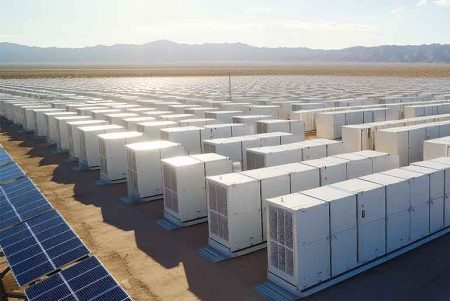
PowerBank has signed a lease agreement for a battery energy storage system (BESS) project called Salt Rising Road in Allegany County, New York. The project will have a capacity of 5 MW AC and 20 MWh of battery storage and is expected to benefit from New York State clean energy incentive programs.
The NY-Sun Program is a public-private partnership that aims to drive growth in the solar industry and make solar technology more affordable for all New Yorkers. Led by NYSERDA, the program provides incentives and financing to expand solar adoption for homes, businesses, and communities, while supporting local job creation and advancing the state’s clean energy goals.
Battery energy storage is one of the fastest-growing power technologies in the world today. The rapid growth of wind and solar power and the rising demand for electricity from data centers are making batteries a necessity. They store surplus renewable energy for when it’s not windy or sunny, and maintain a balance between energy supply and demand. There has been a 90 percent drop in the cost of batteries over the last 15 years as new factories have come on line, resulting in significant growth in this sector globally.
The Company is in the process of initiating the preliminary screening analysis as part of the interconnection process. Assuming receipt of interconnection approval, the Company will work to complete the permitting process and secure the necessary financing for the construction of the Project.
PowerBank’s proven expertise, with over 100 MW of completed projects and a development pipeline exceeding 1 GW, underpins the project’s execution. Strategic partnerships and institutional-grade development capabilities position PowerBank to deliver reliable, high-impact renewable energy solutions.
The Project advances New York’s path to 10 GW of distributed solar and 6GW of energy storage by 2030. The State leads the United States in community solar capacity, having achieved the New York State Climate Act 6 GW solar goal in the fall of 2024.
The company said the project is subject to several development risks, including securing a community solar contract, interconnection approvals, required permits, and third-party financing for construction. It also noted that changes or reductions in government incentives and policy support for battery storage projects could affect the long-term financial viability of future projects.
 Electrify your feed! Click here to join our Whatsapp group and to get the latest updates, expert insights, and innovations driving India’s energy storage revolution.