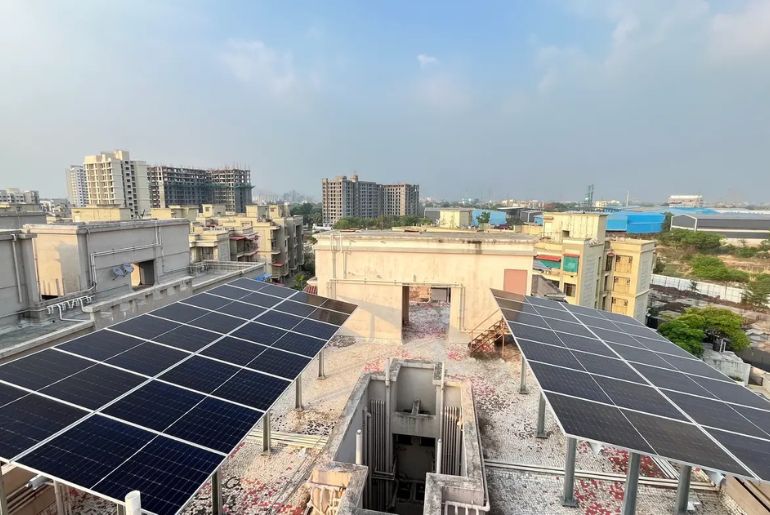
The Rajasthan government has directed state power distribution companies (DISCOMs) to comply with the Ministry of New and Renewable Energy’s (MNRE) guidelines regarding exemptions under the Approved List of Models and Manufacturers (ALMM) Order-II for rooftop solar installations under the PM Surya Ghar: Muft Bijli Yojana.
The move aims to ensure smooth implementation of the residential rooftop solar scheme and provide clarity to stakeholders involved in solar deployment across the state. The directive follows MNRE’s provisions allowing specific exemptions from ALMM-II requirements for certain categories of rooftop solar projects.
Under the PM Surya Ghar scheme, households across India are being encouraged to adopt rooftop solar systems to reduce electricity costs and increase renewable energy adoption. DISCOMs play a key role in the programme by facilitating approvals, grid connectivity, and subsidy-linked processes for residential consumers.
The Rajasthan government’s instruction requires DISCOMs to align their procedures with the latest MNRE provisions and ensure that eligible projects benefit from the exemptions. The compliance is expected to support faster execution of rooftop solar projects and reduce procedural challenges for consumers and installers.
The ALMM framework was introduced by MNRE to promote quality standards and strengthen domestic solar module manufacturing by ensuring that approved models and manufacturers are used in government-supported solar programmes. However, exemptions under ALMM-II have been provided for certain rooftop solar categories to support wider participation and faster deployment.
Rajasthan, with its strong solar potential and favourable conditions for renewable energy generation, has been a key state in India’s solar expansion plans. The implementation of PM Surya Ghar is expected to further increase distributed solar adoption among households and contribute to the state’s clean energy targets.
Industry stakeholders believe that clear implementation of MNRE guidelines by DISCOMs will help improve the rooftop solar ecosystem, encourage consumer participation, and accelerate India’s transition toward renewable energy-based power generation.
 Electrify your feed! Click here to join our Whatsapp group and to get the latest updates, expert insights, and innovations driving India’s energy storage revolution.