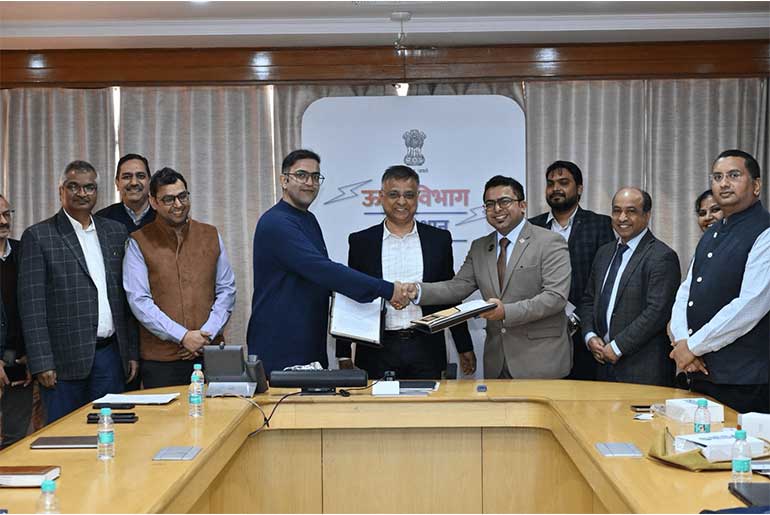
The Rajasthan Energy Department has taken a decisive step to strengthen the state’s energy storage ecosystem by signing a Memorandum of Understanding (MoU) with the India Energy Storage Alliance (IESA) aimed at advancing research-led policy frameworks, grid integration and industry collaboration in battery energy storage systems (BESS). The signing ceremony was held at Vidyut Bhawan, Jaipur, with senior officials from both sides in attendance.
The MoU was formally executed by Sourabh Swami, Joint Secretary, Energy Department, on behalf of the Government of Rajasthan, and Debmalya Sen, President of IESA. Present at the event were Principal Secretary (Energy) Ajitabh Sharma, RRECL CMD Rohit Gupta, and other senior representatives from the state energy apparatus and the industry.
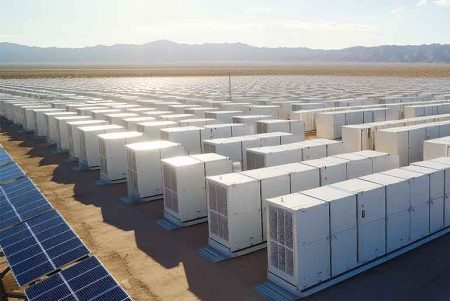
This collaboration is set against the backdrop of Rajasthan’s expanding renewable energy ambitions. The state has already allocated 6,000 MWh of standalone BESS projects to fortify renewable integration and enhance grid reliability, representing one of the largest storage procurements in India to date. A major large-scale infrastructure, the Pugal Solar Park in Bikaner district, is being developed to integrate extensive solar generation with battery storage — positioning Rajasthan at the forefront of hybrid solar-storage deployment.
In his address, Principal Secretary Ajitabh Sharma noted that the partnership with IESA will help Rajasthan establish itself as a leader in energy storage innovation, policy development and project execution. The alliance brings together industry expertise in advanced storage technologies, grid stability solutions and emerging clean-energy frameworks.
Under the MoU, IESA will support the state on several fronts: integration of storage systems with renewable generation, enhancing grid stability and round-the-clock clean power availability, promoting local manufacturing and supply chains for storage equipment, and facilitating capacity building through workshops and pilot projects.
This agreement comes at a time when Rajasthan is making notable strides in renewable energy development, already boasting one of the largest solar capacities in the country and attracting both policy attention and private investment. The MoU is expected to catalyse growth in storage deployment, support the establishment of a robust energy storage ecosystem, and contribute to India’s broader energy transition goals by bridging gaps between renewable generation and demand-side requirements.
 Electrify your feed! Click here to join our Whatsapp group and to get the latest updates, expert insights, and innovations driving India’s energy storage revolution.