As India accelerates its transition towards electric mobility and Battery Energy Storage Systems (BESS), securing a sustainable supply of critical minerals has become a national priority. While mining remains an important source of raw materials, battery recycling and urban mining are emerging as equally vital pillars for reducing import dependence, strengthening resource security and building a circular economy. With more than four decades of expertise in hazardous waste recycling and over 25 years of leadership in hydrometallurgy, Rubamin has expanded its capabilities into lithium-ion battery recycling, enabling the recovery of valuable battery-grade metals that support India’s growing clean energy ecosystem.
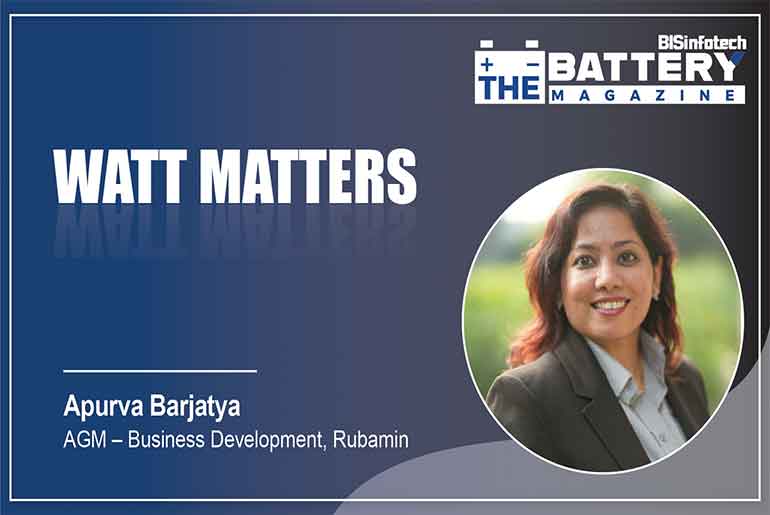
At India Energy Storage Week (IESW) 2026, Shweta Kumari, Sub-Editor, The Battery Magazine, spoke with Apurva Barjatya, AGM Business Development – Rubamin, about the company’s journey into battery recycling, the importance of urban mining, and the role of critical mineral recovery in strengthening India’s energy independence.
Rubamin has built a strong legacy in metal recovery and recycling. Could you introduce the company and tell us what you are showcasing at India Energy Storage Week?
Rubamin is a recycling company based out of Vadodara, Gujarat since 40 years. We focus on recycling hazardous industrial wastes to recover non-ferrous and other critical metals as high purity specialty compounds.
With over 25 years of expertise in hydrometallurgy though home-grown innovative technologies, we recover valuable critical metals such as vanadium, molybdenum, tungsten, nickel and cobalt, giving industrial waste a second life.
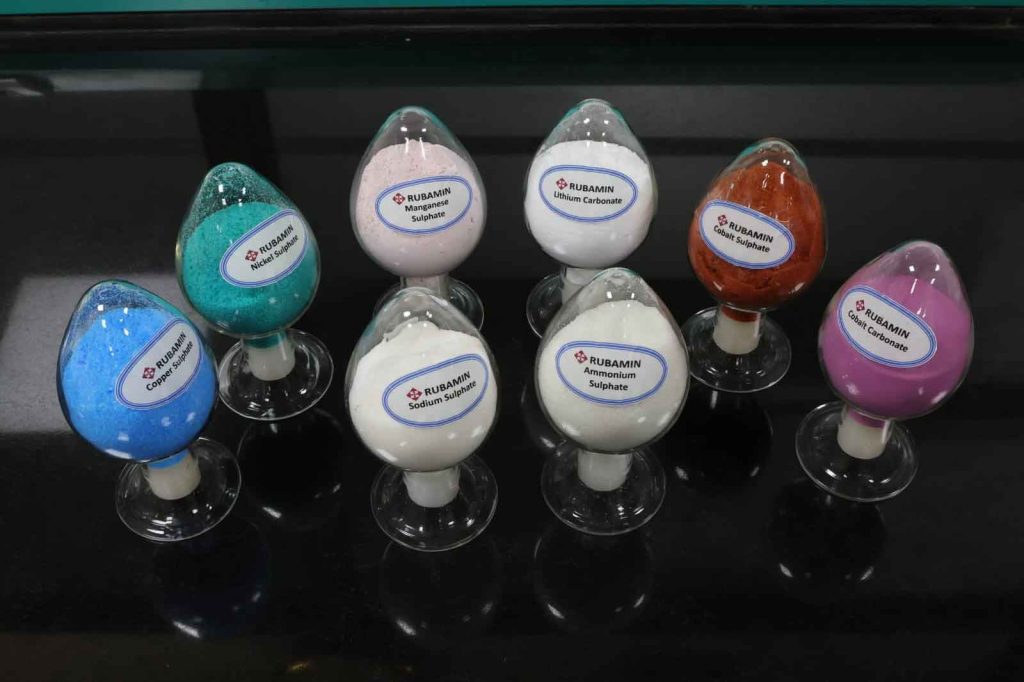
More recently, we have expanded into lithium-ion battery recycling, which is a natural extension of our expertise in metal extraction. At India Energy Storage Week, we are showcasing our capabilities in recovering scarce battery materials that can be reintroduced into the battery supply chain, supporting a more sustainable and circular energy ecosystem.
Rubamin is the Critical Minerals Partner at IESW this year. How is the company contributing to India’s critical minerals ecosystem?
Rubamin is recovering nine critical metals to prevent export of these strategic resources and improving India’s self-reliance.
As India’s demand for batteries continues to grow, recovering these materials domestically will become increasingly important. Our 90 Acres Green Recycling Complex in Halol, Gujarat can significantly strengthen the country’s resource security while reducing dependence on imported critical minerals.
India is placing strong emphasis on domestic manufacturing. Why do you believe battery recycling will become an essential part of this journey?
India does not have reserves of most critical metals required for cell production to support strategic areas such as defence, space, electric mobility, and the low carbon future of our country. The geo-political concentration of resources poses high supply risk which has been experienced in recent times. While acquisition of new mining resources is a solution, it take decades to develop. So, in the short term recycling will become an essential strategy for bridging the gap.
Ours is a Zero Landfill Waste and Zero Liquid Discharge (ZLD) process which significantly reduces waste, and green-house gas emissions with carbon footprint 6-7 times lower as compared to primary mined resources.
By converting end-of-life batteries into reusable battery-grade materials, we help create a circular economy. We are working with new Indian cell component manufacturers for domestic consumption of our products.
As demand for batteries continues to grow, how do you see the future of critical minerals in India?
Government of India has started several initiatives towards availability of critical metals and localization for cell manufacturing. But it is going to be challenging.
While recycling can become important supplier in short term it will depend on formalization of recycling industry, tax laws (GST), enforcement of regulation and restriction on export of Lithium battery black mas which is still being exported illegally.
Rubamin recycling technologies are already capable of recovering many of these strategic materials, allowing us to support battery manufacturers and OEMs as demand continues to increase.
Sustainability has become central to the battery industry. What is Rubamin’s long-term vision?
Sustainability is the cornerstone of everything we do and the guiding principle behind every investment, innovation, and business decision. Our vision is to build one of the world’s most integrated, circular and sustainable critical minerals recycling solution. This commitment is reflected not only in our operations but also in the way we measure and disclose our performance. We have achieved a 39% Circular Transition Indicator (CTI) score. Our Sustainability Report is independently assured and prepared in accordance with the GRI Standards. Our ESG performance is benchmarked through EcoVadis. We also drive continuous improvement through the DSS+ Safety Excellence Framework, transparent carbon disclosures, and globally recognized management systems. We aim to recover critical minerals with the highest standards of safety, environmental stewardship, and governance, enabling India’s transition towards a resource-secure, low-carbon, and circular economy.
What message would you like to share with the battery industry?
India has a tremendous opportunity to build a globally competitive circular battery recycling ecosystem. It has all the required strengths such as availability of skilled manpower, hydrometallurgy experience, domestic waste generation, recycling technology and cost advantage to become a recycler for the world. We invite manufacturers, OEMs and battery ecosystem partners to work together in creating a stronger and more sustainable battery value chain.
Rubamin has decades of expertise in hydrometallurgy. How has this experience helped the company develop efficient lithium-ion battery recycling technologies, and what advantages does hydrometallurgical recycling offer over other recovery processes?
The metallurgical foundation built over 40 years has enabled us to seamlessly extend our capabilities into lithium-ion battery recycling, where precision in purification, metal separation and extraction is critical.
Hydrometallurgical recycling enables selective extraction of lithium, nickel, cobalt, manganese and copper with higher recovery efficiencies, lower energy consumption, lower environmental impact, and significantly reduced emissions. It produces high purity metal compounds suitable for re-entering the battery manufacturing supply chain. With our achievements in lowering water consumption, introduction of renewable energy, zero waste processes and globally benchmarked safety systems, hydrometallurgy has evolved into the preferred recycling technology.
India has introduced the Battery Waste Management Rules and Extended Producer Responsibility (EPR) framework. How do you see these regulations shaping the future of organized battery recycling in the country, and what more can be done to strengthen the ecosystem?
The Battery Waste Management Rules, 2022 have fundamentally transformed India’s battery recycling landscape by establishing clear accountability across the value chain through Extended Producer Responsibility. They have accelerated the formalization of the sector, encouraged investment in advanced recycling technologies, and created greater transparency in battery collection and material recovery.
However, leakages exist in the system leading to loss of critical resources which require urgent attention. Going forward, the success of regulatory framework will depend on robust enforcement, better traceability of end-of-life batteries, and stronger audit mechanisms.
Implementing Reverse Charge Mechanism with 2% TDS in GST for Battery Waste & Black Mass along-with complete ban on export of Black Mass will encourage formal domestic refining by ensuring a level playing field for compliant recyclers.
Looking ahead, do you see Rubamin expanding beyond battery recycling into battery-grade precursor materials or refining solutions that could further strengthen India’s domestic battery manufacturing value chain?
At Rubamin, our focus has always been on creating value through metallurgical innovation and resource recovery. As the ecosystem matures in India, we see significant opportunities to deepen our role across the battery materials value chain. We have invested over Rs 230 Crores in a state-of-the-art Global Capability Centre (GCC) in Gujarat with focus on process development for value addition to battery materials, recovery of Platinum Group Metals (PGM) and extraction of Rare Earth Elements. Our objective is to maximize value addition within India, reduce import dependence, and contribute to a resilient, circular supply chain that supports the country’s rapidly growing e-mobility and energy storage sectors. We will continue to evaluate opportunities that align with our technological strengths and the evolving needs of the country.
 Electrify your feed! Click here to join our Whatsapp group and to get the latest updates, expert insights, and innovations driving India’s energy storage revolution.