The Indian EV sector has grown exponentially over the past few years, driven by policy support, consumer awareness, and advancements in technology. However, one of the most significant enablers of this growth is the development of EV charging infrastructure. Without a reliable, widespread charging network, mass adoption remains an aspiration rather than a reality.
Recognizing this, both the government and private sector have intensified efforts to make charging accessible and convenient. Schemes such as the FAME-II, the National Electric Mobility Mission Plan, and various state-level EV policies have accelerated public and semi-public charging installations across highways, urban centers, and residential spaces.
At Servotech, we see this as more than a business opportunity, it’s a mission to power India’s sustainable mobility journey. Our vision is to ensure that every electric vehicle, whether a two-wheeler or a heavy commercial fleet, has seamless access to fast, efficient, and reliable charging solutions.
While progress has been commendable, challenges remain in terms of scale, interoperability, and grid readiness. India currently has over 18 lakh registered EVs but only around 12,000–15,000 public charging stations, a clear mismatch between demand and infrastructure availability.
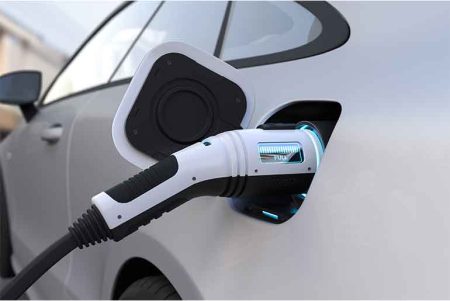
To bridge this gap, the approach must be both strategic and inclusive. We need a well-planned distribution of chargers across cities, highways, and rural regions. Servotech has been actively contributing to this expansion, having deployed over 12,000 EV chargers nationwide, ranging from AC slow chargers for residential and commercial use to DC fast chargers for highways and fleet operations. Each installation is a step towards creating an ecosystem that supports confidence in EV ownership.
The future of EV charging lies in smart and connected infrastructure. As vehicle adoption grows, managing power loads and optimizing energy distribution will become essential to prevent grid stress. This is where technology plays a transformative role.
Servotech’s advanced chargers are equipped with AI-driven monitoring systems, IoT-enabled interfaces, and load management capabilities that ensure optimal use of available energy. These smart solutions allow users to monitor charging status, payments, and performance data in real time, while also enabling remote diagnostics for operators.
Furthermore, our R&D team continues to focus on developing chargers that are future-ready, compatible with multiple charging protocols such as CCS2, CHAdeMO, and Bharat AC/DC standards, ensuring seamless interoperability across EV models.
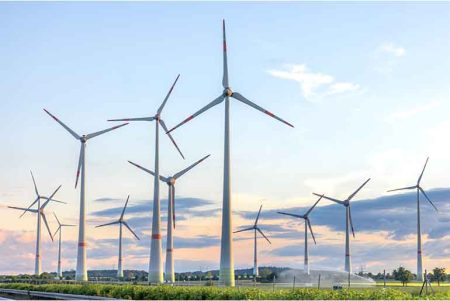
A truly sustainable charging infrastructure cannot rely solely on grid electricity. Integrating renewable energy, particularly solar, into EV charging systems is essential for reducing the overall carbon footprint and ensuring long-term energy stability.
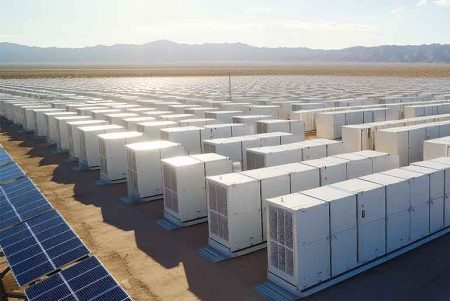
Servotech has pioneered hybrid EV charging stations that combine solar power generation with Battery Energy Storage Systems (BESS). This allows charging stations to operate independently during grid outages, manage peak load demands, and optimize energy use. Our BESS technology is also being deployed across industrial and commercial setups, contributing to energy efficiency and resilience.
By combining renewable energy with smart storage and grid connectivity, we are setting the benchmark for how the next generation of EV charging infrastructure should function, clean, connected, and continuous.
Scaling EV infrastructure requires cohesive collaboration among multiple stakeholders, government agencies, private players, utilities, and consumers. The government’s emphasis on developing a national charging network through policies like the Battery Swapping Policy and Green Energy Corridor is a step in the right direction.
However, greater public-private partnerships and incentivized investments are needed to accelerate infrastructure rollout, especially in tier-2 and tier-3 cities. Servotech remains deeply committed to these partnerships and continues to work closely with government institutions to support their sustainable mobility initiatives.
A large part of achieving mass adoption lies in building consumer trust. Range anxiety, charging time, and cost perceptions still act as barriers for many potential EV buyers. Addressing these through visible infrastructure, faster charging solutions, and reliable service networks is key.
Our focus extends beyond product delivery, we aim to create awareness about the advantages of clean mobility and simplify the EV ownership experience. Whether through our fast-charging solutions for highways or smart home chargers for individuals, we strive to make charging convenient, cost-effective, and sustainable.
Looking forward, India’s EV landscape is poised for remarkable growth. The convergence of technological advancement, supportive policy frameworks, and consumer acceptance will define how fast the country transitions to electric mobility.
The journey toward mass EV adoption begins with strong, scalable infrastructure. Our ongoing projects with PSUs, state governments, and private developers are aimed at building the foundation for a cleaner future, one charging station at a time.
By combining innovation, sustainability, and strategic collaboration, we’re not just powering vehicles; we’re powering change. The road to a cleaner, greener India runs through an ecosystem where renewable energy and mobility merge, and Servotech is proud to drive that vision forward.
 Electrify your feed! Click here to join our Whatsapp group and to get the latest updates, expert insights, and innovations driving India’s energy storage revolution.