As India pushes toward its ambitious goal of 500 GW of non-fossil fuel capacity, the industry has fallen in love with a new hero: the Battery Energy Storage System (BESS). We talk endlessly about Lithium Iron Phosphate (LFP) vs. Sodium-ion, the falling cost per kWh, and the massive gigafactories rising across the country in Gujarat and Tamil Nadu. But as we transition from simple “energy shifting” to high-stakes Grid-Forming applications, we are ignoring a dangerous truth. We are building million-dollar “bodies” (battery cells) and controlled by BMS.
The BMS is increasingly being called the “Weakest Link.” If the cells are the muscle, the BMS is the nervous system. And right now, that nervous system is prone to tremors. Let’s dive into why the BMS is the literal break-point of the energy transition.
Let’s decode why BMS is the weakest link
The biggest irony in BESS engineering today is the “Lifespan Gap.” When a developer buys a containerized BESS, they are promised a 15-year or 20-year operational life. This is scientifically possible for the chemistry. Modern LFP cells are “heavy” hardware; they are robust and designed for thousands of cycles.
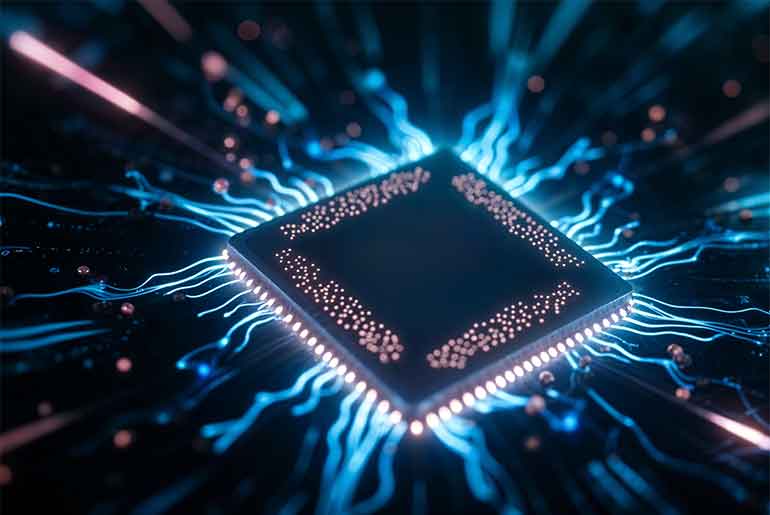
However, the BMS is “thin” hardware. It consists of microchips, capacitors, and resistors. Here is the technical mismatch:
- Chemical Lifespan: 15+ years.
- Electronic Lifespan: 5–7 years for standard consumer-grade components.
Because many BMS units use components similar to those in consumer electronics, they are susceptible to “component fatigue.” While the LFP cells are sitting comfortably at 90% State of Health (SoH), a single dried-out capacitor on a BMS board can “brick” the entire system. We cannot run a high-voltage grid-forming BESS without its brain (BMS). When the brain fails, the multi-crore asset becomes a giant, expensive paperweight.
Technical Insight: This is known as “Premature System Obsolescence.” According to industry research, over 60% of BESS field failures are attributed to electronics and software glitches, not the battery cells themselves.
Analog vs. Digital Friction
If you open a 20ft BESS container, you won’t just see batteries. You will see a chaotic web of thousands of tiny wires. These are the “voltage sensing leads” that connect the BMS to every individual cell. We call this “Analog Spaghetti.”
Think about the math: A 1 MWh container might have thousands of cells. Each cell needs a wire to tell the BMS its temperature and voltage.
- The Cost: A sensing wire costs roughly ₹500
- The Asset: The BESS container costs roughly ₹50 Crore.
In a “Grid-Forming” environment, the battery must be perfect. If one tiny wire becomes loose due to the vibration of the cooling fans or rust from India’s high humidity, the BMS loses “vision” of that cell. Because the BMS cannot see if that cell is safe, it triggers an emergency shutdown.
The entire container goes offline. The grid loses frequency support. The developer loses money. All because of a ₹50 wire. This is the definition of a weakest link—the most fragile part of the chain determines the strength of the whole system.
Grid-Forming Logic: From ‘Monitor’ to ‘Commander’
For years, the BMS was just a “monitor.” It sat there and made sure things didn’t catch fire. But today, we are asking batteries to “form the grid.”
When a solar plant suddenly drops power because of a cloud, the BESS must step in within milliseconds to maintain the 50Hz frequency. This requires Grid-Forming Logic. The BMS is no longer just a spectator; it is the Command Center.
- Impedance Tracking: The BMS must now track the internal resistance (impedance) of cells in real-time to know exactly how much power it can “burst” into the grid without causing damage.
- SoC/SoH Drift: This is the silent killer. If the BMS math is off by even 5% (State of Charge drift), it might tell the grid it has power when it is actually empty. In a grid-forming scenario, this “lie” can lead to a localized blackout.
To form a grid, the BMS needs to be faster than the physics of the grid itself. This is pushing current BMS software to its absolute limit.
So, how do we fix the weakest link? The industry is moving toward two major solutions that are changing the game in 2026:
A. Industrial-Grade BMS (e.g., BharatBMS)
Companies like Xbattery are moving away from fragile electronics. Their BharatBMS architecture is “Industrial-Grade,” meaning the components are rated for high-heat, high-vibration, and a 15-year life to match the cells. They are using “Automotive-grade” chips (ISO 26262) that can handle the harsh Indian climate without frying.
B. The Battery Passport (e.g., WATTSync by Tata Technologies)
If the BMS is the “brain,” then the Battery Passport is the “Aadhaar Card” and “Medical Record” combined.
Platforms like WATTSync create a digital twin of the battery in the cloud. Even if the physical BMS board has a glitch, the cloud-based “Passport” knows the historical health of every cell. It uses AI to predict Thermal Runaway before it happens by spotting tiny patterns in voltage that a human or a basic BMS would miss.
India’s Ministry of Power is already discussing a mandatory Battery Aadhaar (21-character BPAN) for all grid-scale projects to ensure traceability and safety.
Conclusion: Thinking Beyond the Box
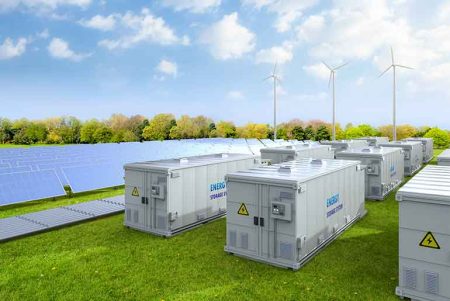
The next time you walk past a massive BESS installation, don’t just look at the white containers. Think about the silent “Digital Heartbeat” inside.
We cannot build a stable Indian grid on unstable electronics. If we want BESS to be the backbone of our energy future, we must stop treating the BMS as a “cheap accessory.” We must invest in Industrial-Grade intelligence.
The BMS might be the weakest link today, but with indigenous innovations like BharatBMS and digital platforms like WATTSync, we are turning that link into the strongest part of the chain. It’s time to give the battery a brain that is as tough as its body.
 Electrify your feed! Click here to join our Whatsapp group and to get the latest updates, expert insights, and innovations driving India’s energy storage revolution.