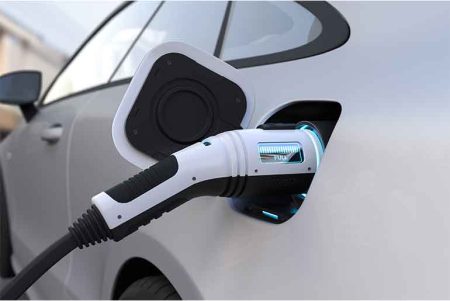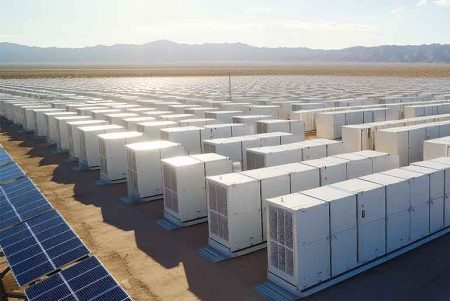
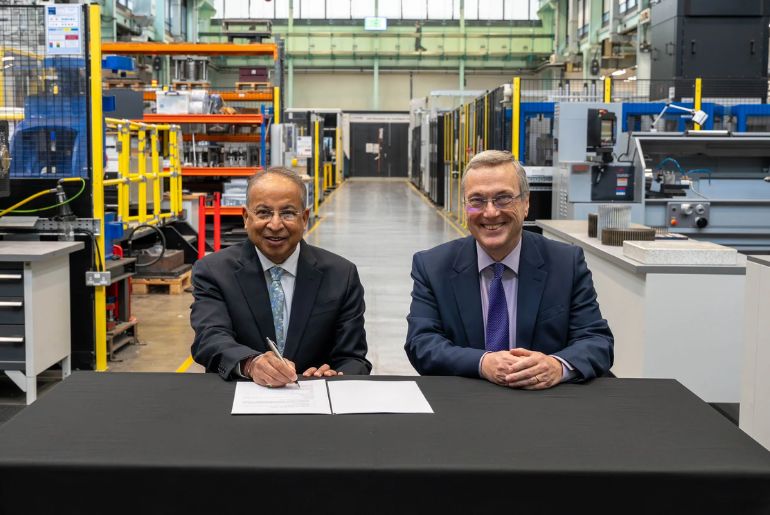
The University of Warwick has signed a Memorandum of Understanding (MoU) with Tata Power to drive joint research and innovation in key energy transition areas. The partnership will focus on grid modernisation, fast charging, power storage, industrial decarbonisation, digital energy systems, optimisation, and advanced manufacturing.
The collaboration will also explore executive education programmes aligned with industry needs, capability development initiatives, exchange opportunities, technical workshops, and joint case studies. Together, these efforts aim to strengthen long-term research capability, talent development, and global academic engagement in line with Tata Power’s strategic priorities.
Building on Strong Academic Foundations
The agreement builds on decades of expertise at Warwick Manufacturing Group (WMG) one of the University’s largest academic departments and the School of Engineering. The University has also announced a renewed focus on energy systems to further support the partnership.
Professor Stuart Croft, Vice-Chancellor and President of the University of Warwick, said:
“We strive to make a better world through our world-leading research and education. Our partnership with Tata Power marries our academic excellence with leading industry expertise to help advance a more sustainable future for people, places, and our planet.”
The University has long-established research groups covering the full energy spectrum from semiconductors and components to power electronics, machines and drives (PEMD), and full energy systems. By increasing collaboration across these areas, the University aims to support Tata Power in accelerating decarbonisation, including electrification, grid innovation, and advanced power storage.
Supporting India’s Energy Transition
Dr Praveer Sinha, CEO and MD of Tata Power and Honorary Professor at WMG, said:
“Tata Power is committed to transforming India’s energy landscape. Our vision is to empower a billion lives through sustainable, affordable, and innovative energy solutions, and we are making strong progress toward that goal. We are building a consumer-centric green energy future anchored in decarbonization, reliable and affordable power, and long-term sustainability. Our agreement with the University of Warwick -an institution with a distinguished track record in electrification and sustainability will further accelerate our ambitions and strengthen the pathway to achieving them.”
Research, Industrial Impact and Global Collaboration
Established programmes at WMG and the School of Engineering already support advances in:
• Circular materials
• Battery innovation
• Wind energy
• Artificial intelligence
• Industrial decarbonisation
Professor Kerry Kirwan, Dean of WMG, said:
“Applying excellent research to deliver industrial and societal impact has been part of WMG’s mission for the past 45 years. And our celebrated partnership with the Tata Group stretches back decades. It is a partnership built on extensive collaboration across research, education and innovation, and it’s exciting to see how that legacy continues to deliver positive global impact.”
Professor David Greenwood added:
“Research relationships with India, including Tata, have always been incredibly valuable to us. With a free trade agreement now in place between the UK and India, now is the ideal time to work together on critical challenges of energy, industry and the environment, while exploring new research, education and engagement opportunities.”
The School of Engineering is also advancing AI-enabled modelling and control techniques to improve system stability and resilience.
Professor David Towers said:
“By applying artificial intelligence–enabled modelling and control techniques, we are developing solutions that enhance system stability, resilience, and efficiency. Our research spans national, regional, and microgrid-scale infrastructures, integrating renewables particularly wind alongside energy storage and hydrogen technologies. We look forward to working with Tata Power to translate these capabilities into scalable, industrially relevant decarbonisation pathways.”
 Electrify your feed! Click here to join our Whatsapp group and to get the latest updates, expert insights, and innovations driving India’s energy storage revolution.