
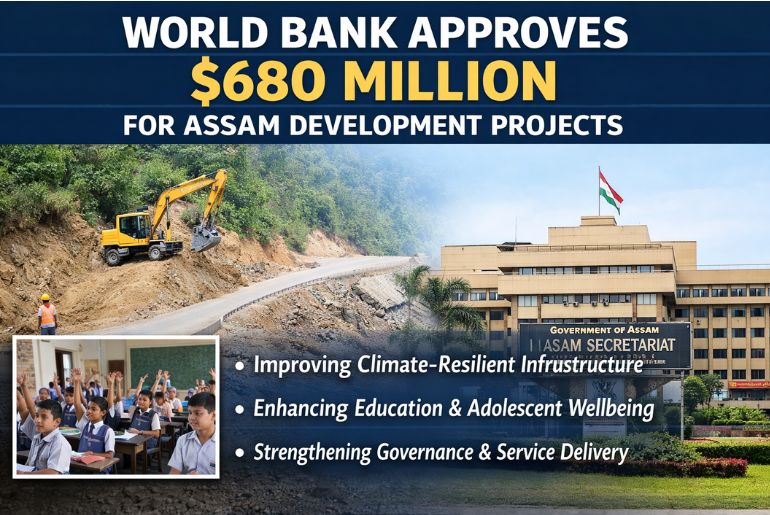
The World Bank has approved a $680 million funding package for the state of Assam, India, aimed at supporting three major development initiatives. The projects are designed to improve climate-resilient infrastructure, enhance educational outcomes for adolescents, and strengthen governance and public service delivery across the region. The approval reflects the World Bank’s continued commitment to promoting sustainable development and resilience in India’s northeastern states.
Project Overview and Objectives
The funding will be allocated across three key programs:
Assam Disaster Resilient Hill Roads Development Project — Focused on upgrading and climate-proofing critical road networks in hilly regions, this project aims to enhance connectivity, improve transport safety, and ensure resilient infrastructure that can withstand natural disasters.
Assam School Education and Adolescent Wellbeing Project — This initiative targets educational improvement, adolescent development, and skill-building programs to boost literacy, learning outcomes, and overall well-being among students. The program also emphasizes inclusivity, ensuring marginalized and vulnerable populations have better access to quality education.
Assam Governance and Service Delivery Program — Designed to strengthen governance systems and public service delivery, this project seeks to improve transparency, efficiency, and citizen-centric approaches across state-level institutions. The initiative will enable better implementation of development programs and foster accountability in administrative processes.
Strategic Importance and Impact
Together, these projects are expected to significantly improve infrastructure, social development, and governance in Assam. Upgraded road networks will facilitate safer and more reliable transport, particularly in disaster-prone areas. Educational programs will enhance learning outcomes, equip adolescents with essential life skills, and promote overall societal development. Strengthened governance will ensure efficient delivery of public services and more effective use of public resources.
The $680 million investment underscores the World Bank’s role in supporting India’s development priorities while addressing climate resilience, education, and governance. Once implemented, these initiatives are expected to create a sustainable and long-term positive impact on Assam’s economy, society, and infrastructure. By improving roads, schools, and governance systems, the projects will foster inclusive growth, community resilience, and enhanced quality of life for residents across Assam, reinforcing the state’s progress toward sustainable and equitable development.
 Electrify your feed! Click here to join our Whatsapp group and to get the latest updates, expert insights, and innovations driving India’s energy storage revolution.