
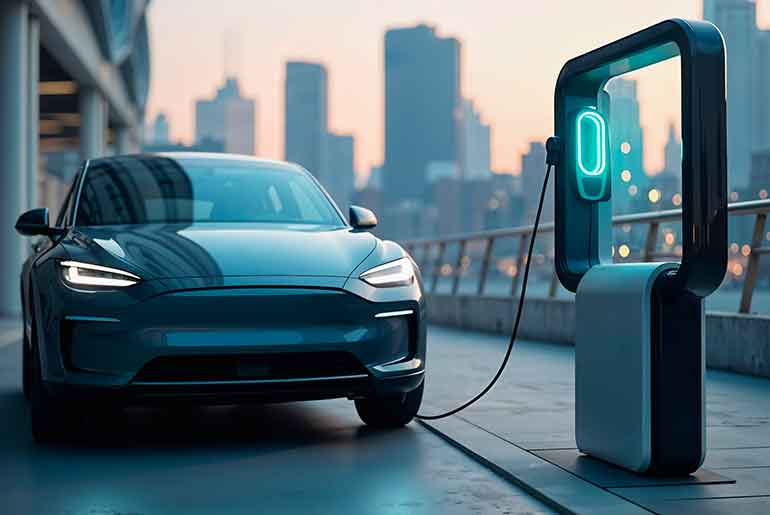
Electric vehicles (EVs) are becoming more common as people look for cleaner and more efficient ways to travel. Unlike petrol and diesel cars, which burn fuel to run an engine, electric vehicles use electricity to power an electric motor. This electricity comes from a rechargeable battery fitted inside the vehicle.
The battery is one of the most important parts of an electric vehicle. It determines how much energy the car can store and plays a major role in its driving range, charging time and performance. But how does an EV battery actually work? Let’s understand it in simple terms.
What Is an Electric Vehicle Battery?
An electric vehicle battery is a rechargeable system that stores electricity and supplies it to the motor when the vehicle is moving. Most electric cars use lithium-ion batteries because they can store a good amount of energy, are relatively lightweight and can be recharged many times.
An EV battery is made up of many small cells connected together. These cells are grouped into modules and combined to form a battery pack. The complete pack is installed inside the vehicle and provides the energy needed for driving.
How Does an EV Battery Work?
An EV battery works through three basic steps: charging, storing energy and supplying power.
1. Charging the battery
When an electric vehicle is connected to a charging point, electricity flows into the battery. Inside the battery cells, chemical changes allow the energy to be stored for later use.
2. Powering the vehicle
When the driver presses the accelerator, electricity flows from the battery to the electric motor. The motor converts this electrical energy into movement, turning the wheels and moving the vehicle.
3. Recharging when needed
As the vehicle travels, it uses the stored energy. When the battery charge becomes low, the driver can recharge it at home or at a public charging station.
In simple words, an EV battery stores electricity when the vehicle is plugged in and supplies that electricity when the vehicle needs to move.
What Are the Main Parts of an EV Battery?
An electric vehicle battery system contains several important components that work together.
Battery cells: These are the basic units that store energy. Many cells are connected to provide the power needed by the vehicle.
Battery modules: Several cells may be grouped into modules, making the battery system easier to assemble and manage.
Battery pack: The battery pack contains the cells or modules, along with the supporting structure, electrical connections and safety components.
Battery Management System (BMS): The BMS monitors the battery’s charge level, temperature and other important conditions. It helps keep the battery operating safely and protects it from problems such as overheating and overcharging.
Thermal management system: Batteries work best within a suitable temperature range. This system helps control their temperature through cooling or heating, depending on the battery design.
Together, these components help the battery store energy and deliver power safely.
What Does Battery Capacity Mean?
Battery capacity tells us how much energy a battery can store. It is measured in kilowatt-hours (kWh). For example, a car with a 60 kWh battery can store more energy than a similar car with a 40 kWh battery. A larger battery can often help a vehicle travel farther before needing to recharge. However, battery size is not the only factor that affects driving range. The vehicle’s weight, motor efficiency, road conditions and driving habits also make a difference.
What Is the Driving Range of an EV?
Driving range refers to how far an electric vehicle can travel on a charged battery before it needs to be recharged. The range varies from one vehicle to another and depends on several factors, including battery capacity, driving speed, traffic, weather and the use of air conditioning.
For example, driving at high speeds or using air conditioning heavily can consume more electricity and reduce the distance a vehicle can travel. Drivers can improve efficiency by maintaining steady speeds, keeping tyres properly inflated and avoiding sudden acceleration whenever possible.
How Long Does It Take to Charge an EV Battery?
Charging time depends on the battery size, its current charge level, the charger’s power and the vehicle’s charging capacity.
Home charging: Many EV owners charge their vehicles at home, often overnight. This is convenient for daily use, although charging usually takes longer than with a fast charger.
AC charging: Alternating current (AC) charging is commonly available at homes, offices and public parking areas. The vehicle’s onboard charger converts AC electricity into the direct current needed by the battery.
DC fast charging: Direct current (DC) fast chargers can charge compatible vehicles more quickly. However, charging speed often slows as the battery approaches a high charge level.
The actual charging time varies by vehicle and charger, so it is best to check the manufacturer’s recommendations.
What Is Regenerative Braking?
One useful feature of electric vehicles is regenerative braking. It allows the vehicle to recover some energy while slowing down. When the driver slows the vehicle, the electric motor can work like a generator. It converts some of the vehicle’s movement energy into electricity and sends it back to the battery.
This helps improve efficiency, particularly in city traffic where vehicles frequently slow down and stop. However, regenerative braking cannot recover all the energy used during driving.
How Long Does an EV Battery Last?
EV batteries are designed to last for many years, but their ability to store energy gradually decreases over time. This is called battery degradation. As a battery ages, it may hold less energy than it did when it was new, which can reduce the vehicle’s driving range.
Battery life depends on factors such as temperature, charging habits, usage and battery design. Following the manufacturer’s guidelines and avoiding prolonged exposure to extreme temperatures can help maintain battery health. Many manufacturers also provide battery warranties, although the coverage and duration vary between models.
Conclusion
Electric vehicle batteries make electric mobility possible by storing electricity and supplying it to the motor whenever the vehicle needs to move. Their capacity, charging speed, efficiency and lifespan all affect the driving experience.
As battery technology improves, electric vehicles may become more affordable, efficient and convenient for everyday use. For anyone interested in electric mobility, understanding how the battery works is a simple first step towards understanding the future of transportation.
 Electrify your feed! Click here to join our Whatsapp group and to get the latest updates, expert insights, and innovations driving India’s energy storage revolution.