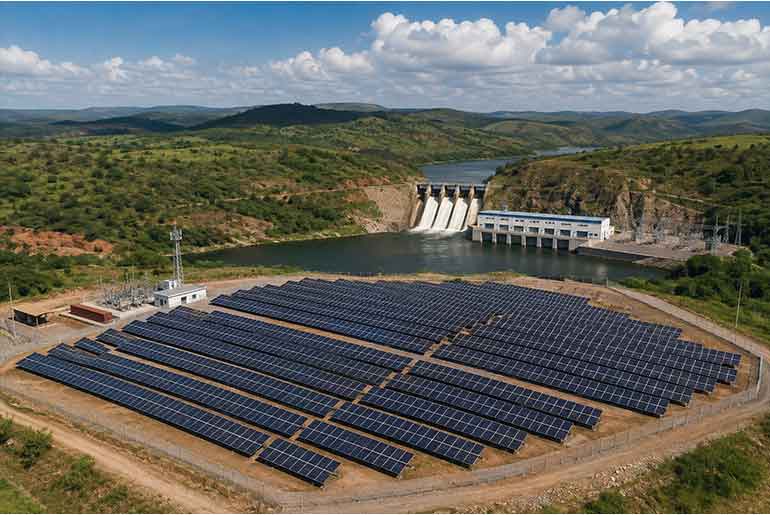
Zambia has commissioned its first solar-hydro hybrid power plant, adding a 27 MWp solar photovoltaic facility to the existing hydropower operations of Lunsemfwa Hydro Power Company Limited (LHPC) in Central Province. The project is designed to diversify electricity generation and improve the reliability of supply as Zambia faces increasing pressure on its hydropower resources during periods of drought.
Located in Kapiri Mposhi District, the solar facility has been integrated with LHPC’s existing hydropower assets. LHPC operates two hydropower stations — the 24 MW Lunsemfwa Hydropower Station and 32 MW Mulungushi Hydropower Plant — giving the company a combined existing hydro capacity of 56 MW.
The project is being operated under a complementary solar-hydro model. During periods of strong solar generation, the PV plant can supply electricity while reducing the need to rely on hydropower generation. Hydropower can then provide flexibility when solar output falls, particularly during evening hours or periods of reduced sunlight.
POWERCHINA, which constructed the solar project, said the 27 MWp/20 MWac Lunsemfwa PV project was connected to the grid on May 31, 2026, and began generating electricity. The project includes a 33 kV-to-66 kV step-up substation and two 66 kV transmission lines of approximately 1 kilometre each. POWERCHINA described the project as Zambia’s first to combine solar generation with hydropower regulation.
Solar-Hydro Model Targets Drought Resilience
The hybrid configuration is particularly relevant to Zambia because of the country’s dependence on hydropower. When water availability declines, hydroelectric generation can be constrained, creating pressure on electricity supply.
By adding solar generation to an existing hydroelectric system, LHPC can diversify the sources feeding its power portfolio without developing an entirely new large-scale hydropower facility. Globeleq has said the solar project is intended to strengthen energy security, while its project information identifies the development as Zambia’s first solar-hydro hybrid facility.
The model effectively gives the hydro assets a balancing role. POWERCHINA described the operating approach as “solar-priority, hydro-regulated”, under which solar generation is prioritised during the day while hydropower can supplement supply at night or during periods when solar production is lower.
Globeleq Holds Majority Stake in LHPC
The project is being developed through LHPC, in which Globeleq holds a 51% stake following its acquisition from Norfund in March 2026. The remaining 49% is owned by Zambia-based Wanda Gorge Investments.
Globeleq’s acquisition gave it control of LHPC’s two existing hydro plants, while also bringing the company’s developing solar portfolio into its Zambian operations. LHPC supplies electricity to ZESCO under a long-term power purchase agreement and also serves private off-takers including Copperbelt Energy Corporation and Jubilee Metals.
The commissioning therefore adds solar generation to an existing hydroelectric platform rather than creating a standalone solar project. For Zambia, the significance lies in using complementary renewable resources to improve generation flexibility and reduce the system’s exposure to hydrological variability.
The project also provides an example of how existing hydropower infrastructure can be combined with new solar capacity as African power systems seek to expand renewable generation while maintaining reliability.
 Electrify your feed! Click here to join our Whatsapp group and to get the latest updates, expert insights, and innovations driving India’s energy storage revolution.