India is reaching a key moment in its shift to electric mobility and a more stable power grid. Li-ion battery demand is projected to grow to 20 GWh by 2026, with the recycling market size expected to reach around USD 152.68 million in 2025 and grow rapidly thereafter. This advancement will enhance the security of India’s clean energy initiatives, reduce battery expenses, and bolster supply chains for Electric Vehicles (EVs) and Battery Energy Storage Systems (BESS).
Crucial Anticipated Milestones in 2026
The synergy of government backing, private investment, and swift technology advancement is poised to bring about significant breakthroughs in the upcoming 18–24 months.
Domestic Battery Manufacturing Capacity to Reach Approximately 100GWh:
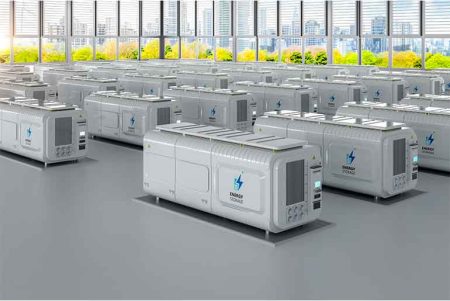
Currently, India’s capacity for Battery Manufacturing stands at approximately 60GWh and is expected to increase to about 100GWh by 2026, demonstrating that there has been a significant change in the manufacturing capabilities of companies that were once limited to very small-scale pilot programs, now capable of providing industrial-scale products. Such capacity will provide a stronger, more reliable supply base for the fast-growing EV sector and the rising demand for stationary energy storage.
Operational Ramp-up of Gigafactories under the PLI-ACC Framework:
The operational ramp-up of gigafactories under the PLI-ACC framework will begin in 2026 once the first two years of the program are completed and all of the major companies, such as Reliance New Energy Battery Limited, have received a significant increase in their projected capacity. This gigafactory expansion will create a strong foundation for a robust lithium-ion battery manufacturing industry in India.
Development of a Fully Integrated Battery Supply Chain (Battery Cells → Battery Packs → Battery Recycling):
India’s Battery Supply Chain will go beyond basic assembly of battery modules through to greater backward integration of critical component parts such as cathodes, anodes, electrolytes and battery separators; This level of Backward Integration will be essential in achieving the Domestic Value Addition (DVA) criteria outlined in National Manufacturing Policy. Battery Waste Management Rules of the Indian Government are intended to help achieve a Material Recovery rate of 80% by 2026. These rules are working toward developing Circular Economy systems for effective management of battery waste and securing a Regular Source of Secondary Raw Materials for Future Battery Manufacturing.
Lowering Costs, Improved Localisation & Greater Affordability of EV Batteries:
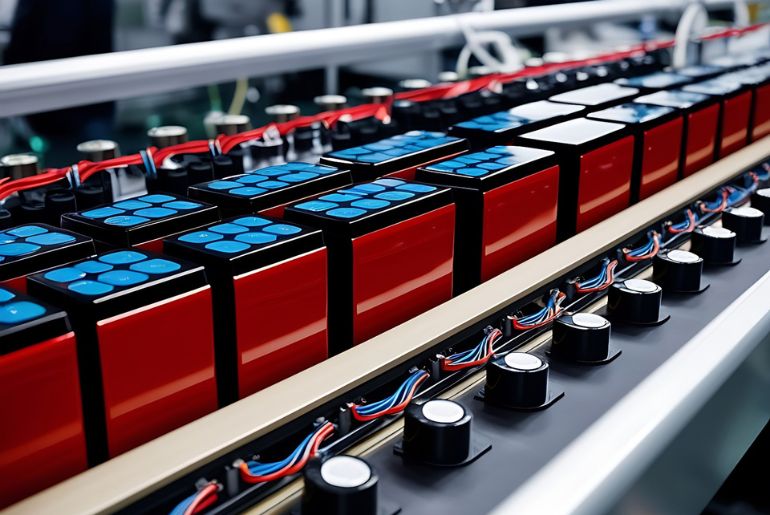
As domestic battery production continues to grow, more and more advanced battery production facilities are automating their processes to the point of achieving automation levels greater than 95%, which results in dramatically improved production efficiency and lower production costs. Furthermore, the combination of government exemption from import duties on critical minerals and capital equipment enables these efficiencies to be passed along in the form of reduced prices for battery packs. Overall, the reduction in the price of batteries will reduce the cost of an electric vehicle and greatly increase the commercial feasibility of battery energy storage solutions for both commercial and utility-scale applications.
Emergence of Alternative Battery Chemistries and Diversified Energy-Storage Solutions:
In addition to mainstream lithium-ion technologies such as NMC and LFP, Indian manufacturers and researchers are increasingly exploring alternative chemistries, including sodium-ion (Na-ion) and solid-state batteries. Diversifying the battery portfolio is critical for controlling costs, enhancing resource security, and meeting the performance requirements of large-scale grid and industrial energy-storage applications.
Growth in Battery Demand from EVs and Stationary Storage:
Rising EV adoption, coupled with ambitious renewable energy targets supported by initiatives such as Viability Gap Funding for BESS, is set to create a strong, self-reinforcing demand cycle. This surge in demand will attract further private investment and catalyze additional capacity expansion across India’s battery manufacturing and energy-storage ecosystem.Second-Life Potential: When an EV battery becomes too weak for use in a vehicle, it still keeps about 70–80% of its original power. This remaining capacity is good enough for lighter jobs, like storing energy for microgrids, homes, or telecom towers. By giving these used batteries a “second life,” they can work for another 10–15 years. Because of this, India could see a 2 GWh market for second-life batteries by 2030.
Industry Examples: The Shift is Already Underway
Recent investment and strategic moves underscore the velocity of this industrial shift:
|
Milestone Category |
Industry Example |
Strategic Implication |
|
I. Capacity and Recycling Scale-up |
Maxvolt Energy Industries acquired land in Ghaziabad to set up a new manufacturing and recycling facility. Launching in December 2025, this will triple Maxvolt’s Li-ion battery production capacity to 2.25 lakh units annually. |
Direct scaling of domestic cell and pack production coupled with establishing the crucial recycling infrastructure for a circular economy. |
|
II. Foreign Investment and BESS Focus |
China’s Envision Group is exploring a 5 GWh-a-year battery manufacturing plant in India to tap into the country’s grid modernization and renewable energy storage push. The facility would assemble battery systems and develop local racks and software. |
Validates India as a key global manufacturing hub and addresses the most urgent need: grid-scale Battery Energy Storage Systems (BESS) to stabilize intermittent renewable power. |
|
III. Global Partnerships and Clean Energy Synergy |
Honda Motor has bought a stake in India’s OMC Power (which already has investment from Chubu and Mitsui) to develop clean energy batteries. OMC Power focuses on using renewable energy for power solutions. |
Signifies increasing global strategic partnership in India’s battery space, leveraging foreign R&D and capital to integrate batteries with clean energy generation at the distributed level. |
|
IV. Component Manufacturing and Supply Chain Depth |
Electronics Minister Ashwini Vaishnaw inaugurated TDK Corporation’s advanced Li-ion battery plant in Haryana, set to manufacture 20 crore battery packs annually. This plant will meet 40% of India’s annual domestic requirement for mobile phones, wearables, and laptops. |
Crucial step for localisation in the electronics supply chain, proving India’s capability in high-precision battery pack assembly and component production for high-volume consumer goods. |
Why 2026 is Critical: The Strategic Imperative
2026 is shaping up to be a landmark year for India’s battery sector, marking the transition from a phase largely driven by government incentives to a market-led, self-sustaining industrial scale. This shift underscores the industry’s growing maturity and its readiness to support both electric mobility and large-scale energy-storage demands independently.
Moving from Nascent to Industrial Scale:
Achieving a domestic battery manufacturing capacity of around 100 GWh represents the critical threshold for realizing economies of scale in India’s emerging battery industry. This scale sends a clear signal to global component and equipment suppliers that the Indian market is sufficiently large and stable for investment, further accelerating Domestic Value Addition (DVA) targets and strengthening the local supply chain.Achieving Solar-Storage Cost Parity: Industry experts anticipate that efficiencies from domestic scale, automation, and emerging battery chemistries could bring storage costs close to parity with solar energy by 2026. Achieving this milestone would transform the economics of renewable power, enabling reliable 24/7 green electricity without relying on conventional peaking power plants.
Geopolitical Security and Supply Chain De-risking:
China’s dominance of more than 70% of the world’s lithium, cobalt and nickel processing for batteries remains an ongoing challenge for developing countries who want to be able to produce their own batteries. Establishing comprehensive manufacturing plants in India is an important accomplishment that allows the country to establish itself as an independent player in the battery market. Additionally, this would allow India to better protect itself from fluctuations in international prices for battery materials resulting from potential geopolitical instability.
Challenges to Watch: De-risking the Growth Trajectory
The journey to 100 GWh is fraught with complexity, requiring continuous policy and industry focus:
Critical Raw Material Supply Constraints:
Despite growing domestic production, India remains heavily dependent on imports for more than 90% of critical minerals such as lithium, cobalt, and nickel. To safeguard gigafactory operations from potential supply disruptions, it is crucial to secure these materials through long-term off-take agreements, strategic overseas mining investments via entities like KABIL, and accelerated development of domestic battery recycling infrastructure.
Technology and Quality Gaps:
To be able to adequately compete with global standards, local producers of batteries must constantly continue to control their quality, durability, and safety.As the number of batteries being produced increases rapidly, essential characteristics of the product, such as thermal management and cycle-life, need to be retained so that consumers continue to have trust in the product and will use it with confidence, which also creates fewer risks of warranty.
Infrastructure & Ecosystem Development:
Large-volume production of batteries will require new forms of infrastructure, new methods of dealing with logistics related to hazardous materials, and a highly trained workforce with the skills to work in advanced cell manufacturing. The development of this entire ecosystem will take time to develop and will not happen without the support of aligned policies, in addition to the basic Production Linked Incentive (PLI) incentive.
Project financing and implementation risk:
We believe that financing and project implementation are the biggest vulnerabilities facing the growth of the battery manufacturing sector in India. The Indian government has set a target to establish a capacity of 50 GWh by providing ₹18,100 crore (approximately $2.5 billion) in subsidies through the Production Linked Incentive (PLI) program for Advanced Chemistry Cells (ACC). In total, a cumulative investment of approximately ₹33,750 crore (close to $4.5 billion) will be needed to achieve this goal. Delays associated with land acquisition, obtaining environmental permits, and the ability to secure manufacturing equipment may hinder the commissioning of the factory, thereby impacting the overall growth of the industry. Additionally, as many global manufacturers have reached their production capacity limits, there will likely be delays in acquiring .
What to Watch for in 2026: Key Events
The upcoming events will be crucial benchmarks for assessing if India is effectively managing its transition:
Initiation of Integrated Cell Manufacturing: Official announcements or inauguration ceremonies for the primary PLI-ACC gigafactories signify the start of mass production and act as a crucial indicator of the initiative’s success.
Sodium-ion Batteries Commercialization: India is expected to have commercially viable Sodium-ion batteries available for sale within the next few years; Macsen Laboratories is expected to have a pilot production line established to manufacture Sodium-ion batteries between now and 2026. This would enable manufacturers to expand their offerings in battery types within their product lines and create a strategic buffer against reliance on lithium-ion based battery technologies.
Black Mass Processing Capacity: India plans to become a major producer of battery-grade materials (lithium carbonate, cobalt sulfate) by creating a large-scale battery recycling industry that will shift from trading “Black Mass” and refine battery-grade materials locally. The domestic battery recycling operations will enable the supply of materials to Gigafactories and contribute to creating a closed loop supply chain, breaking the dependency on imports, and enhancing the sustainable nature of the battery ecosystem in India.
Reduction in Battery Costs (per kWh): Predictions are indicating a max of 75% decrease in average price paid by customers for 1 kWh of locally produced battery packs over the next three years. This reduction in cost will allow for lower-priced electric vehicles (EVs), but will also pave the way for large-scale utility companies to bid on battery energy storage (BESS) project opportunities at extremely low bids. Increasingly affordable battery solutions will stimulate competition within the marketplace and promote a more rapid uptake of EVs and battery energy storage systems (BESS) in the mobility and energy storage sectors.
Policy Support for BESS and Grid: Further policy moves, like the expansion of the Viability Gap Funding (VGF) scheme for BESS, that signal continuous and stable demand from the utility sector, which is necessary to absorb the massive scale-up in manufacturing capacity.
Conclusion
In 2026, India’s energy market should see significant growth domestically with significant capacity for lithium-ion battery production expected to reach over 100 GWh driven by the massive deployment of PLI (Production Linked Incentive) – ACC (Advanced Chemistry Cell) gigafactories, and India’s transition from being an emerging supply chain; to becoming an integrated large-scale battery manufacturing ecosystem. Leveraging efficient management of sourcing raw materials and developing technology capabilities will allow India to create a strong foundation for reaching 500 GW of renewable energy target; promoting EV adoption and supporting the country’s continued progress toward becoming self-sufficient and competitive in the global clean energy economy.
 Electrify your feed! Click here to join our Whatsapp group and to get the latest updates, expert insights, and innovations driving India’s energy storage revolution.