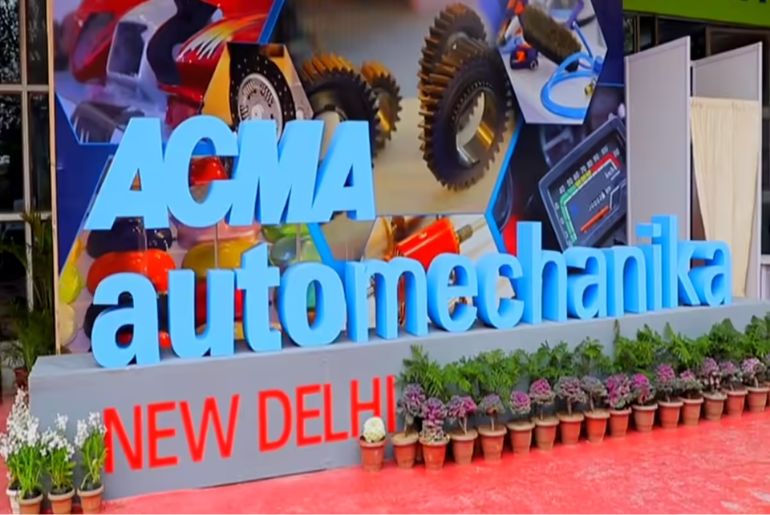
The sixth edition of ACMA Automechanika New Delhi ended with a strong response from people in the industry from both India and other countries. The three-day trade fair had 35,750 visitors and 870 exhibitors from about 20 countries. It was one of the biggest events of its kind.
Held at Yashobhoomi (IICC), Dwarka, the event brought together over 3,000 brands from the auto components and aftermarket sectors. These included global manufacturers, technology solution providers and service companies showcasing the latest in parts, components and mobility solutions.
Focus on Global Participation and Innovation
The trade fair highlighted India’s growing significance in the global automotive supply chain. Exhibitors came from countries such as Belgium, China, Germany, Hong Kong, Italy, Japan, Korea, Spain, Taiwan, Thailand, Turkey, the UAE and the USA. Attendance from international industry players emphasized the rising global interest in India as both a manufacturing hub and a market for automotive products.
Alongside the exhibition, a series of knowledge sessions and networking events offered insights into current trends in electrification, alternative fuels, digital tools for the aftermarket, and workshop productivity practices.
Government and Industry Leaders Stress Growth Potential
The event was inaugurated on February 5 by Union Minister of State for Commerce and Industry and Electronics & IT, Jitin Prasada, who highlighted the auto component industry’s potential as a reliable global partner, especially in electric vehicle (EV) segments.
He also referenced India’s strong performance in vehicle exports, noting that the country shipped more than 53 lakh vehicles in fiscal 2024–25, with continued double-digit export growth in the first half of fiscal 2025–26.
Industry Momentum and Future Prospects
Economic data shared at the event pointed to expected investments of USD 2.89–3.46 billion in fiscal 2025–26 for capacity expansion and EV parts localisation up from USD 1.73–2.31 billion the previous year.
Participants also emphasised that India’s relatively low vehicle ownership ratio with roughly 48 cars per 1,000 people compared to more than 800 in many Western markets suggests significant potential for long-term growth and demand across both domestic and overseas markets.
 Electrify your feed! Click here to join our Whatsapp group and to get the latest updates, expert insights, and innovations driving India’s energy storage revolution.