Amara Raja Energy & Mobility (ARE&M) has highlighted growing challenges in accessing Chinese battery technology, stating that restrictions on technology transfers from China are making licensing arrangements increasingly difficult for Indian manufacturers and prompting a stronger focus on indigenous battery development.
During the company’s Q4 FY26 earnings call, Executive Director – New Energy Business, Vikramadithya Gourineni, said that technology-sharing and licensing agreements with Chinese companies are becoming harder to secure due to policy changes in China.
“Sharing of technology and licensing arrangements is being increasingly discouraged by the Chinese government,” he noted, adding that the issue is impacting several companies that rely on partnerships with Chinese battery technology providers.
The development comes as India works to establish a domestic battery manufacturing ecosystem to support the growth of electric mobility and energy storage. ARE&M had previously announced a technology licensing arrangement with Chinese battery manufacturer Gotion High-Tech, but the company indicated that future product development will rely increasingly on its own engineering and research capabilities.
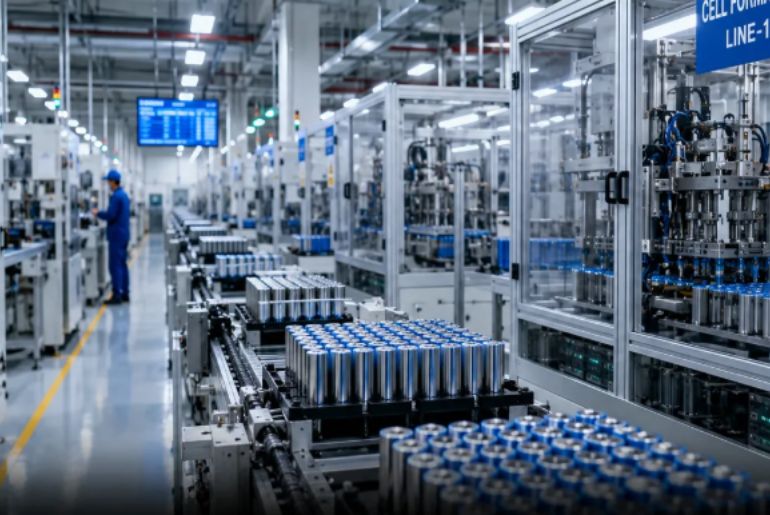
To support this transition, Amara Raja is advancing its battery research and manufacturing infrastructure. The company’s E Positive Energy Labs research centre is nearing commissioning, while its Customer Qualification Plant (CQP) is expected to begin supplying commercial lithium-ion cell samples to customers in the coming months.
The company also confirmed that its first 2 GWh lithium-ion cell manufacturing facility remains on schedule for commissioning in June 2027. However, management acknowledged execution challenges, including difficulties in obtaining Chinese engineering support for equipment installation and commissioning due to visa and regulatory restrictions.
ARE&M further noted that domestically manufactured battery cells may initially face a 15–20% cost disadvantage compared to imported Chinese cells. The company attributed this gap to limited local raw material availability, an underdeveloped supply chain, and lower production scale.
Despite these challenges, management expects costs to decline as manufacturing volumes increase, localization improves, and supportive policy measures evolve. The company also suggested that battery storage projects could eventually benefit from domestic-content requirements similar to those implemented in India’s solar sector.
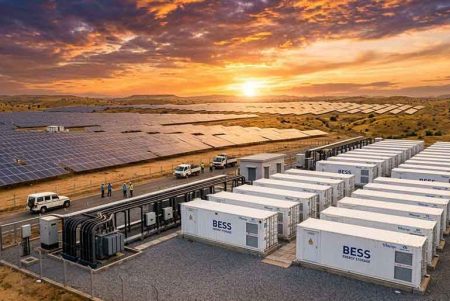
Alongside its electric vehicle battery plans, Amara Raja is placing greater emphasis on battery energy storage systems (BESS). The company plans to establish a 5 GWh BESS integration facility in Telangana by the end of 2026, with the potential to expand capacity to 10 GWh as demand grows.
While maintaining its long-term goal of developing 16 GWh of battery cell manufacturing capacity, the company indicated that a larger portion of future production may be directed toward stationary energy storage applications, reflecting the rapid growth of renewable energy and grid-scale storage markets in India.
 Electrify your feed! Click here to join our Whatsapp group and to get the latest updates, expert insights, and innovations driving India’s energy storage revolution.