Ashok Leyland has broken ground for a new battery pack manufacturing facility in Pillaipakkam near Chennai, Tamil Nadu, marking a major step in the company’s strategy to strengthen its electric mobility ecosystem in India. The project involves an investment of ₹400–500 crore and is part of the investments planned by the Hinduja Group under a Memorandum of Understanding (MoU) signed with the Government of Tamil Nadu in September 2025.
The foundation plaque for the new facility was unveiled by M. K. Stalin, highlighting the state government’s continued efforts to position Tamil Nadu as a major hub for electric vehicle manufacturing and advanced energy technologies.
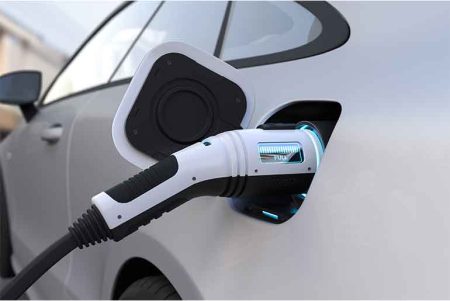
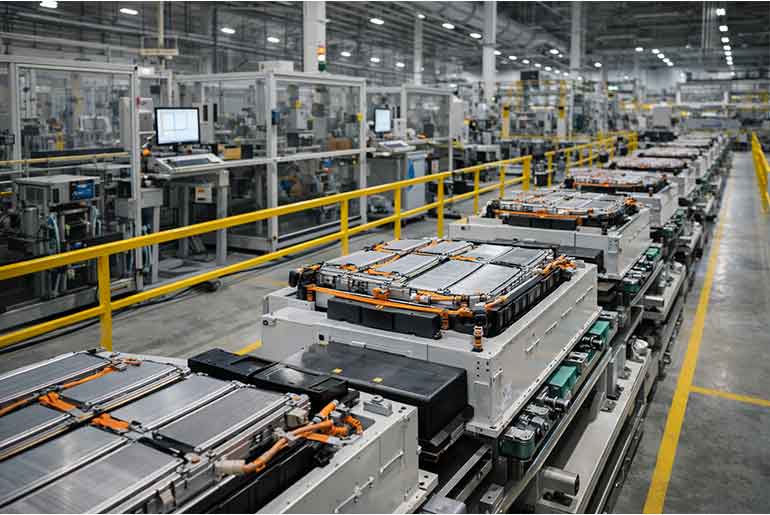
The upcoming facility will focus on manufacturing battery packs for electric commercial vehicles, supporting Ashok Leyland’s expanding portfolio of electric trucks and buses. By localizing battery pack production, the company aims to enhance supply chain efficiency, reduce dependence on imported components, and accelerate the development of indigenous EV technologies.
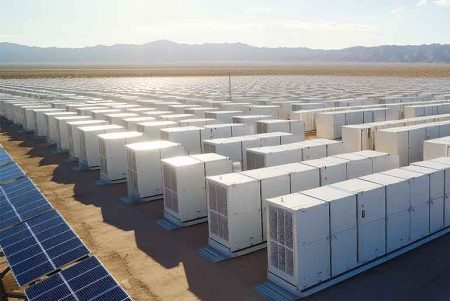
The project is also expected to strengthen India’s broader electric mobility and battery manufacturing ecosystem, which has been witnessing rapid growth driven by policy support, increased EV adoption, and rising investments from both domestic and international companies.
Senior leadership from Ashok Leyland and the Hinduja Group attended the groundbreaking ceremony. Key attendees included Shenu Agarwal and Dheeraj Hinduja, along with Dr. TRB Rajaa.
The facility forms part of Ashok Leyland’s long-term strategy to scale its electric vehicle manufacturing capabilities and support the growing demand for clean commercial transportation. The company has been actively expanding its EV business through its electric mobility arm Switch Mobility while investing in next-generation battery technologies and localized production infrastructure.
Tamil Nadu has emerged as one of India’s leading EV manufacturing hubs due to its strong automotive ecosystem, established supplier networks, and supportive industrial policies. Several global and domestic companies have announced investments in the state’s electric mobility supply chain, including battery manufacturing, EV components, and vehicle assembly.
The new battery pack facility is expected to play a crucial role in supporting Ashok Leyland’s transition toward electrified commercial vehicles while contributing to India’s broader clean energy and decarbonization goals.
As India accelerates its push toward sustainable mobility, investments in battery manufacturing infrastructure such as the Pillaipakkam project are expected to strengthen domestic capabilities and support the country’s ambitions to become a global hub for electric vehicle production.
 Electrify your feed! Click here to join our Whatsapp group and to get the latest updates, expert insights, and innovations driving India’s energy storage revolution.