Avaada Electro Limited has moved a step closer to its proposed stock market debut after filing its Updated Draft Red Herring Prospectus (UDRHP) with the Securities and Exchange Board of India (SEBI). The solar cell and module manufacturer is seeking to raise ₹7,600 crore through an initial public offering (IPO), with the proposed issue coming at a challenging time for India’s solar manufacturing industry.
The IPO will comprise a fresh issue of shares worth up to ₹1,600 crore and an Offer for Sale (OFS) of up to ₹6,000 crore by promoter Avaada Ventures Private Limited. The equity shares will have a face value of ₹5 each.
Of the proceeds from the fresh issue, approximately ₹1,200 crore is proposed to be used towards repayment or settlement of borrowings and letter-of-credit obligations. The remaining funds will be utilised for general corporate purposes.
The structure of the proposed issue reflects both the company’s capital requirements and the promoter’s intention to monetise part of its investment. Avaada Electro has incurred significant capital expenditure as it rapidly expands its manufacturing footprint, making debt reduction an important priority as it moves towards a public listing.
Avaada Electro’s proposed IPO comes at a time when solar manufacturing stocks have faced pressure in the market. Manufacturers that have invested heavily in cell production have been dealing with the challenges associated with scaling operations, while changes in the Approved List of Models and Manufacturers (ALMM) framework have added another layer of complexity.
The ALMM provisions introduced from June 2026 have also seen certain relaxations extending through December. Meanwhile, external factors, including geopolitical developments in the Gulf region, higher crude oil prices and disruptions affecting exports to the US, have added pressure to the broader renewable energy and manufacturing ecosystem.
Vikram Solar, which was among the most prominent solar manufacturers to list in the previous year, has traded below its IPO price amid investor concerns. The company is banking on the commencement of its cell manufacturing operations to improve its growth prospects.
The broader solar manufacturing sector has also witnessed companies diversify beyond traditional module manufacturing. Several manufacturers are expanding into energy storage, aluminium frames, inverters, transformers, engineering, procurement and construction (EPC) and operations and maintenance services to create additional revenue streams and reduce dependence on a single business segment.
Avaada Electro, incorporated in 2021, is part of the Avaada Group led by Chairman Vineet Mittal. The company markets solar modules under the Enlume and Integlow brands through 14 distribution partners across 13 states.
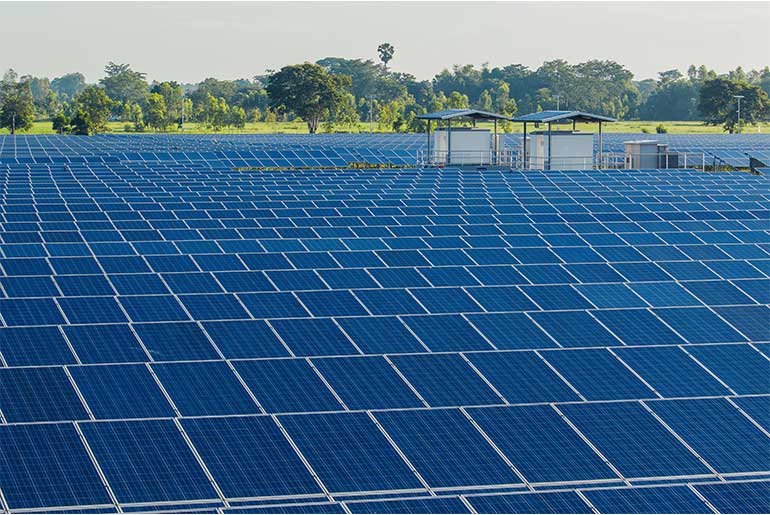
The company currently has 8.5 GW of operational solar module manufacturing capacity and 3 GW of TOPCon solar cell capacity. It plans to develop a fully integrated manufacturing ecosystem covering ingots, wafers, cells and modules.
By FY28, Avaada Electro is targeting 13.6 GW of module manufacturing capacity, 12 GW of cell capacity and 3 GW of ingot and wafer capacity. The company aims to establish itself among India’s leading integrated solar manufacturers.
Its manufacturing facilities include a 1.5 GW module plant at Dadri in Uttar Pradesh and a larger manufacturing complex in Nagpur, Maharashtra. The Nagpur facility has 7 GW of operational module capacity and a planned 6 GW cell manufacturing facility. Around half of the cell capacity is already operational, while the remaining 3 GW is expected to become operational by the quarter ending September 2026.
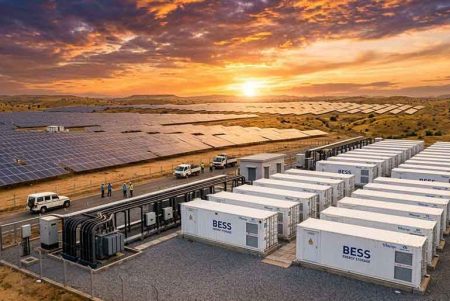
Beyond solar manufacturing, Avaada Electro is preparing to enter the energy storage market with its proposed Avaada Halo product. The company also plans to expand into third-party EPC and operations and maintenance services.
The manufacturer is focusing heavily on N-type Tunnel Oxide Passivated Contact (TOPCon) technology and was among the early Indian manufacturers to introduce 720 Wp TOPCon modules.
According to its IPO documents, the company’s bifacial glass-to-glass modules can achieve efficiencies of up to 23.61%. Its solar cell efficiency, listed under ALMM List-II, ranges from 24.5% to 26.3%.
Avaada Electro has stated that its N-type TOPCon modules provide bifaciality of approximately 80-85%, compared with around 70-75% for conventional PERC technology. Its modules also received Top Performer recognition in the Kiwa PVEL 2026 PV Module Reliability Scorecard.
The company claims a module production cycle time of approximately 16 seconds and says its capital expenditure requirement per GW is lower than that of several comparable Indian manufacturers.
Avaada Electro reported substantial growth in FY26. Revenue from operations increased to ₹5,303.52 crore from ₹911.62 crore in FY25. EBITDA rose to ₹1,258.86 crore from ₹241.68 crore, while profit after tax increased to ₹888.74 crore from ₹173 crore.
However, the company remains significantly dependent on its group ecosystem. Avaada Energy accounted for approximately 89% of Avaada Electro’s revenue in FY26, making it the company’s largest customer.
The company’s manufacturing scale expanded rapidly during the year, with installed module capacity rising from 1.5 GW to 8.5 GW. Module production increased from 0.63 GW to 3.77 GW, while its order book expanded sharply from 2,555 MW to 19,106 MW.
Avaada Electro is targeting demand from rooftop solar, residential installations and large government-backed projects. It expects schemes such as PM-Surya Ghar, PM-KUSUM and Central Public Sector Undertaking (CPSU) tenders to provide opportunities, particularly where domestically manufactured solar equipment is required.
The company also holds a Production Linked Incentive (PLI) award for 3 GW of integrated wafer-to-module manufacturing capacity, granted in March 2023. Subject to meeting the prescribed conditions, Avaada Electro could receive incentives of up to ₹961.62 crore.
India’s push for domestic solar manufacturing could provide further support. Since June 1, 2026, projects covered under the ALMM framework have been required to use solar cells manufactured by companies included in ALMM List-II. The government is also considering an ALMM List-III for domestically manufactured wafers from 2028.
The IPO is being managed by ICICI Securities, Axis Capital, BofA Securities India, HSBC Securities and Capital Markets (India), SBI Capital Markets and IIFL Capital Services.
Separately, the Avaada Group has signed an MoU with the Haryana Enterprises Promotion Centre for developing a 300-acre green industrial campus in Hisar, involving a proposed investment of ₹10,000 crore. The campus is intended to provide industries with round-the-clock renewable power and related infrastructure and is planned as a zero-CBAM industrial park to help companies address the European Union’s Carbon Border Adjustment Mechanism requirements.
While Avaada Electro’s expansion plans offer significant long-term opportunities, investors are likely to focus closely on near-term execution, capacity utilisation, cell manufacturing ramp-up, debt reduction and customer diversification. With solar manufacturing valuations remaining under pressure, the company’s ability to convert its growing capacity and order book into sustainable earnings could be more important to investors than its longer-term expansion ambitions.
 Electrify your feed! Click here to join our Whatsapp group and to get the latest updates, expert insights, and innovations driving India’s energy storage revolution.