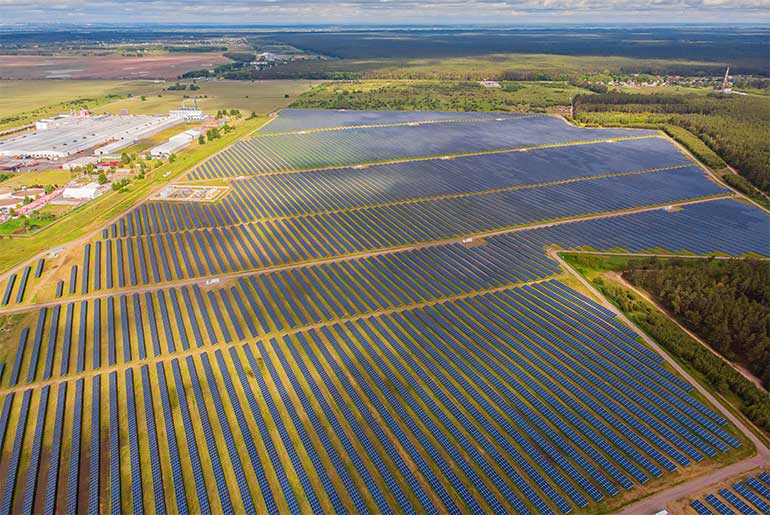
Tata Power Renewable Energy Limited (TPREL) has commissioned a 190.5 MW solar Firm and Dispatchable Renewable Energy (FDRE) project at Kalasar in Bikaner, Rajasthan, strengthening its portfolio of renewable projects backed by energy storage.
The project is part of TPREL’s 460 MW contracted FDRE capacity and has been developed under the SJVN FDRE Tranche-1 programme. It will supply firm renewable electricity to Haryana Power Purchase Centre (HPPC), Maharashtra State Electricity Distribution Company Limited (MSEDCL) and Noida Power Company Limited (NPCL).
Solar Power Combined With Battery Storage
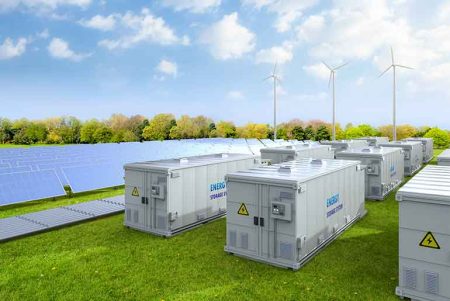
The project combines large-scale solar generation with Battery Energy Storage Systems (BESS) and grid-support technologies to provide more reliable and dispatchable renewable electricity.
In addition to BESS, TPREL has deployed Harmonic Filter Bank and Static Var Generator systems at the project. These technologies are designed to support power quality and grid stability while enabling the project to meet its firm power delivery requirements.
The integration of battery storage is particularly significant as India increases its reliance on variable renewable sources. Solar generation is concentrated during daylight hours, while electricity demand can remain high during evening and peak periods. Storage enables renewable power to be shifted to periods when it is needed most.
Fast-Tracked Project Execution
TPREL said the project was delivered under compressed timelines despite global supply-chain challenges affecting the availability of transmission-line materials, module mounting structures and other critical equipment.
The company completed the project’s switchyard in three months, while the Harmonic Filter Bank was completed within just one month.
The accelerated execution demonstrates the growing focus among renewable developers on deploying firm renewable power projects at speed as demand for reliable clean electricity increases.
TPREL Renewable Capacity Reaches 12.4 GW
With the commissioning of the Rajasthan project, TPREL’s total renewable utility capacity has increased to 12.4 GW.
Of this portfolio, approximately 6.9 GW is operational, comprising around 5.6 GW of solar capacity and 1.3 GW of wind capacity. A further 5.5 GW is under various stages of development, with commissioning expected to take place in phases over the next 24 months.
The company’s expanding FDRE portfolio reflects the increasing importance of energy storage in India’s renewable energy transition. Projects combining solar generation and BESS can provide predictable power output while helping distribution companies manage peak demand and improve grid flexibility.
The Rajasthan project also contributes to India’s broader objective of reaching 500 GW of non-fossil fuel-based electricity capacity by 2030.
For the battery industry, the project highlights the growing role of BESS in large-scale renewable projects, as developers increasingly move beyond standalone solar and wind generation toward dispatchable clean power backed by storage.
 Electrify your feed! Click here to join our Whatsapp group and to get the latest updates, expert insights, and innovations driving India’s energy storage revolution.