
The battery industry did not collapse in 2025.
It also did not celebrate.
Instead, it was tested.
What the world witnessed over the last year was not a slowdown, but a stress test — one that stripped away excess optimism, subsidy dependency, and fragile business models. For the first time in over a decade, the battery sector had to stand on its own fundamentals: cost discipline, operational efficiency, safety performance, and real market demand.
These pressures triggered a series of battery industry breakthroughs in 2025 — not the kind announced on conference stages, but the kind forged quietly inside factories, supply chains, and software platforms. Together, they are now shaping the industry’s path toward terawatt-scale maturity in 2026.
This is the story of how the battery industry grew up.
2025: The Year the Battery Industry Was Put on Trial
For much of the past decade, battery growth was powered by certainty — policy certainty, subsidy certainty, and cheap capital. In 2025, that certainty vanished.
Consumer-facing incentives in major markets were scaled back or restructured. Europe tightened compliance rules while pulling back blanket subsidies. In the United States, policy emphasis shifted away from demand stimulation toward manufacturing performance and domestic content. Financing costs remained elevated, and customers — from EV buyers to utilities — became far more price-sensitive.
The result was not chaos, but clarity.
2025 forced companies to answer uncomfortable questions:
- Can your batteries compete without incentives?
- Can your supply chain absorb shocks?
- Can your technology perform consistently, not just impress on paper?
The battery industry breakthroughs that emerged from this pressure now define the road ahead.
Breakthrough #1: Policy Shock Created Operational Discipline
The first and most important breakthrough was psychological.
In 2025, policy stopped being a cushion and became a filter.
As subsidy frameworks evolved across the US, EU, and parts of Asia, manufacturers could no longer rely on government support to compensate for inefficiencies. Projects with weak execution timelines stalled. Overambitious expansion plans were quietly shelved. Some players exited without headlines.
But for others, the shift was transformative.
Factories became leaner. Procurement became smarter. Yield losses were treated as business risks, not technical footnotes. Cost per kilowatt-hour — once discussed in future tense — became a present-day survival metric.
This shift from policy-driven growth to performance-led survival is one of the defining battery industry breakthroughs of 2025. It laid the foundation for a more resilient sector — one that 2026 will reward.
Breakthrough #2: Manufacturing Geography Was Rewritten
If earlier years were about “where incentives are highest,” 2025 was about where manufacturing actually makes sense.
Battery manufacturing geography fractured — deliberately.
In the United States, domestic content rules reshaped sourcing strategies. Manufacturers rethought material pipelines, localized processing, and supplier relationships. The goal was no longer maximum scale at minimum cost, but compliant scale at predictable cost.
India moved from ambition to execution. Gigafactory announcements from previous years began translating into live capacity, driven by a mix of policy support and domestic demand. For the first time, India was discussed not just as a future hub, but as a functioning one.
Meanwhile, Southeast Asia — particularly Vietnam and Indonesia — quietly emerged as export-oriented battery and BESS manufacturing bases, supplying markets where speed and automation mattered more than subsidy access.
The lesson was clear: terawatt-scale will not be built in one geography. It will be assembled through interconnected regional ecosystems — a structural battery industry breakthrough that will define global competition in 2026.
Breakthrough #3: Chemistry Became a Cost Strategy, Not a Science Project
Perhaps the most visible battery industry breakthrough of 2025 was the industry’s newfound honesty about chemistry.
Lithium iron phosphate (LFP) did not win because it is perfect. It won because it is predictable, safe, and cheaper — exactly what a post-subsidy market demands. By 2025, LFP had become the default chemistry for mass-market EVs and stationary storage, helping manufacturers offset lost incentives with lower system costs.
At the same time, sodium-ion stopped being treated as a lithium replacement and started being treated as what it truly is: a strategic niche solution. Its role in low-cost mobility, short-duration storage, and resource-diversified markets became clearer — and more realistic.
What disappeared was the idea that one chemistry would rule them all.
In 2026, chemistry choice is no longer about novelty. It is about unit economics, safety margins, and application fit. That mindset shift is a breakthrough in itself.
Breakthrough #4: Software Quietly Became the Real Differentiator
In 2025, the battery industry saw some huge advancements, none of which were the result of the chemistry side of things, but rather technology advancements made in software.
The evolution from hardware-in-the-loop systems to intelligent Battery Management Systems (BMS) that add value to the battery product through their advanced capabilities (AI predictive maintenance, true state-of-health diagnostics in real-time, and predictive degradation models) enabled a much different way to value batteries for Pricing, Insuring, and Financing.
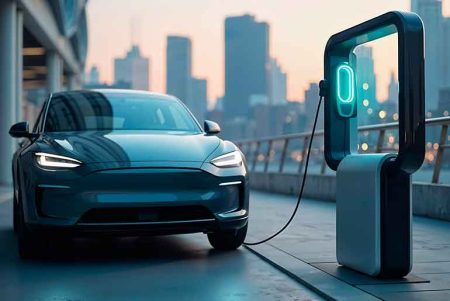
- For Electric Vehicles (EVs), BMS enabled EVs to have “Health Passports,” which allowed better resale value.
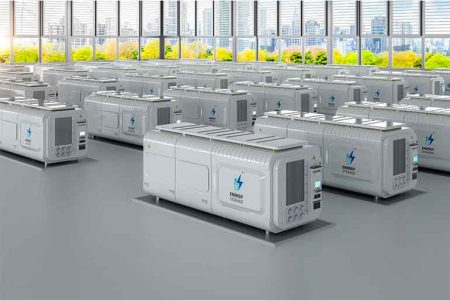
- For Large Battery Storage Systems (BESS), BMS enabled the ability to guarantee much higher availability rates and much less operating risk.
- For Lenders and Insurers, BMS provided confidence based on data instead of historical methods that were based on guesswork.
In a market where hardware margins are compressing, software emerged as the silent moat. By the end of 2025, it was clear: the companies that control battery intelligence control long-term value.
Breakthrough #5: The Secondary Battery Economy Finally Arrived
For years, circularity was discussed as an environmental obligation. In 2025, it became an economic necessity.
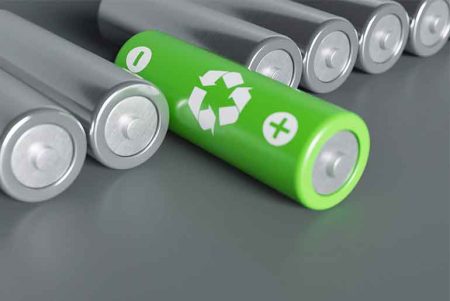
With raw material prices stabilizing and demand for stationary storage surging — especially from data centers and AI infrastructure — second-life batteries found a real market. Repurposed EV packs moved from pilot projects to structured deployments.
At the same time, recycling shifted from promise to practice. The first signs of “circular gigafactories” emerged, where recycling output was directly reintegrated into manufacturing lines.
Regulatory pressure accelerated this shift. Battery passports, lifecycle tracking, and material disclosure requirements pushed manufacturers to think beyond first use.
This secondary market is one of the most underestimated battery industry breakthroughs — and one that will play a critical role as the industry scales toward terawatts.
The 2026 Roadmap: What Terawatt-Scale Really Means
Terawatt-scale does not mean bigger factories alone.
In 2026, terawatt-scale means predictable degradation, not theoretical energy density. It means lower cost per kilometer, not higher peak specs. It means fire safety records that stand scrutiny, not just certifications.
The industry is entering its industrial era — where execution matters more than excitement.
Manufacturers that survived 2025 are leaner, sharper, and more realistic. They understand that the next phase of growth will be won not by announcements, but by repeatable performance.
This is the ultimate outcome of the battery industry breakthroughs forged under pressure.
Conclusion: From Momentum to Maturity
The battery industry did not lose momentum in 2025.
It gained maturity.
The past year stripped away excess and revealed what truly matters: efficiency, intelligence, safety, and resilience. As the industry charges into 2026, the rules are clearer and the bar is higher.
The race to terawatt-scale will not be won by those who promise the future — but by those who can deliver it, quietly and consistently.
And that may be the most important breakthrough of all.
 Electrify your feed! Click here to join our Whatsapp group and to get the latest updates, expert insights, and innovations driving India’s energy storage revolution.